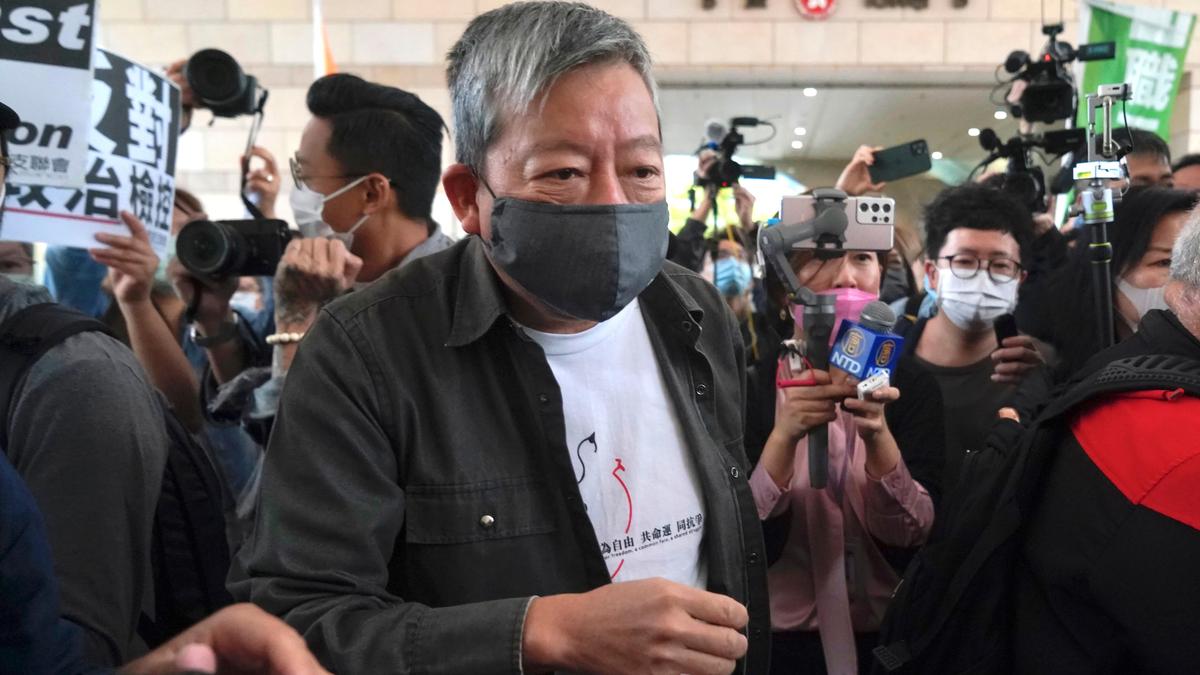
The Western press is running a tired script on the Hong Kong Tiananmen activist trials. Every headline follows the same predictable arc: a tragic lament over the discovery that freedom of speech is "not an absolute right."
This is lazy journalism masquerading as moral outrage.
To pretend that the limitation of speech is a novel tyranny invented by Beijing is to ignore three centuries of jurisprudence. The legal reality is brutal, universal, and entirely uncomfortable for liberal observers: no functional state on Earth treats free speech as an absolute right.
The real story in the Hong Kong trials isn’t that speech has limits. The real story is how the illusion of absolute speech is weaponized by both sides, blinding us to the actual mechanics of political power.
The Legal Illiteracy of Global Outrage
Western commentators are acting shocked that prosecutors in Hong Kong argued speech can be restricted for national security. They frame this as a uniquely authoritarian perversion of law.
It isn't.
Let’s look at the foundational text that Western democracies point to: the European Convention on Human Rights. Article 10 explicitly states that the exercise of free speech may be subject to restrictions "in the interests of national security, territorial integrity or public safety, for the prevention of disorder or crime."
The United States Supreme Court, often viewed as the most permissive guardian of speech, has spent a century drawing boundaries. You cannot defame people with impunity. You cannot engage in insider trading and call it "free expression." You cannot incite imminent lawless action.
When the prosecution in Hong Kong argues that public assembly and speech must yield to state security, they are not inventing a new legal theory. They are applying the standard operating procedure of the modern nation-state.
The Western media's insistence on treating speech as an unassailable monolith does a disservice to the public. It replaces rigorous legal analysis with emotional shorthand.
The Sovereignty Paradox: Why States Can't Yield
I have spent decades analyzing constitutional frameworks and international law. Here is the cold truth that human rights organizations refuse to acknowledge: Constitutions are not suicide pacts.
A state's primary, non-negotiable directive is self-preservation. When a legal system perceives an existential threat—whether that threat is a physical insurrection or an ideological campaign designed to dismantle its legitimacy—it will always override individual liberties.
[Existential Threat Perceived] -> [National Security Exception Triggered] -> [Rights Suspended/Curtailed]
This dynamic is not unique to Hong Kong. Consider how Western democracies reacted to the rise of digital disinformation or domestic extremism over the past decade. Laws were rewritten, bank accounts were frozen, and speech was deplatformed. The mechanisms differ, but the underlying logic is identical: the state survives first; rights are negotiated second.
To argue that Hong Kong or Beijing should prioritize abstract speech rights over sovereignty is to misunderstand the very nature of the state. It is asking a government to willfully accept its own subversion. No government in human history has ever agreed to those terms.
Dismantling the "People Also Ask" Delusions
The public discourse surrounding these trials is infected with flawed premises. Let's dismantle the most common ones.
Can a society function with truly absolute free speech?
No. Imagine a scenario where perjury is protected as free expression. The judicial system collapses. Imagine a scenario where trade secrets can be broadcast at will under the guise of truth-telling. The economic engine grinds to a halt. Every civilized society negotiates a boundary where speech ends and harm begins. The debate is never if speech should be limited, but where the line is drawn.
Is the crackdown in Hong Kong a violation of international law?
International covenants, including the International Covenant on Civil and Political Rights (ICCPR), contain explicit clawback clauses. Article 19 of the ICCPR guarantees freedom of expression but explicitly states it can be restricted for the "protection of national security or of public order." The argument in court isn't about whether international law applies; it’s about who gets to define what constitutes a threat to public order. Spoiler: the entity with the monopoly on violence always defines the threat.
The Hard Truth Western Activists Miss
The activists on trial in Hong Kong understood this dynamic far better than their international cheerleaders do. They knew they were not engaging in a polite academic debate about rights. They were engaged in a high-stakes political struggle.
By framing the trial purely as a victim-blaming narrative about the death of free speech, Western media diminishes the agency of the activists. It turns a political conflict into a melodrama.
The strategy of peaceful protest and public commemoration is designed to force a regime's hand—to make the state manifest its power explicitly. The activists succeeded in forcing that manifestation. To look at the result and cry foul because the state acted like a state is naive.
The Cost of the Contrarian Reality
Acknowledging that speech is never absolute comes with a heavy price. It strips away the comfort of moral absolutism. It forces us to confront the reality that global politics is not a battle between pure freedom and pure tyranny, but a collision of competing sovereign claims.
If you accept that all states limit speech, you can no longer rely on simple slogans. You have to look at the specific context of Hong Kong’s National Security Law, the historical legacy of colonial governance, and the geopolitical chess match between Washington and Beijing.
That requires intellectual labor. It requires moving past the superficial headlines of competitor outlets that trade in outrage rather than analysis.
Stop looking for absolute rights in a world governed by sovereign power. They do not exist. They never have.
The court in Hong Kong didn't destroy a fundamental truth; it merely stated out loud what every government whispers in the dark.