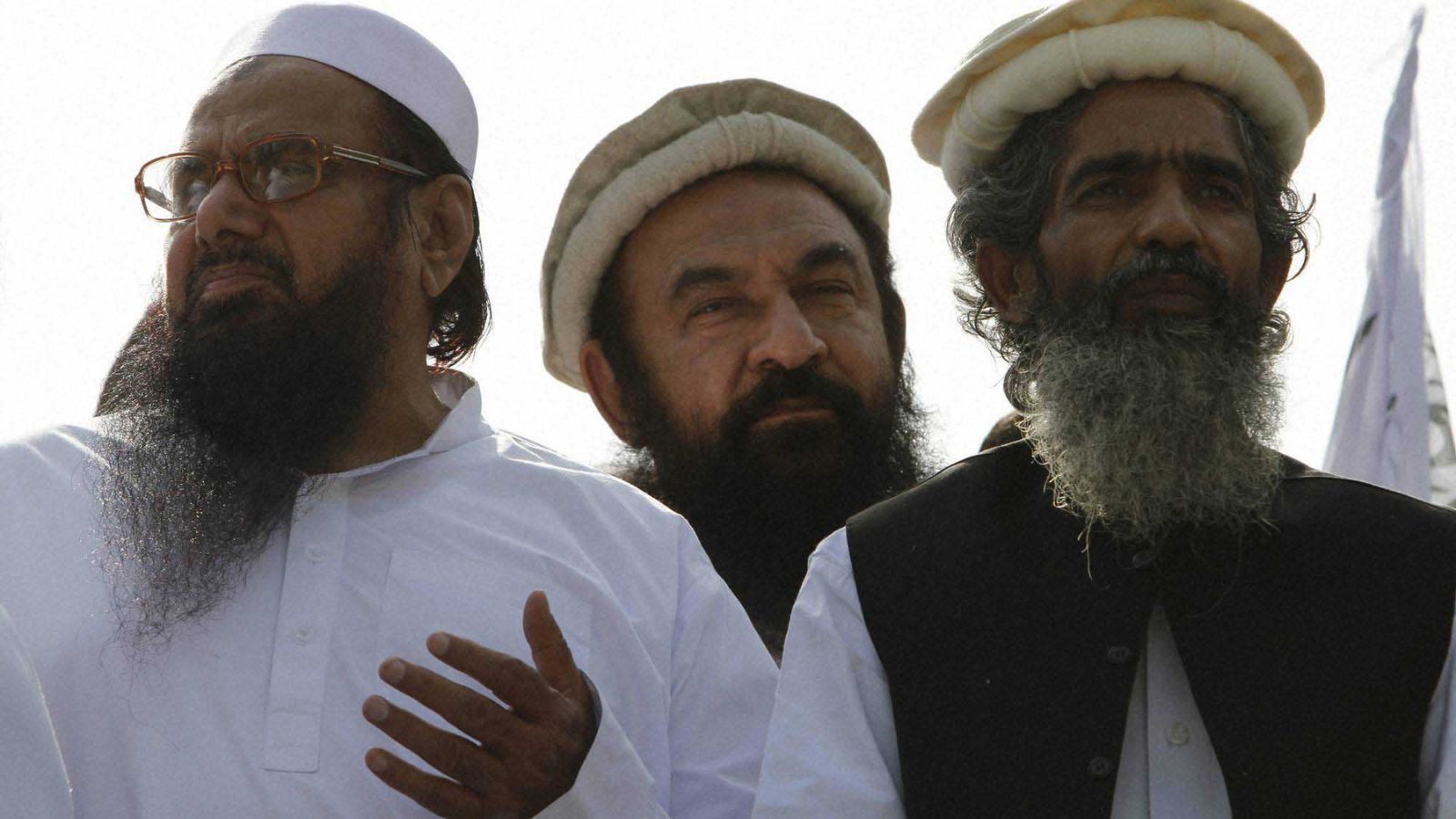
The bullets that struck Amir Hamza in the early hours of April 16, 2026, were more than just an assassination attempt on a 66-year-old theologian. They represented the latest fracture in a carefully maintained Pakistani security architecture that is rapidly crumbling under the weight of internal dissent and external pressure. Hamza, a man who literally helped write the manual for modern Salafi jihad in South Asia, was ambushed near a news channel office in Lahore’s Kot Lakhpat area. While he survived the immediate hail of lead, the message from the unknown gunmen on motorcycles was unmistakable. The untouchables of the 1990s are now marked men.
Hamza is not merely a soldier; he is the intellectual architect of Lashkar-e-Taiba (LeT). While Hafiz Saeed provided the public face and the fiery sermons, Hamza built the group's literary and ideological foundations. As the founding editor of Majallah al-Daawa, the group’s flagship publication, he spent decades transforming complex theological concepts into a digestible, violent narrative that fueled recruitment for the Kashmir insurgency. To understand the gravity of the hit in Lahore, one must look past the blood on the pavement and into the deep-seated identity crisis currently tearing through the remnants of the LeT.
The Pen and the Kalashnikov
Born in May 1959 in Sheikhupura, Hamza belongs to the original vanguard of the Afghan-Soviet war. His journey from the mountains of the Hindu Kush to the editorial offices of Lahore mirrors the evolution of the Pakistani militant. He didn't just fight; he documented. His books, such as From Torkhum to the Caucasus, were not just travelogues of jihad—they were recruitment tools that bridged the gap between the rural madrasa and the global battlefield.
In the decades following the Soviet withdrawal, Hamza's role shifted toward institutionalizing the LeT’s presence within Pakistan. He became the group’s primary fundraiser and negotiator. When the Pakistani state, under intense international scrutiny, began freezing the assets of front organizations like the Falah-e-Insaniat Foundation, it was Hamza who pivoted. In 2018, he reportedly formed Jaish-e-Manqafa specifically to bypass these bans and keep the cash flowing. This financial agility made him an indispensable asset to the LeT’s Central Committee, and a high-priority target for those looking to dismantle the group's infrastructure from the inside out.
A Pattern of Erasure
The attack on Hamza is not an isolated incident of street crime. It is part of a brutal, systematic thinning of the herd that has been underway since late 2023. Across Pakistan, high-profile figures associated with the 26/11 Mumbai attacks and the wider anti-India insurgency have been meeting violent ends at the hands of "unknown gunmen."
- Paramjit Singh Panjwar: Shot dead in Lahore, May 2023.
- Shahid Latif: A key Jaish-e-Mohammad operative, gunned down in Sialkot, October 2023.
- Adnan Ahmed: Also known as Abu Qasid, killed in Karachi, December 2023.
The methodology is consistent: two men on a motorcycle, a high-traffic urban area, and a vanishing act that suggests professional training. The Pakistani establishment often points fingers at external intelligence agencies, but the reality on the ground suggests a more complex web of betrayal. As the Pakistani state attempts to shed its "gray list" reputation and stabilize its economy, these aging militants have transitioned from strategic assets to diplomatic liabilities.
The Split Within the Ranks
There is a quieter, more insidious theory regarding Hamza's shooting: the internal schism. The LeT is no longer the monolithic entity it was in 2008. There is a generational and ideological divide between the old guard—men like Hamza who remain committed to the original Salafi vision—and a younger faction that is increasingly frustrated by the group's forced dormancy.
Reports of a "fund crunch" within the LeT have been circulating for years. When resources dwindle, the competition for what remains becomes lethal. Hamza’s role in managing the group’s finances through various fronts placed him directly in the crosshairs of internal rivals who believe the veteran leadership is hoarding wealth while the rank-and-file starve. By targeting the group's chief fund-raiser and ideologue, the attackers are striking at the very nervous system of the organization.
The Failure of the Protection Umbrella
For years, men like Amir Hamza lived in plain sight. They recorded TV programs, published books, and led "charity" drives under the watchful, protective eye of the local security apparatus. The fact that gunmen could strike Hamza as he returned from a recording for City 42—a prominent local news outlet—signals a catastrophic failure of that protection, or perhaps a deliberate withdrawal of it.
If the state can no longer, or will no longer, guarantee the safety of its former proxies, the internal stability of these militant groups will collapse. The "unknown gunmen" are operating with a level of impunity that suggests they either have high-level clearance or are exploiting gaps left by a security force that has decided to look the other way.
Beyond the Assassination Attempt
The survival of Amir Hamza does little to change the trajectory of the movement he helped build. The LeT is currently a ghost of its former self, operating through a myriad of political shells like the Pakistan Markazi Muslim League. Yet, as long as the ideologues remain alive and vocal, the potential for a resurgence exists.
Hamza’s latest book, The Road to Paradise, continues to circulate in the digital underground, providing the theological justification for a brand of violence that the world has tried to move past. The shooting in Lahore was an attempt to close that book for good. Whether the trigger was pulled by a foreign operative, a domestic rival, or a state-sponsored "cleaner," the result is the same. The old guard of the jihadist movement is being liquidated, one motorcycle ride at a time.
The investigation into the Hamza shooting will likely yield the same results as the dozens before it: a police report filed against "unidentified suspects" and a trail that goes cold at the first sign of institutional involvement. For the aging ideologues still hiding in the villas of Lahore and Rawalpindi, the silence from the authorities is louder than the gunfire. They are discovering that in the brutal arithmetic of regional geopolitics, even the most loyal servant eventually becomes an expired commodity.
The hunt continues, and the list of names is getting shorter.