The woman in the crowd at the bus station didn’t look like a ghost. She looked like a neighbor, or perhaps a grandmother. She wore the quiet, invisible armor of the mundane—a sensible coat, a neutral expression, the practiced ease of someone who has spent two decades blending into the background of a bustling city. For twenty-four years, she had been a master of the most difficult art form: disappearing while staying in plain sight.
She was wanted for a murder committed in 2000. In the decades since, she had built a life on a foundation of silence. She had likely forgotten what it felt like to use her real name. She had watched the world change from the analog era of paper files and grainy CCTV to a digital age where every movement leaves a trail. But she had stayed off the grid. She hadn't been caught by a tip-off or a sudden lapse in her own vigilance.
She was caught by a math problem.
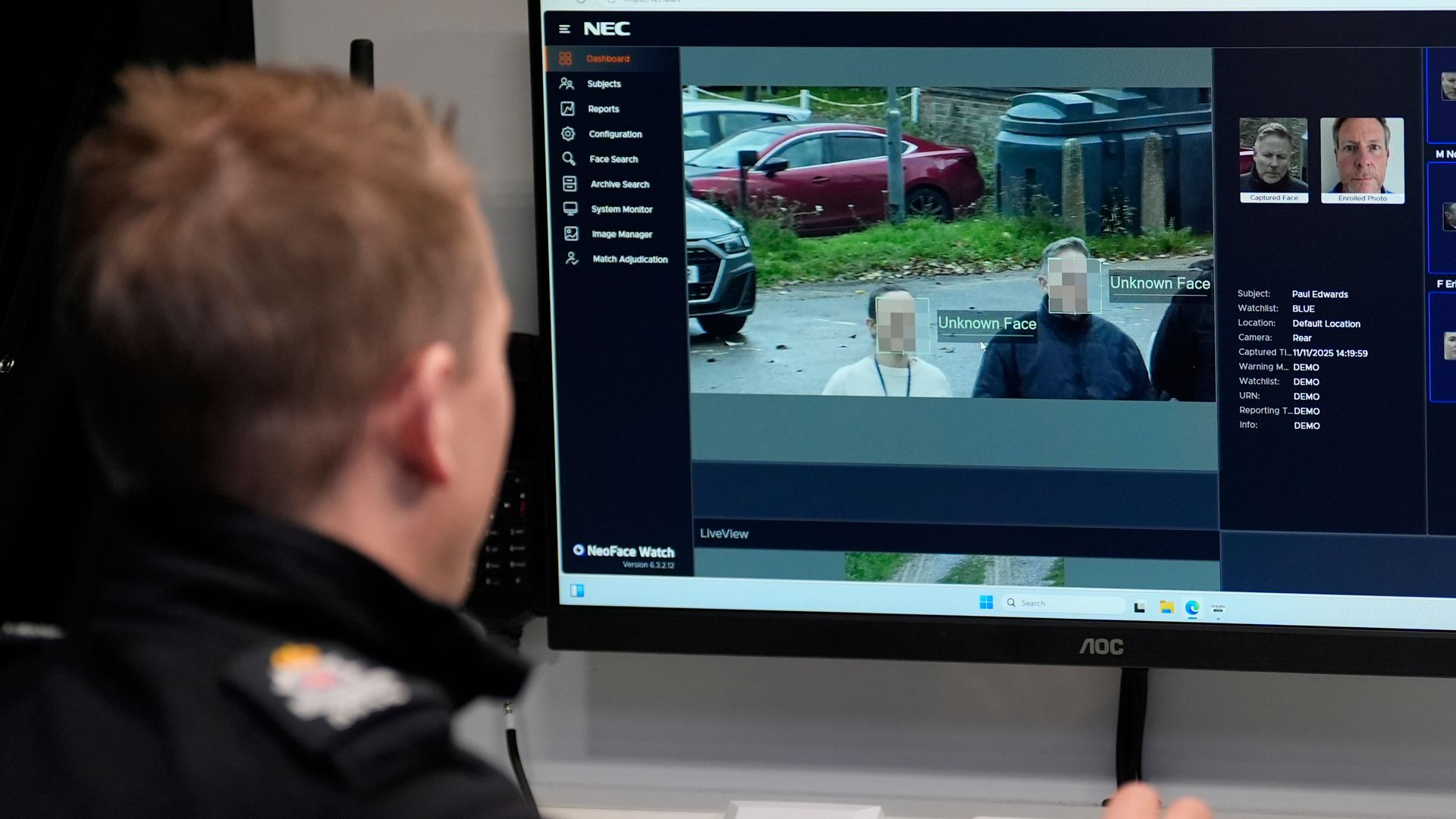
The police in Guangzhou weren't looking for her specifically that morning. They were running a trial. They were testing the limits of a new facial recognition system, a digital net cast over the public square to see what it might drag up from the depths. As she walked past a lens, the software stripped away twenty years of aging. It ignored the graying hair and the weight of time. It mapped the immutable geometry of her skull—the distance between her pupils, the bridge of her nose, the specific curve of her jawline.
In a fraction of a second, the system compared her face against a database of millions. The screen flashed. The ghost was found.
The End of the Great Vanishing
There was a time when running away meant something. If you could make it across a state line or find a city large enough to swallow you, you could effectively reset your existence. This "Great Vanishing" was a staple of human history and noir cinema alike. It relied on the fact that human memory is fallible and paper records are easily lost. A person was only as identifiable as the photograph in a detective’s pocket.
We are now entering the era of the Permanent Record.
Consider the sheer scale of the shift. In the early 2000s, surveillance was reactive. A crime happened, and police would manually review grainy tapes hoping for a lucky break. Today, surveillance is proactive and algorithmic. It doesn't sleep. It doesn't get bored. It doesn't overlook a face because it’s looking at a phone or drinking coffee.
When this woman was arrested, the shock wasn't just that she had been caught after a quarter-century. The shock was the realization that the "shelf life" of a fugitive has been effectively deleted. The passage of time used to be an ally to the disappeared; the longer you stayed hidden, the more your features changed, and the colder the trail became. Now, time is irrelevant. The algorithm sees through the wrinkles. It sees the skeleton beneath the skin.
The Geometry of Identity
To understand how a twenty-year-old cold case ends in a bus station, you have to look at the world through the eyes of the machine. To us, a face is a collection of emotions and memories. To a facial recognition algorithm, a face is a series of nodal points.
There are about eighty nodal points on a human face that the software measures. The depth of the eye sockets. The width of the nose. The length of the jawline. These measurements form a "faceprint." While your skin may sag and your hair may thin, the spatial relationship between these points remains remarkably consistent throughout your adult life.
Imagine a map where the landmarks never move, even if the trees grow over them. That is what the police used to find her. They fed the system a photograph from the turn of the millennium—a snapshot of a woman who no longer existed in any physical sense—and the software found its twin in the moving sea of a 2024 crowd.
This isn't just about catching criminals. It’s about the fundamental loss of anonymity in public spaces. We often talk about "privacy" as a legal right, but for most of human history, privacy was a logistical reality. You were private because it was too difficult for anyone to track you every second of every day. That logistical barrier has crumbled. The "crowd" is no longer a place to hide; it is now a data set to be indexed.
The Invisible Stakes of the Trial
The arrest happened during a "trial" of the technology. This is a crucial detail. It suggests that the system wasn't even at full capacity. It was a test run.
In many cities across the globe, these trials are happening under the guise of public safety or efficiency. We use our faces to unlock our phones, to board planes, and to pay for groceries. We have traded the uniqueness of our features for the convenience of not having to remember a password. But there is a secondary cost to this convenience.
When a government or a corporation builds a database of faceprints, they are creating a master key to our physical movements. Unlike a password, you cannot change your face. If your biometric data is leaked or misused, you cannot "reset" your eyes. You are permanently exposed.
For the woman at the bus station, the system worked exactly as intended. A violent crime was addressed. A victim's family, perhaps decades later, received a phone call they never expected. On the surface, this is a triumph of modern policing. It is a story of justice finally catching up.
But beneath that success lies a chilling question: Who else is the system looking for? Today, it’s a fugitive from 2000. Tomorrow, could it be a political dissident? A protester? Someone who simply owes a debt or has an expired visa? The machine doesn't have a moral compass; it only has a search query.
The Weight of the Unseen
There is a specific kind of exhaustion that comes with being watched. Psychologists call it the "Hawthorne Effect"—the alteration of behavior by the subjects of a study due to their awareness of being observed. When we know a camera is on us, we walk a little straighter. We check our expressions. We become performers in our own lives.
The fugitive in Guangzhou had lived in that state of performance for twenty-four years. She had mastered the art of being unremarkable. Her arrest marks the moment where performance is no longer enough. You can control your behavior, but you cannot control your geometry.
We are living through a period where the technology is sprinting far ahead of the ethics. The legal frameworks in most countries are still catching up to the reality of what an automated, AI-driven surveillance state actually looks like. We are debating things like "data consent" while the cameras are already mapping our gaits and our retinas from a hundred yards away.
The Finality of the Digital Net
The woman was taken into custody without a struggle. There is something profoundly lonely about that moment. Twenty years of secrets, twenty years of looking over her shoulder, ended by a silent ping on a server in a room she would never see.
She didn't get to die a quiet, forgotten death. The digital age reached back into the past and dragged her into the present.
This is the new reality of the human experience. We are no longer allowed to leave our pasts behind. The mistakes we made, the crimes we committed, and the identities we shed are all archived in a format that never degrades. We are walking through a world that remembers everything.
As the police led her away, the cameras continued to whirl. The bus station remained crowded. Thousands of other faces passed through the same light, each one being measured, categorized, and filed away. Most of them were "clean." Most of them were just people going to work or heading home. But they were all being watched by an eye that never blinks, a system that waits patiently for the next match, the next ghost to emerge from the static.
The era of the secret is over. We are all mapped, we are all known, and the shadow we cast is no longer our own—it is a string of code, waiting for the right moment to find us.