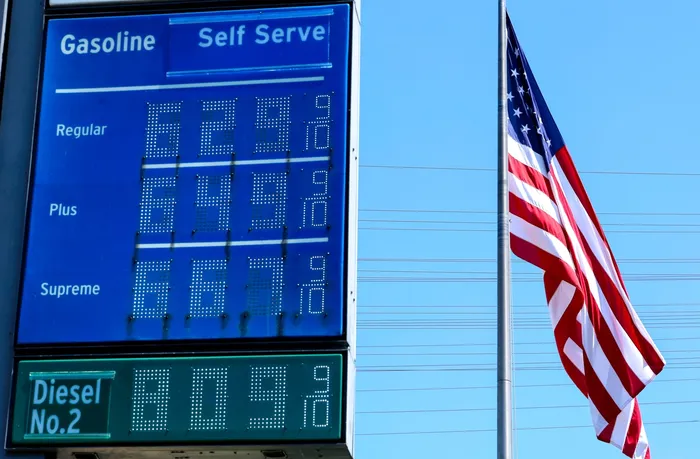
You’ve probably seen the headlines shouting about a massive "jump" in retail sales this March. On paper, a 1.7% monthly increase looks like a victory lap for the American economy. It’s the fastest growth we’ve seen in over three years. But before you start thinking everyone is out on a wild shopping spree, you need to look at what’s actually happening at the gas pump.
Most of that "growth" isn't because people are buying more stuff. It's because the stuff they have to buy—specifically gasoline—got way more expensive.
Why the Headline Number is Deceiving
The Commerce Department’s latest report shows total retail sales hit $752.1 billion in March. That 1.7% rise sounds great until you realize these numbers aren't adjusted for inflation. When gas prices at the pump spike, retail sales "grow" automatically because we’re all forced to hand over more cash for the same amount of fuel.
Thanks to the escalating conflict with Iran and the shutdown of the Strait of Hormuz, gas station receipts exploded by 15.5% in a single month. That’s the biggest jump on record since 1992. If you strip out gasoline and autos, that 1.7% "surge" shrivels down to a much more modest 0.6%.
Where the Money is Actually Going
The American consumer is resilient, sure, but they’re also making some pretty clear trade-offs right now. We’re seeing a weird split in the data that tells a story of two different economies.
On one hand, sectors like department stores saw a 4.2% boost and furniture stores climbed 2.2%. Why? It’s tax refund season. A lot of households are using those annual checks from the IRS to buffer the shock of $4-a-gallon gas. It’s a temporary safety net, not a permanent change in lifestyle.
On the other hand, look at restaurants and bars. They only managed a tiny 0.1% increase. When people spend $80 to fill their tank instead of $50, the first thing they cut is the Friday night dinner out. We’re seeing early signs of a pullback in "experience" spending as the "survival" spending on energy takes over.
March 2026 Spending Breakdown by Category
- Gasoline Stations: +15.5%
- Department Stores: +4.2%
- Furniture & Home Goods: +2.2%
- Online Retailers: +1.0%
- Electronics & Appliances: +0.9%
- Restaurants & Bars: +0.1%
The Hidden Impact of Tariffs and Supply Chains
It isn't just gas that’s getting pricier. If you look at the 0.9% increase in electronics and appliances, you’re seeing the shadow of new tariffs. Prices for imported goods are ticking up, and retailers are passing those costs directly to you.
The Iran war—now in its eighth week—is rippling through the entire supply chain. It’s not just about the fuel in your car; it’s about the fuel in the trucks delivering your Amazon packages and the ships carrying components for your next smartphone. Freight costs are climbing, and that 1.7% "growth" includes a lot of those hidden price hikes finally hitting the retail shelf.
The Control Group Reality Check
Economists love to look at the "control group"—a specific set of data that excludes the volatile stuff like gas stations, auto dealers, and building materials. This is what actually feeds into the GDP calculations.
The control group rose 0.7% in March. This is actually a solid number. It suggests that, despite the chaos in the Middle East and the pain at the pump, the "core" of the American consumer hasn't collapsed yet. We’re still buying clothes, we’re still clicking "buy now" on websites (online sales rose 1.0%), and we’re still maintaining a baseline level of activity.
But here’s the problem: consumer sentiment is at an all-time low. The University of Michigan survey shows people are feeling more pessimistic than they have in years. People are spending because they have to, or because they have a temporary tax refund in their pocket, but they aren't happy about it.
What This Means for the Federal Reserve
This retail report is a nightmare for the Federal Reserve. They’ve been trying to cool down the economy to fight inflation, but a 1.7% headline jump makes the economy look "too hot."
Even though we know it’s mostly gas prices, the Fed can’t ignore the fact that consumer prices rose 3.3% year-over-year in March. They're stuck between a rock and a hard place. If they raise interest rates to fight the energy-driven inflation, they risk crushing the small amount of real growth left in the system. If they do nothing, the cost of living keeps spiraling.
How to Protect Your Budget Right Now
The "gas price shock" is real, and it’s likely to get worse before it gets better. Since we know the tax refund "cushion" is going to vanish by May or June, you need to be proactive.
Stop looking at the headline numbers and start looking at your own "control group." Track your non-essential spending now while you still have that tax refund buffer. If you’re seeing your "miscellaneous" spending or "dining out" costs staying flat while your gas bill doubles, you’re already feeling the squeeze the data is starting to show.
Shift your focus to high-value, durable goods if you have the cash, as tariffs will likely push those prices higher in the coming months. Don't wait for the "official" inflation numbers to tell you what you're already seeing at the checkout counter.