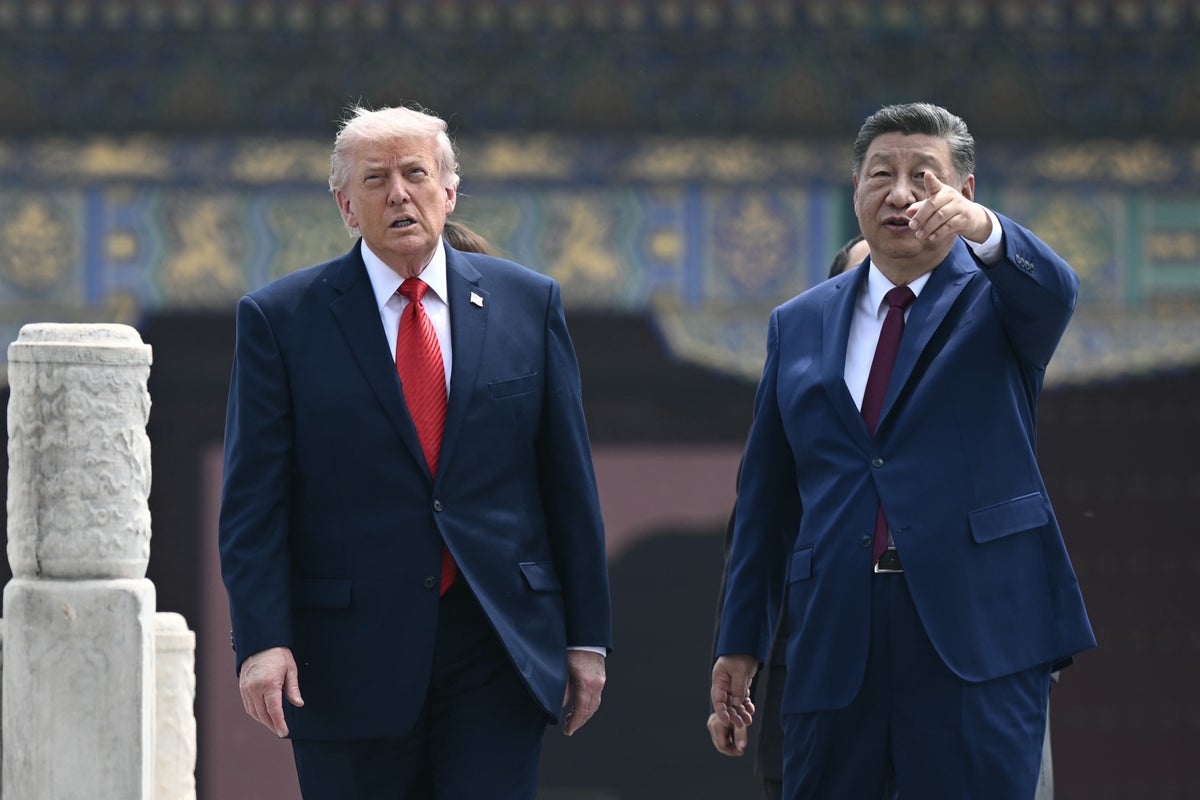
You can lay out the red carpet, line up hundreds of flag-waving children, and play the national anthems outside the Great Hall of the People, but you can't mask the underlying tension. Donald Trump arrived in Beijing looking for immediate economic wins. He brought a massive delegation of American corporate royalty, including Nvidia boss Jensen Huang, hoping to secure market access and keep trade stable. He wanted a television spectacle, and China gave him exactly that.
But behind closed doors, Chinese President Xi Jinping didn't stick to the celebratory script.
During a intense two-hour bilateral meeting, Xi dropped an explicit warning directly in Trump’s lap. He made it clear that the self-governed democratic island of Taiwan remains Beijing’s absolute red line. If Washington mishandles the situation, the two nuclear powers won't just see a diplomatic freeze. They will face direct clashes and even military conflict.
It's a brutal reality check for an American president currently preoccupied with an ongoing war against Iran. While Trump wants to focus on global oil shipping routes and trade numbers, Beijing is forcing him to look at a flashpoint that could spark a much larger global crisis.
The Warning Behind the Pageantry
The public imagery from the summit looked surprisingly warm. Trump called Xi a "great leader" and declared that the relationship between the US and China would be better than ever. Xi congratulated Trump on the upcoming 250th anniversary of American independence. They toured the historic Temple of Heaven together.
Then the official readouts hit the wire.
The Chinese foreign ministry, via spokesperson Mao Ning, published Xi’s specific words on Taiwan. Xi explicitly stated that Taiwan independence and peace across the Taiwan Strait are as irreconcilable as fire and water. According to the state-run Xinhua news agency, Xi warned that mishandling the island's status would put the entire relationship in great jeopardy.
What’s fascinating is how the White House handled this. The initial US summary of the talks skipped any mention of Taiwan. Trump completely ignored a reporter's shouted question about the island while posing for photos. Instead, the American side focused heavily on trade negotiations and the Middle East crisis.
This silence tells you everything. Trump prefers transactional deals, but Taiwan isn't a commodity Xi is willing to trade.
The Oil for Taiwan Tradeoff that Won't Work
Trump has a massive domestic headache right now. The US war with Iran has severely disrupted global energy supplies in the Persian Gulf, driving up fuel prices back home and denting his approval ratings. He desperately needs China’s help to pressure Tehran, open up the blockaded Strait of Hormuz, and stabilize oil markets.
To sweeten the pot, the US economic team—led by Treasury Secretary Scott Bessent—has been floating new economic structures. They are discussing a dual-track system:
- A new Board of Trade to earmark around $30 billion of low-value Chinese products for lower US tariffs.
- A Board of Investment to find safe, non-sensitive sectors for cross-border market access.
In return, the US wants China to buy massive quantities of American oil, diversifying Beijing away from Middle Eastern crude while boosting US energy revenues.
Xi is willing to talk about oil and trade stability. He explicitly noted that their economic teams had achieved balanced outcomes during preliminary talks in South Korea. But he isn't letting Trump walk away with a cheap energy deal without paying a political price on national security.
Beijing knows Trump is vulnerable due to the Iran conflict. By injecting the threat of a Taiwan clash into the summit, Xi is signaling that Chinese cooperation on global energy security depends entirely on US restraint in East Asia.
The Multi-Billion Dollar Arms Problem
The immediate friction point isn't just abstract rhetoric. It involves concrete military hardware.
The US remains Taiwan’s primary security backer. In December, the State Department approved a massive $11 billion arms package for Taipei, followed by another pending $14 billion package awaiting Trump’s final signature. Beijing views these recurring sales as an intolerable violation of its sovereignty.
Before landing in Beijing, Trump openly mused that Xi would bring up these weapons sales, hinting that he was willing to have that conversation. That stance by itself departed from traditional US policy, which holds that Washington does not consult Beijing on its defense commitments to Taipei.
US allies in Asia are quietly panicking about what happens next. The fear among analysts is that Trump might scale back arms deliveries or alter long-standing diplomatic language—shifting from the traditional formula of "not supporting" Taiwan independence to actively "opposing" it—just to secure a quick concession on Iran or trade.
Trapped in Thucydides Shadow
Xi explicitly raised the concept of the Thucydides Trap during his talks. It is a historical reference to how an established dominant power and a rising rival frequently slide into catastrophic war. Xi asked if Washington and Beijing have the capacity to transcend this trap and find a way for major powers to coexist.
The strategy from the Chinese side is brilliant but dangerous. They are using Trump's love for pageantry and his desire for quick economic wins to buy time. By feeding the American president’s appetite for high-stakes theater, China aims to stall further economic escalation while drawing a firm boundary around its core territorial claims.
For anyone watching global stability, the takeaway from the Beijing summit is clear. You can't separate trade from trenches. If you're tracking the markets or global supply chains, don't get distracted by the friendly handshakes or the corporate deals signed by US tech executives in Beijing. The real story is the unresolved geopolitical friction over Taiwan, and it is closer to a flashpoint than the White House wants to admit.
Keep a close eye on the final joint statements from this summit. Watch specifically for any subtle shifts in how the US describes its commitment to Taiwan's defense and whether those pending multi-billion dollar arms packages get delayed. That will tell you exactly who won this round of negotiations in Beijing.
:max_bytes(150000):strip_icc():focal(819x186:821x188)/Murdaugh-Family-e90854a716884d608fb6fd925e18d840.jpg)
