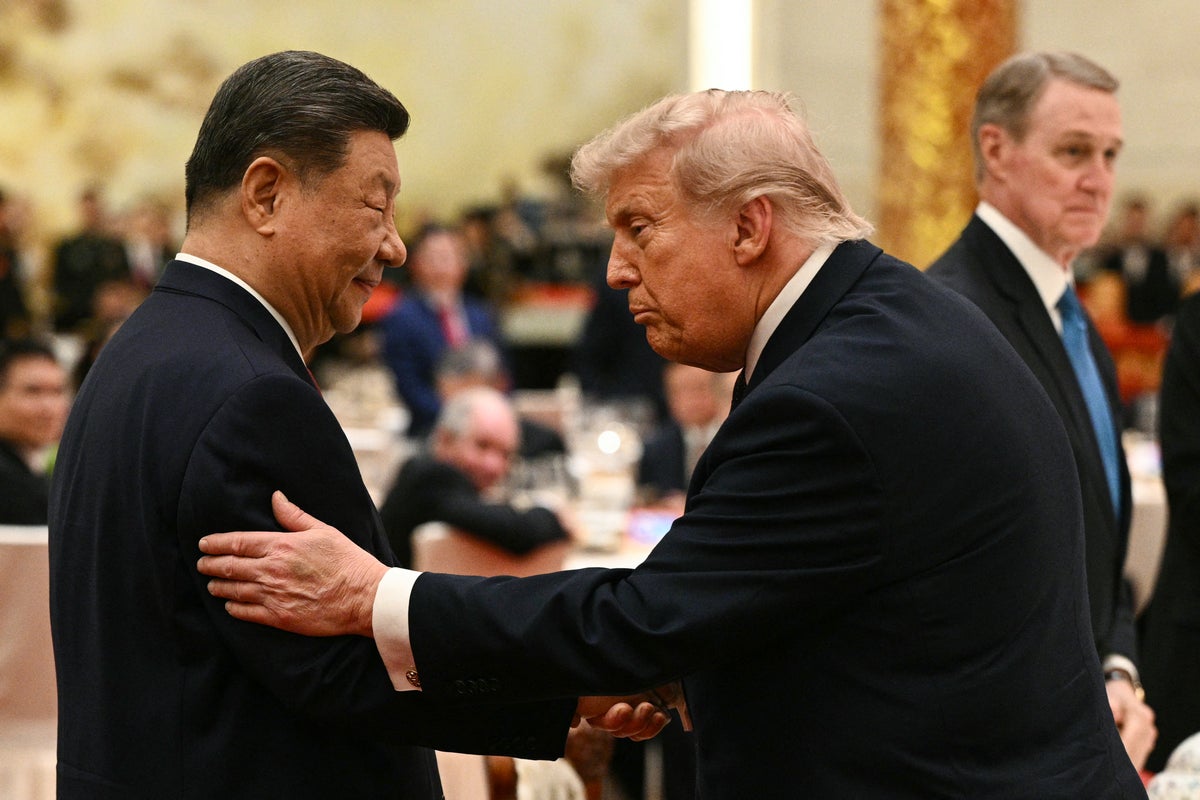
Donald Trump just landed in Beijing for a high-stakes three-day summit, and Xi Jinping wasted no time laying down the law. Behind closed doors at the Great Hall of the People, Xi gave the American president a blunt, unusually harsh admonition. Stay out of our backyard. Specifically, handle the Taiwan situation with extreme care or risk direct military clashes and conflict.
The Western media is already spinning this as a massive embarrassment for the White House. Critics say Xi publicly flexed his muscles while Trump smiled, offered platitudes, and called the Chinese leader a "great leader" and a "friend."
But here is the twist everyone is missing. Trump isn't humiliated. In fact, he's probably completely fine with it.
For all the talk about Washington standing firm against autocracy, Trump’s foreign policy has always been driven by a deeply transactional, "America First" calculus. He doesn't view global geopolitics as a holy crusade to protect foreign democracies. He views it as a ledger. If Beijing wants to claim its regional sphere of influence, Trump is perfectly willing to let them have it—provided the price is right for American business.
The Thucydides Trap Meets Transactional Diplomacy
During the opening remarks of the summit, Xi Jinping raised eyebrows by explicitly referencing the "Thucydides Trap." It's a classic foreign policy concept. When a rising global power threatens to displace an established superpower, the result is almost always a catastrophic war. Xi used the term to warn Trump that the world today is turbulent and changing, and that a US blockade or military intervention over Taiwan could shatter global stability.
Trump countered the dark historical warning with simple optimism. He told Xi it was an honor to be there and predicted that U.S.-China relations would become better than ever before.
This isn't a sign of weakness. It's a completely different worldview.
Mainstream foreign policy analysts treat Taiwan as a sacred democratic outpost that must be defended at all costs. Trump treats it like an expensive insurance liability. Look at his record. He has openly complained that Taiwan "took our chip business" and argued that the island should pay the US for its defense. While his administration approved an $11 billion arms package for Taipei, actually fulfilling that order hasn't been a priority.
When Xi tells Trump to back off from China's coastal waters, Trump doesn't hear a blow to American honor. He hears an opening move in a negotiation.
What China Actually Wants from the Beijing Summit
Beijing’s aggressive rhetoric isn't just about Taiwan. It's about survival. The global economy is currently reeling from the war in Iran, which has sparked a massive energy crisis across Asia and Europe.
Because of the ongoing US naval blockade in the Middle East and threats to global shipping lanes, China is feeling an immense economic squeeze. As the world's largest buyer of Iranian crude oil, Beijing desperately needs the Strait of Hormuz to open back up. Just weeks ago, Chinese officials at the United Nations openly warned that if the Hormuz crisis wasn't resolved by the time Trump arrived in Beijing, it would dominate the summit agenda.
Xi has a clear strategy for this meeting. He wants to balance his hard red lines on regional security with major economic carrots. The Chinese state apparatus has hinted at several massive concessions designed to appeal directly to Trump’s business-first mindset.
- Massive Oil Purchases: China is offering to significantly increase its imports of American crude oil. This would directly reduce Beijing’s risky dependence on Middle Eastern oil while handing Trump a massive win for the US domestic energy sector.
- The Board of Trade: Chinese officials are backing a new bilateral Board of Trade to resolve long-standing commercial disputes, signaling to the American business community that China is still an incredibly profitable market.
- Preventing Shipping Tolls: Xi has explicitly stated his opposition to implementing arbitrary tolls on commercial vessels crossing critical Asian shipping straits, keeping global supply chains moving.
Why a Sphere of Influence Works for America First
The Washington foreign policy establishment is terrified of a world divided into spheres of influence. They believe that if the US backs away from East Asia, it signals the end of the American century.
But the "America First" doctrine relies on a totally different logic. Why should American taxpayers fund the permanent defense of an island 100 miles off the Chinese coast while US domestic infrastructure crumbles?
Trump’s inner circle, including billionaire tech figures like Elon Musk who joined the President on this Beijing trip, views China through a commercial lens rather than a military one. They want market access, supply chain reliability, and intellectual property protections. They don't want a shooting war in the Taiwan Strait that would instantly vaporize the global tech economy. Apple's main chipmakers are already seeing massive profit surges despite regional tensions, and a war would instantly halt that progress.
If Xi Jinping demands that the US wind down its military presence in China's backyard, Trump's response will likely be a counter-offer. He'll want structural trade concessions, agricultural purchasing commitments, and cooperation on ending the Middle East blockade.
The Real Risk for the Global Order
This transactional approach isn't a flawless strategy. It carries massive, long-term risks that could backfire spectacularly on Washington.
If the US signals that its commitment to allies like Taiwan, Japan, or the Philippines is purely financial, those nations will face a terrifying choice. They will either have to radically ramp up their own military spending—potentially pursuing nuclear options—or cut their own deals with Beijing, effectively surrendering to Chinese hegemony.
We're already seeing the cracks. US senators are currently scrambling to push through a massive $40 billion defense bill for Taiwan, terrified that the White House is preparing to sell out the island. Meanwhile, allied forces are kicking off joint combat drills in the Philippines to show commitment to Asia, even as Washington's focus is entirely diverted by the war in Iran.
How to Read the Rest of the Summit
Don't get distracted by the sensationalist headlines over the next few days. When you see media outlets screaming about Trump being humiliated by Chinese warnings, look closer at the actual policy updates.
If you want to track who is actually winning this diplomatic chess match, ignore the joint press conferences and look for these specific indicators.
First, check if the White House announces any breakthrough agreements on American energy exports. A massive jump in Chinese purchases of US oil is the ultimate tell that a transactional deal has been struck behind the scenes.
Second, watch the status of the $11 billion arms package to Taiwan. If the delivery of those weapons continues to face quiet bureaucratic delays, it means Trump is actively using that leverage to keep Xi at the negotiating table.
Finally, keep a close eye on the maritime situation in the Middle East. If China suddenly shifts its diplomatic stance and helps broker an end to the shipping crisis near the Strait of Hormuz, you'll know exactly what Trump got in exchange for respecting China's backyard.
The old rules of global diplomacy don't apply anymore. Xi Jinping knows it, and Donald Trump lives by it. It isn't a humiliation. Kinda looks like business as usual.
:max_bytes(150000):strip_icc():focal(819x186:821x188)/Murdaugh-Family-e90854a716884d608fb6fd925e18d840.jpg)
