The silence didn’t fall all at once. It leaked into the streets of Beirut and the hills of northern Israel like a slow-moving fog, dampening the roar of the iron birds and the rhythmic thud of the earth being torn apart. For months, the sound of the sky was a predator. Now, for the first time in what feels like a lifetime, the sky is just the sky.
A ceasefire of ten days. It sounds like a clerical error. In the grand ledger of a war that has consumed decades, ten days is a heartbeat. It is a rounding error. Yet, for the mother in a basement in Southern Lebanon or the farmer in a kibbutz near the border, ten days is an eternity of possibility. It is the difference between a funeral and a homecoming.
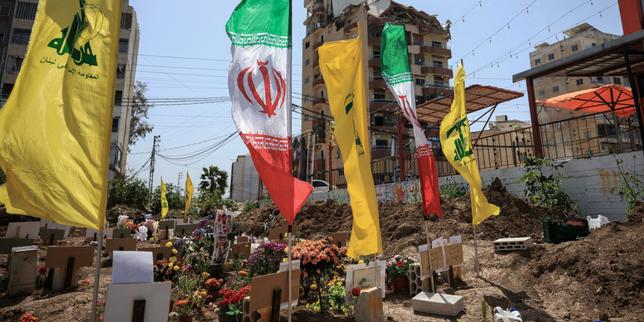
The diplomatic wires are humming with the technicalities. They speak of "cessation of hostilities," "buffer zones," and "monitored withdrawals." But on the ground, the reality isn't a map or a treaty. It is the sound of a key turning in a lock that hasn't been touched in a year. It is the smell of dust settling on a kitchen table that was abandoned while the coffee was still warm.
Consider a man we will call Elias. He is a fictional composite of a thousand very real people currently standing at the edge of a road, looking south. He has a car packed with plastic jugs of water and a mattress tied to the roof with fraying twine. He doesn't care about the geopolitical chess match between Tehran, Tel Aviv, and Washington. He isn't thinking about the broader conflict in Iran or the strategic depth of the Litani River. He is thinking about his lemon tree. He is wondering if the roots survived the heat and the neglect, or if the soil has been salted by the debris of a missile strike.
For Elias, the ceasefire isn't a victory. It’s a breath.
The Weight of a Temporary Promise
The fragility of this moment is its most defining characteristic. A ten-day ceasefire is a "ghost of peace." It has no weight, no permanence. It is a haunting of what life used to be, hovering over a landscape that has been rearranged by fire.
The logic of the ten-day window is calculated. It is a pressure valve. In the high-stakes theater of Middle Eastern warfare, the players often need a moment to recalibrate, to count their remaining pieces, and to see if the other side has the stomach for more. By agreeing to this brief hiatus, both Israel and the groups in Lebanon are acknowledging a grim truth: neither can currently afford the cost of a total, unyielding collapse into the abyss.
But what does this mean for the "Guerre en Iran" mentioned in the dispatches? The shadow of Tehran looms over every inch of this truce. Iran’s influence is the invisible thread pulled taut through the mountains of Lebanon. To understand why the guns went quiet today, you have to look beyond the border. You have to look at the regional exhaustion. Even the most ideologically driven machines eventually run low on fuel, or at least need a moment to fix the treads.
The stakes are invisible until they aren't. They are hidden in the supply lines, the depleted interceptor stockpiles, and the weary eyes of reservists who have missed their children's first steps. Peace, even this thin, translucent version of it, is often born from the sheer physical inability to keep swinging.
The Geography of Scars
War doesn't just destroy buildings; it rewrites the geography of the mind. In the north of Israel, the empty towns are a testament to a shift in the sense of safety that may take a generation to repair. The "Direct" reports tell us the ceasefire has entered into force, but they don't tell us about the silence in the schools.
Imagine a classroom where the chairs are still stacked on the desks, covered in a fine layer of gray soot. The "Core Facts" say the residents can theoretically return. But how do you return to a place where the horizon is a constant threat? The ten days aren't long enough to rebuild a house, but they are long enough to walk through the ruins and decide if you ever want to come back.
In Lebanon, the scale of the displacement is staggering. Roads that were once used for commerce and Sunday drives are now clogged with the frantic migration of the dispossessed. The ceasefire is a window of opportunity for the desperate. It is a race against the clock. If you have ten days, you spend the first two traveling, the next five digging through the rubble of your life, and the last three wondering if you should stay or flee before the eleventh day arrives.
The logic of 240 hours.
14,400 minutes of not being hunted.
When you break it down into minutes, you realize why people are willing to risk everything to return to a war zone during a temporary lull. Every minute of safety is a luxury they haven't tasted in months.
The Technicality of Survival
The "En Direct" updates will continue to track the violations. There will be violations. A sniper here, a stray shell there, a drone that "malfunctioned." In the language of the military, these are "minor incidents" that don't necessarily break the ceasefire. In the language of the people living there, a minor incident is a dead neighbor.
The machinery of the truce is overseen by international bodies that often seem as though they are shouting into a hurricane. The UN, the mediators, the frantic diplomats in five-star hotels—they are trying to build a dam out of paper.
The real problem lies elsewhere. It’s not in the wording of the agreement. It’s in the lack of an exit ramp. A ten-day ceasefire is a pause button, not a stop button. If the underlying reasons for the war—the territorial disputes, the proxy battles, the existential fears—aren't addressed, the eleventh day becomes an inevitability.
Consider what happens next: The soldiers on both sides are using these ten days to sleep, yes, but also to clean their rifles. The intelligence officers are using the clear skies to map out the targets they missed last week. The logistics teams are moving food, but they are also moving ammunition. This is the paradox of the "humanitarian pause." The same window that allows a child to receive a polio vaccine also allows a commander to reposition a battery of rockets.
The Emotional Calculus of the Eleven-Day Clock
There is a specific kind of cruelty in a short-term ceasefire. It forces a population to gamble.
If you are a shopkeeper in a Lebanese village, do you spend your meager savings to restock your shelves during these ten days? If you do, and the war resumes on day eleven, you have lost everything. If you don't, you have nothing to sell to the people returning home. It is a high-stakes game of poker played with loaves of bread and cartons of milk.
We see the statistics of the displaced, but we don't see the internal debate. We don't see the woman standing in her kitchen, holding a cracked photograph, trying to decide if it’s worth trying to glue the frame back together.
The ceasefire is a test of hope. And hope, in this part of the world, is a dangerous thing to possess. It makes you vulnerable. It makes you stay when you should run.
The "Guerre en Iran" and the conflict in Lebanon are often portrayed as a clash of civilizations or a struggle for regional hegemony. But on a Tuesday afternoon during a ten-day truce, it is a clash between the desire to plant a garden and the knowledge that a tank might roll over it by next Wednesday.
The Invisible Stakes of the Silent Sky
The real stakeholders aren't the men in suits signing papers in Geneva or Paris. The stakeholders are the people who have to interpret the silence. Is that the sound of a distant truck, or the beginning of an airstrike? Is that bird a drone, or just a bird?
The psychological toll of "intermittent peace" is a form of torture. It is the suspension of the inevitable. It prevents the closure of grief and the beginning of reconstruction. You cannot mourn properly when you are listening for the sirens. You cannot build a future when you are living in ten-day increments.
The facts of the ceasefire are simple: The guns have stopped. The borders are being watched. The political leaders are claiming a diplomatic win.
The truth of the ceasefire is more complex. It is a fragile bridge made of glass, built over a canyon of fire. We are all walking across it, holding our breath, watching the cracks form under our feet.
As the sun sets over the Mediterranean, the light hits the Mediterranean sea and the charred hillsides of the Galilee with the same indifferent beauty. For tonight, at least, the only things falling from the sky are the shadows of the clouds.
But everyone is counting.
One. Two. Three.
The clock doesn't tick; it thumps like a heart in a panicked chest. The world watches the "Direct" feed, waiting for the update that tells them if the eleven-day mark will bring a continuation of the silence or a return to the scream.
Deep in the rubble of a village that has no name on most maps, a man finds a heavy iron pot. It is slightly bent, but it is whole. He wipes the dust from it with his sleeve and sets it on a pile of stones. He begins to look for dry wood. He is going to make tea. He has nine days left. He is going to act as if those nine days are forever, because the alternative is to acknowledge that he is already a ghost in his own home.
The tea begins to boil. The steam rises into the quiet air, a tiny, defiant white flag in a land that has forgotten the color of surrender.
Tomorrow is another day of the ten. Tomorrow, they will try to remember how to live without looking up. But for now, there is only the heat of the cup against his palms and the terrifying, beautiful weight of the silence.