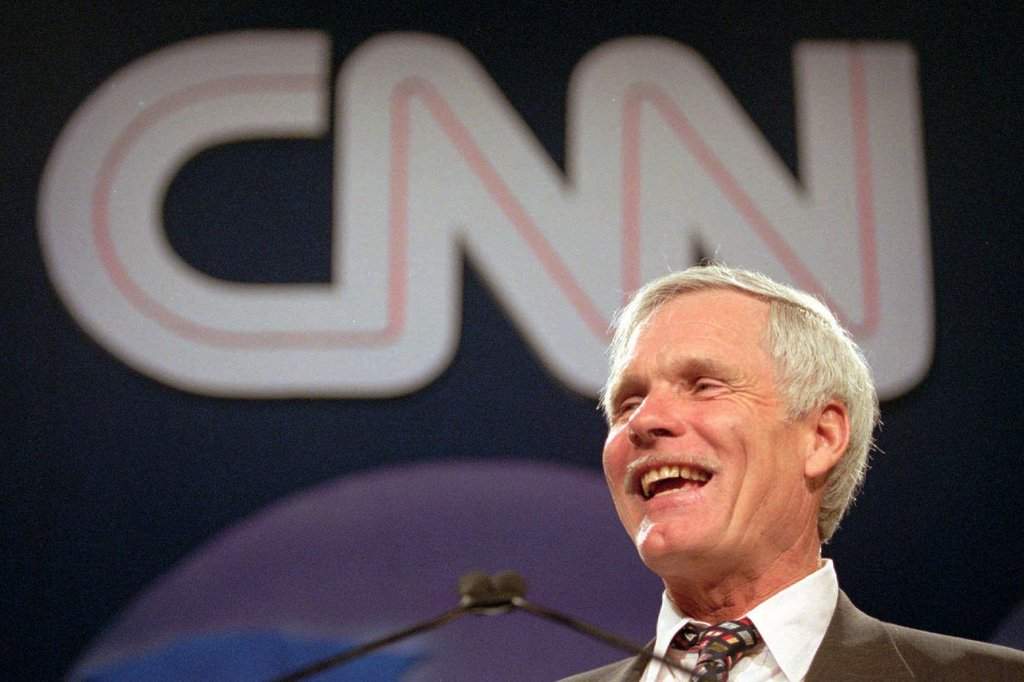
Ted Turner didn't just build a cable network. He broke the monopoly that three massive corporations held over the American mind for decades. With his passing at 87, we aren't just losing a billionaire or a sports fan. We're losing the last of the true media outlaws. Long before the internet made 24-hour news cycles a wearying reality, Turner bet his entire fortune on the "absurd" idea that people would watch news at 3:00 AM. They called it the Chicken Noodle Network. They laughed at him. Then, he changed the world.
The Man Who gambled Everything on a Satellite
In 1980, the television world was a closed loop. ABC, CBS, and NBC decided what was news and when you got to see it. If something happened at noon, you waited until 6:00 PM to hear about it. Turner saw a gap. He didn't just see a business opportunity; he saw a way to democratize information. He bought a struggling UHF station in Atlanta and turned it into WTCG, later WTBS.
He pioneered the "Superstation" model by beaming his signal to satellites. This was radical. It meant a local Georgia station could be seen in Oregon or Maine. It sounds basic now, but back then, it was like discovering fire. He used that leverage to fund CNN. He famously told his staff that the network wouldn't stop broadcasting until the end of the world. He even had a video prepared for the occasion. That's the kind of ego we're talking about. It wasn't just business. It was theater.
Why the CNN Model Still Matters Today
Critics thought CNN would fail because "nothing happens all day." They were wrong. Turner understood that the world is always happening somewhere. When the Challenger exploded in 1986, CNN was the only one live. When the Gulf War broke out in 1991, Bernard Shaw and Peter Arnett were reporting from a hotel in Baghdad while the big three networks were scrambling.
This changed the political process forever. It created the "CNN Effect." Suddenly, politicians had to react to global crises in real-time because the public was watching them unfold live. You couldn't hide behind a press release anymore. Turner’s vision forced transparency on a global scale. He believed that if people saw what was happening in other countries, they’d be less likely to want to go to war with them. It was a utopian dream fueled by cold, hard advertising dollars.
The Captain Outrageous Persona
You can't talk about Turner without talking about the mouth. They called him "Captain Outrageous" for a reason. He won the America's Cup. He owned the Atlanta Braves and the Atlanta Hawks. He once managed the Braves himself for one game just because he could. Major League Baseball had to create a rule to stop him.
He was loud, brash, and frequently offensive. But he was also one of the most significant philanthropists in history. In 1997, he pledged $1 billion to the United Nations. Think about that. At the time, that was a staggering portion of his net worth. He did it because he thought the UN was inefficiently funded and he wanted to shame other billionaires into giving more. It worked. He shifted the bar for what "giving back" looked like for the ultra-wealthy.
The Merger That Broke the Magic
The biggest mistake of Turner's career is well-documented. The 2000 merger between AOL and Time Warner was a disaster. It’s often cited in business schools as the worst merger in history. Turner, who had sold his company to Time Warner years earlier, saw his influence stripped away. He lost billions. More importantly, he lost his voice in the company he built from nothing.
It’s a cautionary tale for any founder. He trusted the corporate suits and they sidelined him. He spent his final years focusing on land conservation and his massive bison herds. He became the second-largest individual landowner in North America. Even in retirement, he did things at a scale most of us can't wrap our heads around. He traded the newsroom for the open range, but he never stopped trying to influence the planet’s survival.
Lessons from the Turner Playbook
If you're looking to disrupt an industry, Turner's life is the blueprint. He didn't ask for permission. He ignored the experts who told him his ideas were localized and small-time.
- Own the distribution. Turner didn't just make content; he owned the way it got to people. In the modern era, that means owning your platform and your audience data.
- Lean into the hate. When people mocked CNN, he used it as fuel. If everyone agrees with your "disruptive" idea, it's probably not actually disruptive.
- Diversify your passions. He wasn't just a news guy. He was an environmentalist, a sportsman, and a philanthropist. This gave him a perspective his competitors lacked.
Understanding the Legacy Beyond the Headlines
Turner’s later life was marked by his struggle with Lewy body dementia. He was open about it, which was a final act of public service in itself. It’s a brutal disease, yet he handled it with a level of dignity that contrasted with his wilder years.
He lived long enough to see the 24-hour news cycle he created turn into something he often didn't recognize. He frequently lamented the "tabloidization" of news. He wanted CNN to be a bridge between nations, not a shouting match between pundits. There’s a bitter irony in the fact that the platform he built to educate the world eventually contributed to the noise he grew to dislike.
We won't see another Ted Turner. The media world is too fragmented now. Algorithms have replaced the gut instincts of eccentric billionaires. We have more information than ever, but less of the singular, driving vision that Turner brought to the table. He was a man of contradictions—a capitalist who loved the UN, a media mogul who hated the direction of the media, and a billionaire who gave it all away.
Don't just remember him as the guy who founded CNN. Remember him as the guy who proved that one person with a satellite and a lot of nerve can actually change the way the entire human race communicates. If you want to honor that legacy, stop waiting for consensus. Start building the thing everyone says is impossible. Turner wouldn't have had it any other way.