The West is obsessed with a funeral that hasn't happened yet.
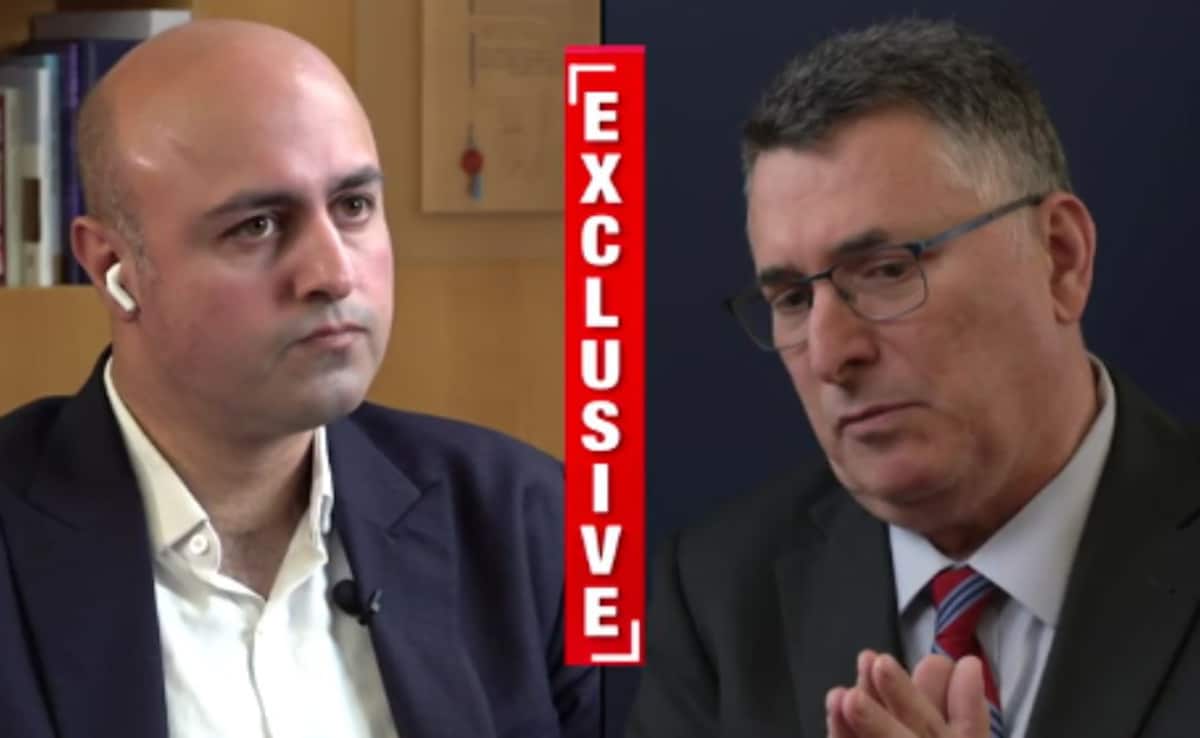
Every time a rumor drips out of Tehran about the health of Supreme Leader Ali Khamenei, the geopolitical "experts" dust off the same tired scripts. They talk about a "power vacuum." They speculate about moderate reformers suddenly seizing the wheel. They listen to Israeli ministers like Gideon Sa'ar and nod along to the idea that the Iranian people will somehow "pick" a democratic future the moment the old man breathes his last.
It is a fantasy. It’s a comforting, dangerous delusion that ignores the cold mechanics of how a deep-state theocracy actually functions.
The premise that Khamenei’s death creates a "choice" for the Iranian people is fundamentally flawed. In the real world, the succession won't be a revolution; it will be a corporate merger backed by the IRGC (Islamic Revolutionary Guard Corps). If you are waiting for a "Persian Spring" triggered by a vacancy in the Office of the Supreme Leader, you haven't been paying attention to the last forty years of institutional hardening.
The Assembly of Experts is a Smoke Screen
Conventional wisdom says the Assembly of Experts—a body of 88 clerics—will deliberate and choose the next leader. This is the first lie.
The Assembly is a rubber stamp. I have watched analysts treat this body like it's the College of Cardinals in the Vatican. It isn't. The Assembly doesn't lead; it follows the lead of the security apparatus. By the time the clerics meet to "vote," the decision will have been made in the backrooms of the Sarallah Headquarters.
The real power in Iran has shifted from the mosque to the barracks. Khamenei spent decades ensuring that the IRGC is not just a military, but a multi-billion dollar conglomerate that owns the country’s infrastructure, telecommunications, and oil. They aren't going to let a bunch of eighty-year-old theologians gamble with their balance sheet.
The "Moderate" Mirage
Whenever a name like Mojtaba Khamenei or a supposedly "pragmatic" cleric is floated, Western media immediately starts looking for signs of moderation. They want to know if the new guy will return to the JCPOA or stop the proxies in Lebanon and Yemen.
This is the wrong question.
In a system built on Velayat-e Faqih (Guardianship of the Jurist), the individual’s personality is secondary to the survival of the system. The IRGC requires a Supreme Leader who provides ideological cover for their regional expansion. They don't need a visionary; they need a CEO who won't fire the board of directors.
When Gideon Sa'ar suggests that the transition is an opportunity for the Iranian people to reclaim their destiny, he is playing to a domestic Israeli audience, not describing reality. The Iranian street is brave—we saw that with the "Woman, Life, Freedom" protests—but a state that is willing to blind its own youth with buckshot to stay in power does not hand over the keys because the man at the top died of natural causes.
Why "Stability" is the Greatest Threat
The most counter-intuitive truth about the post-Khamenei era is that it will likely be boring.
The world expects chaos. The markets brace for a civil war. Instead, we should expect a surgically precise transition. The regime knows that any sign of internal fracture is an invitation for external intervention. Therefore, they will project a facade of absolute unity.
Think of the Soviet transition from Brezhnev to Andropov to Chernenko. It was a geriatric parade of the status quo until the system finally rotted from within decades later. The Iranian "Deep State" has studied history. They saw what happened in the USSR when Gorbachev tried to open the windows too fast. They saw what happened to Gaddafi and Mubarak.
Their takeaway? Never blink. Never reform.
Dismantling the "People Also Ask" Delusions
Does the Iranian public have a say in the next Supreme Leader?
No. Zero. To even ask the question is to misunderstand the nature of an autocracy. You might as well ask if the passengers on a hijacked plane get to vote on the co-pilot.
Will Mojtaba Khamenei succeed his father?
Hereditary succession is a massive risk for a regime that overthrew a Monarchy. If the IRGC puts Mojtaba in power, they effectively admit the 1979 Revolution was a lie—trading one Pahlavi for another. It’s more likely they pick a weak, elder cleric who can be easily manipulated while the Guard runs the country as a military junta in all but name.
Could the regime collapse during the transition?
Collapse requires two things: a divided elite and a military that refuses to shoot. Currently, the Iranian elite are unified by their mutual fear of the gallows. They know if the ship sinks, they all drown. As for the military, the IRGC is a separate entity from the regular army (Artesh). Their entire existence is predicated on protecting the revolution, not the borders. They will shoot.
The Strategy of Managed Decline
The West keeps waiting for a "breakthrough" moment. We treat the Iranian government like a puzzle that can be solved with the right combination of sanctions and "support for the people."
The reality is far grimmer. Iran is entering a phase of managed decline. The economy is a shambles, the environment is collapsing, and the youth are alienated. But "failed states" can persist for decades if the security apparatus remains paid. Look at North Korea. Look at Venezuela.
The transition after Khamenei will not be a door opening to the West. It will be the slamming of a vault. The next leader will likely be more paranoid, more reliant on the "Pivot to the East" (Russia and China), and less interested in the approval of the United Nations.
Stop Hunting for Reformers
The biggest mistake a policymaker can make is betting on a "hidden moderate" within the Iranian clerical establishment. We did it with Rafsanjani. We did it with Khatami. We did it with Rouhani. Every single time, the Supreme Leader and the Guard clipped their wings the moment they moved toward actual systemic change.
There are no reformers left in the upper echelons of the Iranian power structure. They have been purged, exiled, or silenced. The people who remain are the survivors of a Darwinian process that rewards brutality and ideological purity.
If you want to understand the future of Iran, stop reading the bios of mid-ranking mullahs. Start looking at the promotion tracks of IRGC brigadier generals. They are the ones who will be holding the clipboards when the Assembly of Experts meets. They are the ones who decide if the next Supreme Leader is a lion or a lamb.
And they have no intention of choosing a lion.
The transition won't be a revolution. It will be a hostile takeover by the guys who already own 80% of the stock. Stop asking if the Iranian people will pick their leader. They weren't invited to the meeting.
Expect the same regime, just with a younger, more efficient set of teeth.