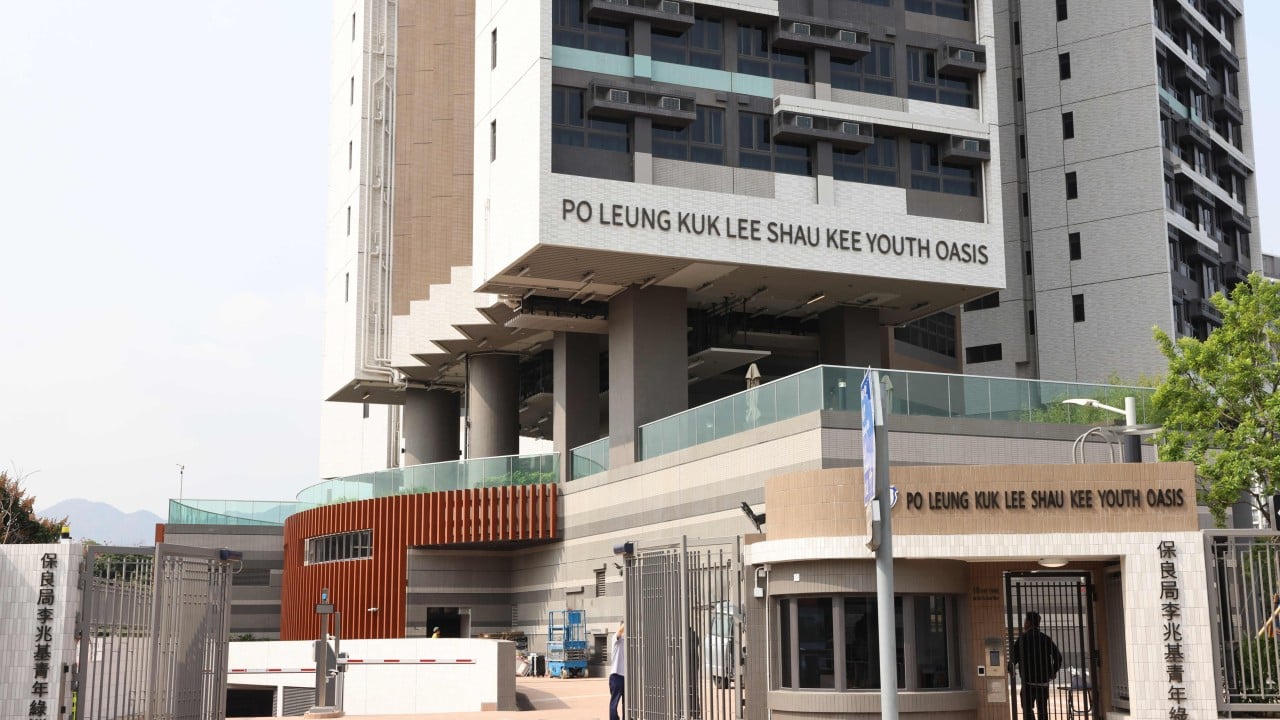
The failure of the Youth Hostel Scheme to meet its initial capacity targets—achieving only 44% of the projected 3,000 units—is not a mere administrative delay but a fundamental breakdown in the public-private partnership (PPP) model. When a government initiative relies on the voluntary conversion of commercial assets by private NGOs and hotel operators, the primary friction point is the misalignment between social policy objectives and the economic reality of asset management. The current deficit of 1,680 units reveals that the incentive structures provided were insufficient to offset the opportunity costs and operational risks inherent in the hospitality-to-housing transition.
The Triad of Underperformance
To understand why the conversion rate stalled at less than half of its objective, one must analyze the three structural pillars that govern the program's viability: the Incentive Gap, the Operational Friction, and the Asset Liquidity Constraint.
The Incentive Gap
The government's strategy assumed that a five-year subsidy would be enough to entice hotel owners to pivot their business models. However, the risk-adjusted return on investment (ROI) for a youth hostel often pales in comparison to the recovery of the tourism sector. A hotel operator evaluates the "Youth Hostel" option against the "Tourism Recovery" option. If the projected RevPAR (Revenue Per Available Room) from traditional tourists exceeds the government subsidy plus the capped rent from youth tenants, the rational economic actor will decline the scheme. The audit's findings suggest that the financial backstop provided by the state did not account for the rapid rebound in travel demand, leaving the subsidy uncompetitive.
Operational Friction
The transition from a transient guest model (hospitality) to a long-term residential model (tenancy) requires a complete overhaul of management protocols. Hotels are designed for high turnover and minimal tenant rights. Converting these into hostels involves:
- Legal Reclassification: Navigating building codes and land use zoning that were never intended for permanent or semi-permanent residence.
- Service Provision: NGOs are required to provide 200 hours of community service per year per tenant. This adds a layer of social engineering costs that typical property managers are not equipped to handle.
- Governance Overload: The audit highlights that monitoring these 200 hours creates an administrative bottleneck. Neither the government nor the NGOs have established a streamlined, automated system for tracking compliance, leading to manual reporting errors and high overhead.
Asset Liquidity Constraint
Property owners are wary of the five-year commitment. In a volatile real estate market, locking a building into a specific social use reduces its "saleability" or its potential for redevelopment. This "liquidity premium" was never priced into the government's offer. Consequently, only owners with underperforming assets or those with high debt-service coverage ratios (DSCR) felt compelled to join, severely limiting the pool of available units.
Quantifying the Audit Failures
The audit report identified specific lapses in the oversight mechanism that directly contributed to the 44% yield. These are not merely logistical errors; they are failures in the Feedback Loop required for any large-scale urban intervention.
Under-utilization of Capacity
Even within the limited number of hostels that were launched, occupancy rates have been inconsistent. This suggests a mismatch between the location of the units and the demand centers for youth employment. If a hostel is situated in a district with poor transit connectivity to major business hubs, the value proposition to a young professional diminishes, regardless of the subsidized rent. The "Cost of Commute" effectively eats the "Rent Subsidy," leading to a net-zero gain for the tenant.
The Community Service Paradox
The requirement for tenants to perform 200 hours of community service was intended to "foster social responsibility." In practice, it functions as a non-monetary tax on the tenant’s time. For a young professional already working 50 to 60 hours a week, an additional 4 hours per week of mandatory service is a significant burden. The audit indicates that the lack of diversity in service options and the rigidity of the tracking systems have led to tenant dissatisfaction. This creates a high churn rate, which in turn increases the NGO's cost of tenant acquisition and vetting.
The Cost Function of Regulatory Compliance
The complexity of the application process represents a hidden "Compliance Cost" that acts as a barrier to entry. For an NGO or a hotel owner to participate, they must engage in a multi-stage approval process involving the Home and Youth Affairs Bureau, the Buildings Department, and the Lands Department.
The total cost of participation ($C_p$) can be modeled as:
$$C_p = O_c + R_c + (T \times A_l)$$
Where:
- $O_c$ = Operational conversion costs (renovations, signage, security).
- $R_c$ = Regulatory compliance costs (legal fees, permit filings).
- $T$ = Time spent in the approval queue.
- $A_l$ = Asset loss (the revenue lost while the building is caught in administrative limbo).
When $C_p$ exceeds the present value of the government subsidy, the project is abandoned. The audit's data implies that for 56% of the target units, this equation remained net-negative.
Structural Deficiencies in Monitoring
The audit was particularly critical of the government's "hands-off" approach once the initial funding was disbursed. This lack of active management resulted in several key failures:
- Financial Transparency: There is no standardized reporting format for how NGOs utilize the operating subsidies. Without granular data on line-item expenditures, the government cannot determine if the funds are being used efficiently or if they are being absorbed by NGO administrative bloat.
- Performance Metrics: The primary KPI (Key Performance Indicator) has been "Number of Units Offered." This is a shallow metric. A more robust analysis would include "Tenant Career Progression," "Savings Rate of Residents," and "Net Social Value Generated." By focusing on the raw count of beds, the bureau ignored the quality and sustainability of the living environments.
- Default Contingencies: The scheme lacked a clear "exit strategy" for hostels that failed to meet occupancy targets. This created a situation where the government continued to subsidize underperforming assets instead of reallocating capital to more successful locations.
The Path to Capacity Realization
To bridge the 1,680-unit gap, the strategy must shift from a passive "call for interest" to an active "market-making" approach. The following adjustments are necessary to stabilize the program and achieve the 3,000-unit target.
Dynamic Subsidy Modeling
The fixed-subsidy model is obsolete in a fluctuating economy. The government should implement a floating subsidy linked to the Consumer Price Index (CPI) and local RevPAR averages. This ensures that the scheme remains attractive to property owners even when the tourism market is booming. If the private market’s earning potential rises, the subsidy must adjust to narrow the opportunity cost gap.
Streamlining the Service Mandate
The 200-hour service requirement needs to be digitized and diversified. A centralized platform should allow tenants to "trade" or "bank" hours across different social enterprises, rather than being tied to the specific NGO managing their hostel. Furthermore, the definition of "service" should be expanded to include professional mentoring or skill-sharing, which provides more value to the community than menial labor and is more aligned with the skill sets of the youth population.
Institutional Conversion of Commercial Surplus
Instead of relying solely on hotels, the bureau should target underutilized Grade B and C office spaces. With the rise of remote work, commercial vacancy rates in certain districts have remained high. Converting these spaces into "Co-living Youth Hubs" offers a larger floor plate than a standard hotel, allowing for better communal facilities and a lower per-unit conversion cost. This would require a "Fast-Track Zoning" ordinance specifically for the Youth Hostel Scheme to bypass the multi-year delays currently seen in land-use modification.
Data-Driven Site Selection
Future hostels must be selected based on a "Proximity to Opportunity" index. This involves mapping potential sites against data from transportation departments and labor bureaus. A hostel that reduces a tenant's commute by 30 minutes has a higher "Internal Rate of Return" for the city's economy than a cheaper unit in a remote location. The government must prioritize sites that function as transit-oriented developments (TOD).
The current 44% completion rate is a diagnostic signal of a mispriced and over-regulated product. Achieving the remaining 56% requires treating the youth hostel not as a charity project, but as a sophisticated urban infrastructure asset that requires competitive returns, streamlined regulation, and high-resolution performance tracking. The next phase of the rollout must focus on reducing the $C_p$ (Compliance Cost) and increasing the flexibility of the service model to match the lived reality of the target demographic. Failure to recalibrate these variables will result in a permanent stagnation of the housing supply for the city's critical workforce.