The current standoff between the United States and Iran represents a classic game-theory bottleneck where both actors are utilizing "threats that leave something to chance" to influence the other's internal cost-benefit analysis. The rhetoric surrounding "bombs going off" and the deployment of "new cards" functions as a signaling mechanism designed to mask a fundamental reality: both parties are operating under a high-stakes attrition model where the primary currency is not just military kinetic energy, but the credibility of their respective deterrents. To understand the trajectory of this conflict, one must move beyond the inflammatory headlines and examine the structural variables governing the escalation ladder.
The Calculus of Credibility and the Cost of Inaction
The core of the US-Iran friction point lies in the asymmetric valuation of regional stability versus nuclear non-proliferation. For Washington, the objective is the permanent denial of a nuclear breakout capability; for Tehran, the nuclear program serves as a critical hedging asset against external regime change and a lever for sanctions relief.
This creates a Divergent Objective Matrix:
- The US Position: Employs "Maximum Pressure 2.0," a strategy relying on economic strangulation to force a diplomatic capitulation. The risk here is the "Sunk Cost Trap"—if sanctions fail to yield a new deal, the only remaining escalatory steps are kinetic, which carry an exponentially higher political and economic price tag.
- The Iranian Position: Utilizes "Strategic Defiance," incremental violations of the Joint Comprehensive Plan of Action (JCPOA) to reduce the "Breakout Time" (the duration required to produce enough weapons-grade uranium for one nuclear device). By decreasing this window, Tehran increases the urgency for the US to negotiate, effectively selling "stability" back to the West in exchange for economic liquidity.
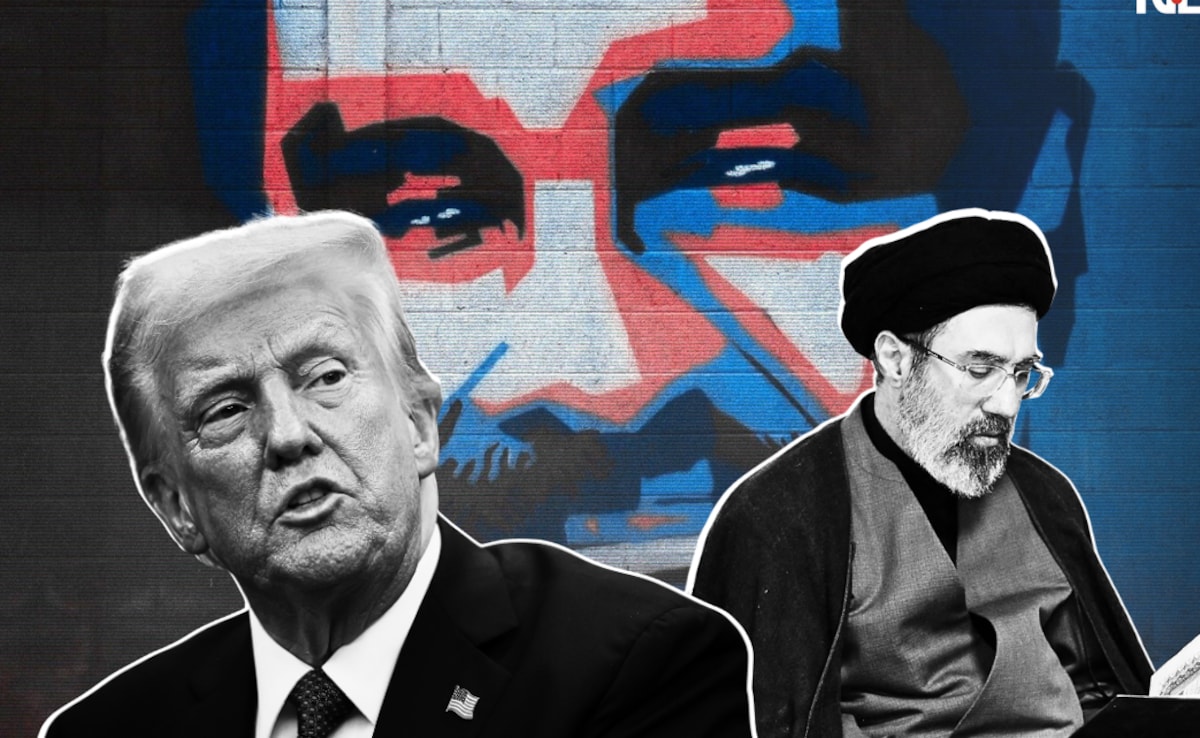
The mention of "bombs going off" by the Trump administration serves as a verbal commitment to a military threshold. In strategic studies, a commitment is only effective if the cost of reneging is perceived as higher than the cost of execution. By making such public declarations, the administration attempts to lock itself into a course of action, signaling to Tehran that the "Inaction" option has been removed from the US decision tree.
The Mechanics of Iranian Counter-Signaling
Iran’s response—claiming to hold "new cards"—indicates a shift from passive resistance to active leverage generation. These "cards" are not merely rhetorical; they represent specific technical and geopolitical vectors intended to complicate US military planning and economic interests.
Technical Escalation Vectors
Tehran’s technical leverage is concentrated in the nuclear fuel cycle. By increasing enrichment levels (e.g., to 60% or 90%) and deploying advanced IR-6 centrifuges, Iran achieves two things:
- Knowledge Accumulation: Unlike physical infrastructure, technical expertise gained during enrichment cannot be bombed away.
- Margin Reduction: High-level enrichment significantly reduces the amount of work required to reach weapons-grade material, as the initial stages of enrichment are the most energy and time-intensive.
Geopolitical Friction Points
The "new cards" also involve the theater of proxy conflict and maritime security. The Strait of Hormuz remains the ultimate economic choke point. Any disruption to the flow of approximately 20% of the world's oil consumption triggers an immediate global price shock. Iran utilizes this vulnerability to globalize the cost of US sanctions. If Iran cannot export oil, its strategic logic dictates that it will ensure the cost of oil exports becomes prohibitive for everyone else.
The Escalation Ladder and the Risk of Miscalculation
Strategic friction rarely results in a linear progression toward war; instead, it moves through a series of discrete steps known as an escalation ladder. Each rung represents an increase in intensity or a widening of the conflict's scope.
The Threshold of Kinetic Engagement
The transition from verbal threats to kinetic action usually occurs when one party perceives that the status quo is more damaging than the risks of open conflict. This is the Break-Even Point of Aggression. For the US, this point is reached when Iranian breakout time approaches a "red line" (often cited as two to four weeks). For Iran, this point is reached when internal socioeconomic stability is threatened to the point of regime instability.
Structural Bottlenecks in Diplomacy
The primary obstacle to a "Deal" is the lack of a verification mechanism that satisfies US requirements for "anytime, anywhere" inspections while respecting Iranian sovereignty concerns. This creates a Verification Gap.
- The US View: Any deal without intrusive inspections is a temporary freeze that allows Iran to retain its clandestine infrastructure.
- The Iranian View: Intrusive inspections are a Trojan horse for intelligence gathering and military targeting.
Economic Warfare as a Kinetic Substitute
The current US strategy treats financial systems as a battlefield. By weaponizing the SWIFT banking system and secondary sanctions, the US exerts power that mimics the effects of a naval blockade without the need for physical ships. However, this strategy faces the Law of Diminishing Returns. As Iran integrates more deeply into non-Western financial architectures (such as the BRICS+ framework or barter-based trade with China and Russia), the efficacy of US dollar-denominated sanctions declines.
This creates a paradoxical outcome: the more the US uses its financial dominance to punish Iran, the more it incentivizes the development of a multipolar financial system that is immune to US pressure. This is a strategic trade-off where short-term tactical gains in the Middle East may lead to long-term structural erosion of US global financial hegemony.
Proxy Dynamics and the Asymmetry of Power
The conflict is not contained within the borders of the two primary actors. It is distributed across a network of non-state actors in Lebanon, Yemen, Iraq, and Syria. This Distributed Warfare Model allows Iran to project power far beyond its borders at a fraction of the cost of a conventional military.
- Cost Asymmetry: A single low-cost drone (approximately $20,000) can require a million-dollar interceptor missile to neutralize. Over a prolonged engagement, the defender faces economic exhaustion.
- Plausible Deniability: By operating through proxies, Tehran can calibrate the level of pressure without triggering a direct state-on-state retaliatory strike from the US or its allies.
The US response has been to target the "Head of the Snake" (direct Iranian assets) versus the "Tentacles" (proxies). This shifts the risk profile for Iran, as it removes the shield of deniability that has protected Iranian territory for decades.
The Internal Political Variables
The viability of any "Deal" is subject to the internal political constraints of both nations. In the US, the 2024 and 2026 election cycles create a volatile environment where any perceived "weakness" on Iran is a political liability. In Iran, the succession process for the Supreme Leader and the influence of the Islamic Revolutionary Guard Corps (IRGC) create a hardline tilt that views compromise as a sign of existential vulnerability.
This leads to a Credibility Paradox: To reach a deal, both sides must appear willing to walk away from it. However, appearing too willing to walk away can lead to accidental escalation where neither side can back down without losing domestic legitimacy.
Strategic Forecasting and the Probability of Resolution
The probability of a comprehensive "Grand Bargain" remains low due to the fundamental lack of trust and the irreconcilable nature of the core objectives. Instead, the most likely path is a "Limited De-escalation" or a "Freeze-for-Freeze" agreement.
- Scenario A: Controlled Escalation: Both sides continue to trade blows in the gray zone (cyberattacks, proxy strikes, and sanctions) while maintaining a back-channel to ensure that these actions do not trigger an all-out war.
- Scenario B: The Breakout Trigger: Iran decides that the cost of sanctions is no longer bearable and moves to weaponize its nuclear program as a final deterrent. This would force a US/Israeli kinetic response, leading to a regional conflict with global energy implications.
- Scenario C: Tactical Reset: A temporary agreement is reached that provides Iran with limited sanctions relief in exchange for a cap on enrichment levels and increased monitoring. This is a "kick the can" strategy that delays the confrontation but does not resolve the underlying systemic friction.
The current rhetoric is a tool of psychological operations intended to influence the internal deliberations of the adversary. The US "bombs" threat is a move to re-establish a credible military threat, while Iran’s "new cards" are a signal that the cost of an attack will be shared globally.
The strategic play for any Western observer or policymaker is to recognize that the nuclear issue is a symptom, not the cause, of the regional power struggle. Solving for the nuclear variable without addressing the regional security architecture is a temporary fix. The endgame depends on whether the US can offer a security guarantee that Iran finds more credible than a nuclear deterrent, or whether Iran can demonstrate that the cost of a military intervention is high enough to make the US accept a nuclear-capable Tehran.
The immediate priority for neutral actors is the establishment of a "De-confliction Hotline" to prevent tactical errors from turning into strategic disasters. Without a mechanism for immediate communication during a crisis, the "bombs" mentioned in political speeches may indeed go off, not by design, but by the failure of the signaling systems both sides are currently overtaxing.