The United States and Iran are currently locked in a high-stakes game of maritime chicken that threatens to derail a fragile ceasefire and send global energy markets into a tailspin. On April 11, 2026, U.S. Central Command (CENTCOM) announced that two guided-missile destroyers, the USS Frank E. Peterson and the USS Michael Murphy, successfully transited the Strait of Hormuz. Their mission is clear: "setting conditions" for a massive mine-clearing operation to reopen the world’s most vital oil chokepoint. Iran’s response was swift, total, and predictably defiant. Tehran denies the ships ever entered the Strait, claiming instead that their own forces maintain "complete control" and that any American vessel attempting such a feat would be forced back or destroyed.
This isn't just a dispute over coordinates on a map. It is a battle for the narrative of who owns the world's most critical 21 miles of water. For the global economy, the stakes are $100-a-barrel oil and the potential for a renewed "Tanker War" that could last for years.
The Invisible Wall Beneath the Waves
While the surface of the Strait remains a visual theater for naval posturing, the real conflict is happening in the dark, pressurized depths of the Persian Gulf. Since the war began on February 28, 2026, the Islamic Revolutionary Guard Corps (IRGC) has reportedly seeded the channel with a sophisticated array of naval mines. These aren't just the rusted "spiked balls" of World War II movies. We are talking about modern acoustic, magnetic, and pressure-sensitive devices that can sit on the seabed for months, waiting for the specific signature of a supertanker.
The U.S. strategy involves more than just firepower; it is a test of a new, unproven generation of autonomous tech. CENTCOM is deploying underwater drones, including the Knifefish UUV, to hunt these hidden killers. The move toward unmanned systems is a calculated risk. By keeping human sailors at a distance, the U.S. hopes to minimize casualties that could spark a full-scale return to kinetic warfare. However, these systems are relatively new to the high-threat environment of the Persian Gulf, where high salinity and heavy clutter can baffle even the most advanced sonar.
The Geography of Denial
Iran’s denial of the U.S. transit serves a specific domestic and regional purpose. For Tehran, admitting that American destroyers are operating at will in the Strait would be a catastrophic loss of face after weeks of claiming the waterway is "closed." By insisting the U.S. claim is a fabrication, the IRGC maintains its aura of invincibility and continues to justify the "tolls" and restrictions it has placed on merchant shipping.
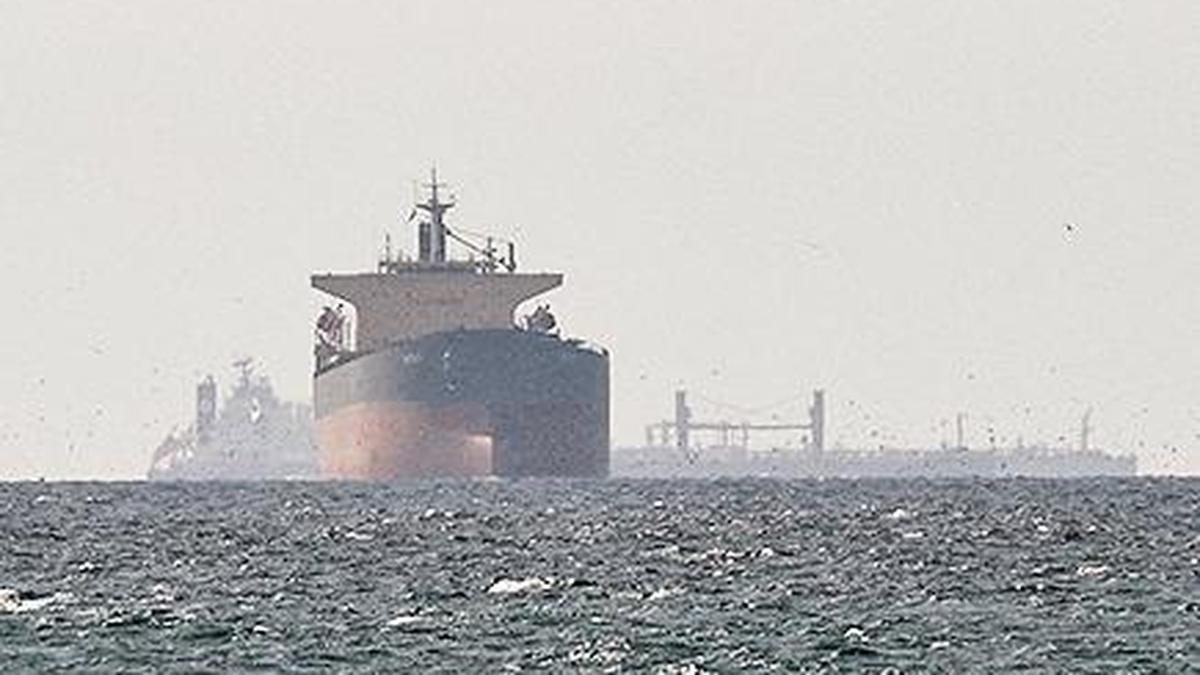
This maritime blockade has been brutally effective. Since late February, tanker traffic has plummeted by nearly 70%. More than 150 ships are currently anchored outside the Strait, their captains refusing to enter a zone where 21 merchant vessels have already been attacked. Insurance premiums have skyrocketed, turning a routine voyage into a gamble that most commercial firms simply cannot afford to take.
The Ceasefire that Never Was
The "shaky two-week ceasefire" brokered in Pakistan just days ago was supposed to provide a window for de-escalation. Instead, it has become the backdrop for this latest confrontation. The U.S. views mine clearing as a humanitarian and economic necessity—a "freedom of navigation" operation that falls outside the bounds of combat. Iran, conversely, views the entry of American warships as a direct violation of the truce.
- The U.S. Position: Mine clearance is a non-combative act required to restore international trade.
- The Iranian Position: Any American military presence in the Strait is an act of aggression and a breach of sovereignty.
This fundamental disagreement is why the talks in Islamabad reached a stalemate on April 12. Vice President JD Vance’s blunt assessment—that the lack of an agreement is "bad news for Iran"—suggests that Washington is losing patience with diplomacy. The U.S. is no longer asking for permission to enter the Strait; it is forcing the issue.
The Hardware of the Hunt
The deployment of the USS Frank E. Peterson and USS Michael Murphy signals a shift in naval doctrine. These are Arleigh Burke-class destroyers, designed for high-end surface and air defense, not specifically for mine hunting. Their presence is a protective umbrella for the smaller, specialized assets like the Littoral Combat Ships (LCS) and the upcoming swarm of underwater drones.
The U.S. Navy is essentially trying to build a "safe lane" through a minefield while under the constant shadow of Iranian shore-based anti-ship missiles. If a drone or a mine-sweeper is attacked, the destroyers are there to provide immediate, overwhelming retaliation. It is a "work and defend" model that has not been tested at this scale since the 1980s.
The Cost of Uncertainty
Every day the Strait remains contested, the global supply chain fractures further. The IMO estimates that 20,000 seafarers are currently stranded aboard vessels in the Persian Gulf, unable to leave due to the threat of mines or missile strikes. These are the forgotten casualties of the standoff—thousands of workers caught in a geopolitical vice.
The IRGC's tactics of "satellite spoofing" and GNSS jamming add another layer of danger. Even if the mines are cleared, a ship that doesn't know its exact location in these narrow, crowded waters is a hazard to itself and others. The Strait at its narrowest point is only 21 nautical miles wide. There is zero margin for error.
The U.S. claim of transit is an attempt to break the psychological grip Iran has on the shipping industry. If Washington can prove that its ships can operate in the Strait and successfully clear a path, it may encourage the return of commercial traffic. But if an American ship hits a mine or is engaged by Iranian fast-attack boats, the ceasefire will be nothing more than a historical footnote to a much larger conflagration.
The real test will come in the next 48 hours. As the first underwater drones are lowered into the water, the world will find out if the U.S. "safe passage" is a reality or a dangerous gamble. If the mines are as numerous as reported, "clearing out" the Strait will not be a matter of days, but of months. This is a slow-motion crisis that has only just begun.