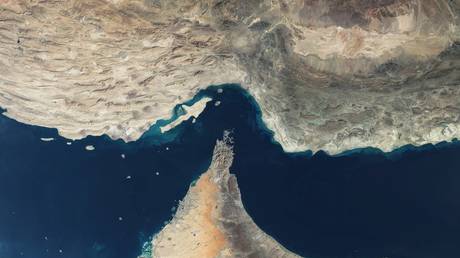
The declaration by Iranian authorities that the Strait of Hormuz remains "completely open" to commercial traffic is an exercise in political signaling that ignores the underlying mechanics of maritime risk assessment. In the world of global logistics, "openness" is not a binary state determined by naval presence; it is a variable function of insurance premiums, hull risk ratings, and the psychological threshold of private shipowners. While the physical waterway remains passable, the operational reality for a Suezmax tanker or a 20,000 TEU container ship is governed by a tripartite framework of risk: kinetic threat, legal liability, and the escalating cost of indemnity.
The Mechanics of a False Equilibrium
Tehran’s insistence on the safety of the Strait attempts to decouple the physical security of the channel from the geopolitical friction that defines the region. For a global shipping firm, the decision to transit Hormuz depends on the Cost of Passage Formula:
$$C_{passage} = O_{cost} + I_{war} + R_{premium}$$
Where:
- $O_{cost}$ represents standard operating costs (fuel, crew, maintenance).
- $I_{war}$ represents the War Risk Additional Premium (WRAP) dictated by the Joint War Committee (JWC) in London.
- $R_{premium}$ represents the reputation and secondary sanction risk associated with the cargo or the flag state.
When Iran issues a statement of "openness," it seeks to suppress the $I_{war}$ variable. However, insurance underwriters do not price risk based on official government communiqués. They price risk based on historical seizure data, the presence of IRGC (Islamic Revolutionary Guard Corps) fast-attack craft, and the frequency of "limpet mine" incidents. The gap between Iranian rhetoric and Lloyd’s of London risk ratings creates a "shadow friction" that slows down trade even when no shots are fired.
The Three Pillars of Hormuz Transit Stability
To analyze whether the Strait is truly functional, one must evaluate three distinct pillars of stability that allow for the flow of 21 million barrels of oil per day.
1. The Kinetic Security Guarantee
Physical passage requires the absence of active blockades. Iran’s military doctrine emphasizes "asymmetric denial"—the ability to make the Strait unusable through mines, coastal defense cruise missiles (CDCMs), and submersible drones. The current declaration of openness suggests a strategic pivot away from active denial toward passive monitoring. This shift is often a response to domestic economic pressure; Iran requires the functional status of the Strait for its own sanctioned or "dark fleet" exports to reach Asian markets. A closed Strait is a self-inflicted wound for the Iranian budget.
2. The Insurance Underwriting Threshold
The Joint War Committee currently lists the Persian Gulf and the Gulf of Oman as "Listed Areas." This means any vessel entering the region must notify its underwriters and pay an additional premium. These premiums can spike from 0.01% to 0.5% of the ship's value during periods of high tension. For a $100 million VLCC (Very Large Crude Carrier), a single transit can incur a $500,000 surcharge. Iran’s claims of safety are an attempt to influence these financial markets, yet the JWC maintains its ratings based on "intent and capability." As long as the capability to seize vessels—like the Stena Impero or the Advantage Sweet—exists, the financial barrier to entry remains high.
3. The Flag State and Legal Jurisdiction Framework
The Strait of Hormuz operates under the regime of "transit passage" as defined by the United Nations Convention on the Law of the Sea (UNCLOS). Iran, while a signatory, has not ratified UNCLOS and occasionally asserts that the "innocent passage" regime applies instead. This legal nuance is critical. Under "innocent passage," a coastal state can temporarily suspend transit for security reasons. Under "transit passage," they cannot. Tehran’s declaration of an "open" Strait is a de facto admission of the transit passage norm, yet it reserves the right to exercise "police actions" against specific vessels under the guise of environmental or maritime law violations.
Deconstructing the Asymmetric Threat Matrix
The assertion that the Strait is open fails to account for the Asymmetric Threat Matrix. This matrix explains why a statistically small number of incidents can cause a disproportionate collapse in maritime confidence.
- The Seizure Latency: Iran maintains the ability to seize a vessel within 60 minutes of an order being issued. This latency creates a "perpetual threat environment" that no amount of verbal assurance can mitigate.
- The Mine Proliferation Variable: The threat is not just the IRGC Navy, but the potential for "unattributed" maritime mines. Even the rumor of drifting mines in the shipping lanes necessitates a complete halt for de-mining operations, effectively closing the Strait without a formal blockade.
- The Drone-Electronic Warfare Nexus: Modern interference with GPS and AIS (Automatic Identification System) signals in the Strait creates navigation hazards. Reports of "spoofing" near Abu Musa island indicate that the Strait is "open" only to those who can navigate without reliable satellite positioning.
The Strategic Bottleneck of Global Energy Elasticity
The Strait of Hormuz accounts for approximately 20% of the world's liquid petroleum consumption. The elasticity of the global energy market is tightly coupled to the throughput of this 21-mile-wide chasm. When Iran claims the waterway is open, it is speaking to the energy markets of China and India, its primary customers.
The second limitation is the lack of viable alternatives. The East-West Pipeline in Saudi Arabia and the Habshan-Fujairah pipeline in the UAE have a combined capacity of roughly 6.5 million barrels per day. This leaves over 14 million barrels per day with no route to market other than the Strait. Consequently, the "openness" of the Strait is a prerequisite for global price stability. A 1% decrease in throughput in Hormuz does not lead to a 1% increase in price; due to the inelasticity of short-term oil demand, it can lead to a 20-30% price spike.
The Logic of Preemptive Seizure and Legal Pretext
Iran’s "open" policy is frequently interrupted by "legal" seizures. This creates a bifurcation in maritime law:
- Commercial Normality: Ships owned by neutral parties or nations with favorable diplomatic ties to Tehran experience the "open" Strait.
- State-Sponsored Retaliation: Ships associated with the United States, the United Kingdom, or nations involved in the seizure of Iranian assets face a different reality.
This selective enforcement means the Strait is not "open" in a universal sense; it is "conditionally accessible." The IRGC utilizes a "Tit-for-Tat" framework where maritime security is used as a lever for the release of frozen funds or seized tankers elsewhere in the world. This commodification of transit rights renders the term "completely open" technically inaccurate.
Infrastructure Vulnerability and the Maintenance of Order
The physical infrastructure of the Strait—the Traffic Separation Schemes (TSS)—is maintained by the Middle East Navigation Aids Service (MENAS). While Iran provides security within its territorial waters, the actual management of the flow of traffic relies on international cooperation.
If Iran were to attempt a total closure, the operational cost would include the destruction of its own port infrastructure at Bandar Abbas and the cessation of its petrochemical industry. Therefore, the "openness" declaration is a reflection of Mutual Assured Economic Destruction. The Strait remains open because the cost of closing it exceeds the strategic benefit of the leverage gained.
The Strategic Reconfiguration of Maritime Risk
To navigate this environment, shipping conglomerates must move beyond government press releases and adopt a Resilience-Based Logistics model. This involves:
- Flag of Convenience Diversification: Avoiding flags that are historically targeted by regional actors.
- Hardware Hardening: Implementing non-lethal deterrents and enhanced AIS encryption to counter electronic warfare.
- Private Security Integration: Utilizing Embarked Security Teams (ESTs) to raise the "cost of seizure" for the IRGC, moving the interaction from a simple boarding to a kinetic confrontation that Iran typically seeks to avoid for PR reasons.
The current geopolitical climate suggests that the Strait will remain in a state of "contested functionality." Iran will continue to declare the waterway open to maintain its image as a responsible maritime power, while simultaneously utilizing the threat of closure to exert pressure on Western stakeholders. The Strait of Hormuz is not a binary switch that is either on or off; it is a rheostat of tension, modulated by the immediate needs of the Iranian state and the tolerance of the global insurance market.
The strategic play for energy importers and shipping firms is to ignore the "open" or "closed" rhetoric and focus instead on the Volatility Delta—the rate at which insurance premiums and regional naval deployments are changing. Until the fundamental capability for asymmetric seizure is dismantled, the Strait remains a high-risk corridor, regardless of the official stance from Tehran. Transiting Hormuz is no longer a matter of navigation; it is a high-stakes calculation of geopolitical probability.