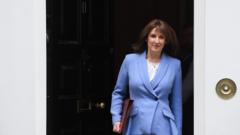
The numbers coming out of the Treasury are usually a snooze fest until you realize they're talking about your grocery bill and your mortgage. When the Chancellor stands up for a Spring Statement, it's easy to get lost in the talk of GDP percentages and fiscal headroom. Forget the jargon for a second. What matters is the cold, hard reality of how much cash is left in your pocket after the taxman and the energy companies take their cut.
Economic forecasts aren't just guesses by people in suits. They're the roadmap for how expensive your life is about to get. If the Office for Budget Responsibility (OBR) says inflation is stickier than expected, you can bet your interest rates won't be dropping anytime soon. We're looking at a landscape where every decimal point in a forecast translates to real-world pressure on your household budget.
The truth about your take-home pay
Most people look at a tax cut and celebrate. It's a natural reaction. If the National Insurance rate drops, you see more money in your Friday paycheck. But there's a catch that most politicians hope you won't notice. It's called fiscal drag.
While the headline tax rates might go down, the thresholds where you start paying those taxes often stay frozen. As inflation pushes wages up, you're nudged into higher tax brackets. You feel richer because your salary grew, but the taxman is actually taking a bigger bite than before. It’s a stealthy way to raise money without "raising taxes."
Look at the data from the Institute for Fiscal Studies (IFS). They've been shouting about this for years. For many middle-income earners, the benefit of a 2p cut to National Insurance is almost entirely wiped out by these frozen thresholds. You aren't necessarily getting ahead; you're just running faster to stay in the same place.
Inflation is the silent thief of your savings
The Spring Statement forecasts usually give a timeline for when inflation will hit that "magic" 2% target. Don't hold your breath. Even if the rate of price increases slows down, it doesn't mean prices are actually dropping. It just means they're going up more slowly.
Your savings account is the front line of this battle. If you've got cash sitting in a standard high-street bank account earning 1% or 2% while inflation is at 3% or 4%, you're losing money. It's that simple. Your purchasing power is evaporating.
I’ve seen people keep £20,000 in a "rainy day" fund for a decade. If inflation averages 3% over that time, that £20,000 only buys what £14,800 would have bought when they started. You've lost a quarter of your wealth without ever spending a penny. When the forecasts suggest inflation will stay higher for longer, it's a direct signal to move your cash into assets that can actually outpace the rising cost of living.
Mortgages and the interest rate trap
The Bank of England watches these forecasts like a hawk. If the Spring Statement includes heavy government spending, it can trigger inflation, which forces the Bank to keep interest rates high. This is bad news if you’re looking to remortgage.
The "base rate" isn't just a number on the news. It determines whether your monthly housing cost is £800 or £1,300. We’ve moved out of the era of cheap money. The forecasts now suggest that "higher for longer" is the new reality. If you’re sitting on a fixed-rate deal that expires in the next 12 months, you need to stress-test your own budget now.
Don't wait for the bank to call you. Use a mortgage calculator and plug in a rate that's 2% higher than what you're paying now. If that number makes you sweat, it's time to cut the fat from your spending today.
Energy costs and the global squeeze
Energy prices are the wildcard in every fiscal forecast. The government likes to take credit when prices fall, but the reality is dictated by global markets and geopolitical tension. The Spring Statement often adjusts the "Energy Price Guarantee" or similar support schemes.
But support is a double-edged sword. Every billion the government spends on subsidizing your electric bill is a billion they have to recoup through taxes later or by cutting services you probably use. We're seeing a shift toward targeted support rather than blanket help. This means if you're in the "squeezed middle," you might find yourself paying full freight for heating while your taxes stay high to fund support for others.
Check your insulation. Seriously. It’s the least sexy financial advice ever, but it’s the only way to permanently lower your exposure to volatile energy forecasts.
Why the growth forecast matters to your job security
When the OBR slashes growth forecasts, it sounds academic. It’s not. Low growth means businesses stop hiring. It means bonuses get cancelled. It means the "cost of living" raises you were hoping for during your annual review probably won't happen.
A stagnant economy creates a "last in, first out" mentality in many corporate offices. If the forecast for the next two years is sub-1% growth, your career strategy should shift from "aggressive expansion" to "becoming indispensable." This isn't the time to be the person who does the bare minimum. You want to be the one the company can't afford to lose when the budget cuts inevitably arrive.
The pension problem nobody is talking about
The Triple Lock is a political football that gets tossed around every Spring Statement. It guarantees that the state pension rises by whichever is highest: inflation, average earnings, or 2.5%.
While this is great for current retirees, the forecasts show it's becoming incredibly expensive to maintain. For younger workers, the "forecast" you should care about is the one regarding the state pension age. It's creeping up. If you're in your 30s or 40s, counting on the state to fund your retirement is a massive gamble.
The most important thing you can do after a Spring Statement is check your private pension contributions. If the government is forecasting a tighter fiscal environment, they'll eventually look for ways to trim the pension bill. Your self-reliance is your only real safety net.
What you should actually do with this information
Stop listening to the political spin. The Chancellor will tell you it's a budget for growth; the Opposition will tell you it's a disaster. The truth is always in the middle and usually tucked away in the OBR's supplementary documents.
First, check your tax code. Millions of people are on the wrong one, especially after changes announced in these statements. A quick call to HMRC could result in a refund you didn't know you were owed.
Second, look at your ISA allowances. If the government isn't going to move tax thresholds, you need to use every tax-free wrapper available to you. Stocks and Shares ISAs aren't just for "investors." They're for anyone who doesn't want the government taking a slice of their savings' growth.
Finally, ignore the "vibes" and look at the debt-to-GDP ratio. If the government is struggling to pay its own bills, expect more "stealth" taxes in the future. Preparation is better than reaction. Start by shifting at least 10% of your discretionary income into an emergency fund that actually pays a competitive interest rate. If your bank is still paying you 0.5%, fire them today. There are plenty of challenger banks and online accounts offering 4% or more. That's an immediate "pay rise" you can give yourself without waiting for a politician to help you.
Audit your recurring subscriptions and cull anything you haven't used in thirty days. Move your savings to a high-yield account immediately. Increase your pension contribution by just 1% today. These small, aggressive moves are the only way to protect your wealth against the forecasts that usually mean you're getting squeezed.