The cellars of Evin Prison do not care about the geopolitical shifts of the outside world. To a man sitting in the dark, the roar of a distant conflict in West Asia is nothing more than a vibration in the floorboards. But for the Iranian state, that vibration is a rhythm to march to. While the eyes of the international community were fixed on the smoke rising over Gaza and the shifting borders of a regional war, a different kind of clearing was taking place within Iran’s own borders.
Statistics are often used to hide the faces of the dead. We hear "twenty-one executed" and our brains categorize it as a data point, a rounding error in the ledger of a violent century. But statistics are just people with the blood washed off.
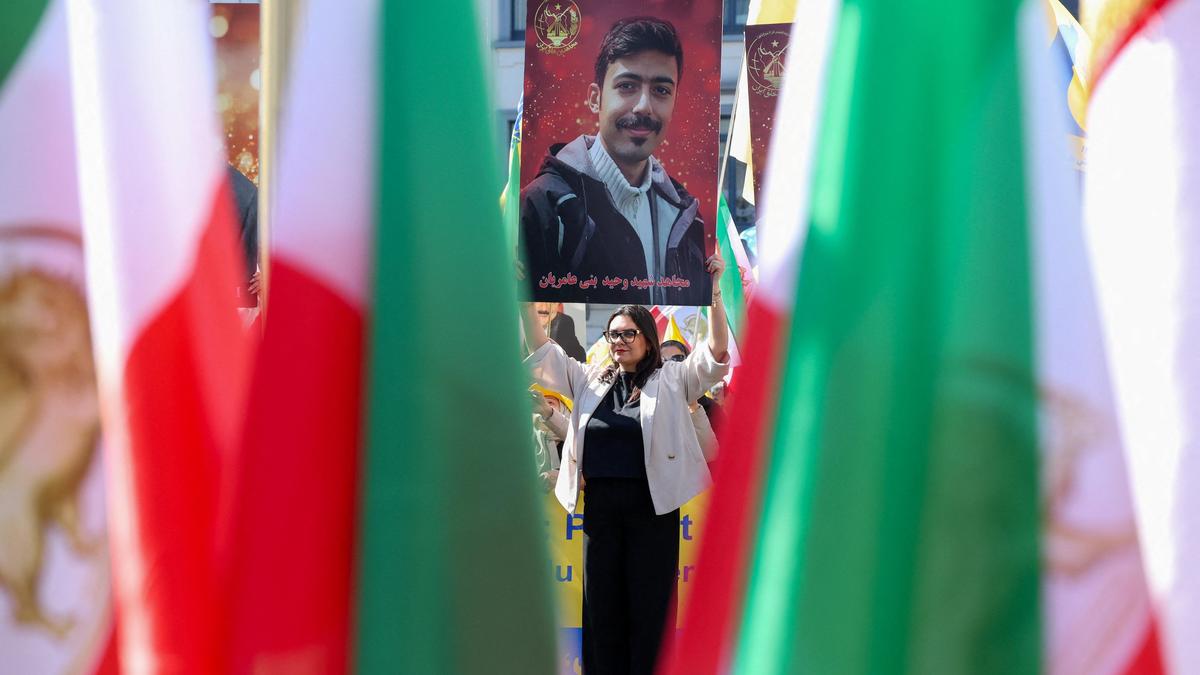
Since the regional conflict erupted, the United Nations reports that the Iranian judiciary has sent at least 21 people to the gallows. At the same time, security forces have swept up roughly 4,000 individuals in a domestic dragnet that spans from the tech hubs of Tehran to the dusty outskirts of Sistan and Baluchestan. These aren't just numbers. They are the sudden, permanent silence of a father who used to argue about football. They are the empty chair at a wedding for a woman who thought her social media post was a whisper, not a death warrant.
Consider a hypothetical young man named Arash. He is a composite of the thousands currently sitting in pre-trial detention. Arash isn't a soldier. He’s a graphic designer who happens to have a memory longer than the state finds convenient. When the war began, Arash noticed that the news cycles shifted. The protests that had defined the previous year—the cries of "Woman, Life, Freedom"—were suddenly buried under headlines about missiles and maritime blockades.
The state noticed, too.
War provides a unique kind of shade. It creates a "security atmosphere" where any internal dissent can be rebranded as treason. In this environment, the legal process doesn't just accelerate; it liquefies. The UN’s findings suggest that many of these 21 executions were carried out following trials that lasted minutes rather than days. No defense lawyers. No evidence presented to the public. Just a judge, a verdict, and a rope.
The mechanism of this crackdown is precise. Of the 4,000 arrested, a staggering number are members of ethnic and religious minorities. These are the people who live on the geographic and social fringes of the Islamic Republic—the Kurds, the Baluchis, the Sunnis. To the central government, these groups represent a "fifth column," a potential fracture point that must be cauterized before a regional war can turn into a civil one.
It is a grim alchemy. The government takes the anxiety of a looming external war and transmutes it into a domestic mandate for absolute control.
The world often views Iran through the lens of its nuclear ambitions or its proxy networks. We talk about centrifuges and drones as if the country is a giant machine. It isn't. It is a collection of eighty-five million souls, most of whom are simply trying to find enough eggs and bread in a market crippled by sanctions. For them, the "West Asia war" is not a strategic game. It is the sound of the tightening of the noose.
When 4,000 people vanish into a prison system known for its "interrogation rooms," the ripple effect is felt by 4,000 families. That’s tens of thousands of people living in a state of suspended grief. They don't know if their loved ones are being fed, if they are being tortured, or if they will be the 22nd name on a list pinned to a UN bulletin board.
The timing is the most chilling part. By ramping up executions during a period of global chaos, the Iranian authorities are betting on our collective exhaustion. They assume that if the world is watching a thousand fires, it won't notice one more person being led to a crane in a public square.
The logic of the state is simple: survival. If you are afraid of the enemy at the gates, you must first crush the "enemy" in the kitchen.
But there is a flaw in this logic. Fear is a powerful tool, but it has a shelf life. When you execute 21 people in the shadow of a war, you aren't just removing dissidents. You are creating martyrs in a culture that has a long, deep, and volatile relationship with the concept of martyrdom. You are signaling to the remaining 3,979 prisoners—and their families—that there is no middle ground.
The invisible stakes here aren't just about human rights violations or international law. They are about the soul of a nation that is being forced to choose between its identity and its survival. Every arrest is a brick removed from the foundation of the country's future. You cannot build a stable society on a graveyard, no matter how much "national security" you use as mortar.
The UN report is a warning, but it is also a mirror. It asks us what we are willing to look at when the world is on fire. It challenges the idea that we can only care about one tragedy at a time.
Somewhere in Tehran tonight, a mother is sitting by a phone that hasn't rung in weeks. She isn't thinking about the geopolitical balance of power in West Asia. She isn't thinking about the price of oil or the security of the Strait of Hormuz. She is thinking about the sound of her son’s voice, and wondering if that sound has already been extinguished by a state that found his existence too inconvenient for the current news cycle.
The gavel falls in the dark, but the echo stays in the streets.