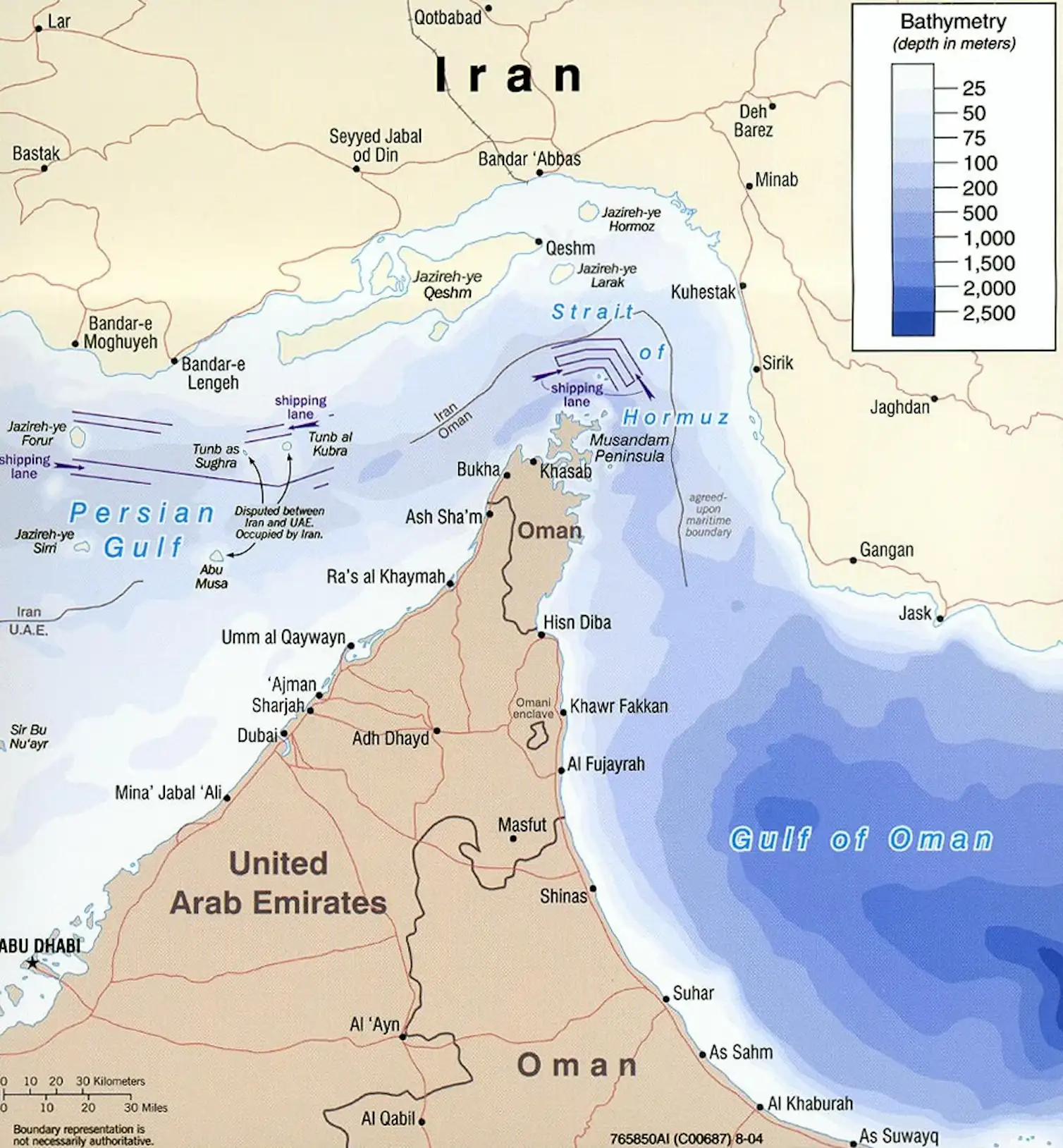
The hum of a city at night is a deceptive thing. In Abu Dhabi, it sounds like the steady whir of high-end air conditioning units and the distant, rhythmic pulse of traffic flowing over perfectly paved highways. It is the sound of absolute security. Or, at least, the sound of security bought and paid for. For years, this was the status quo—a gleaming oasis of glass and gold shielded by distance and diplomacy from the fires burning in the rest of the Middle East.
But the sky changed.
It happened gradually, then all at once. The threats became smaller, faster, and more intimate. They weren't just the lumbering missiles of the 1980s; they were swarms of drones, "suicide" UAVs that buzz like angry insects, and precision rockets that can pick out a single refinery tower from a hundred miles away. Suddenly, the vast emptiness of the desert felt claustrophobic.
This is why Mike Huckabee, the newly minted U.S. Ambassador to Israel, recently pulled back the curtain on a secret that had been whispered about in the corridors of power for months. Israel has sent Iron Dome batteries and the soldiers who breathe life into them to the United Arab Emirates.
The Geography of Anxiety
To understand why this matters, you have to look past the hardware. Forget the radar arrays and the Tamir interceptor missiles for a moment. Instead, imagine a young Emirati father in a high-rise apartment. He looks out his window toward the Persian Gulf. He knows that across that narrow stretch of water, an ancient rival is watching. He has seen the news from the Red Sea, where Houthi rebels—backed by Iran—have turned the sky into a shooting gallery.
He doesn't want to think about "regional hegemony" or "geopolitical pivot points." He wants to know if the roof over his daughter’s head will hold.
For decades, the idea of Israeli military hardware defending an Arab capital was a fever dream. It was unthinkable. The scars of 1948, 1967, and 1973 were too deep. Yet, the 2020 Abraham Accords changed the math of the Middle East from a zero-sum game of identity into a desperate, shared calculation for survival. When Tehran began exporting its drone technology to proxies in Yemen and Iraq, the calculation became simple: my neighbor’s enemy is my protector.
Israel’s Iron Dome is not just a weapon system. It is a psychological blanket. It is the only combat-proven system in the world designed specifically to handle the "short-game"—the low-altitude, high-volume saturation attacks that have become the hallmark of modern asymmetric warfare.
The Secret Transit
The deployment wasn't heralded with a parade. It happened in the quiet hours. Heavily laden transport planes touched down at airbases tucked away in the Emirati dunes. Israeli technicians, men and women who grew up in the suburbs of Tel Aviv and the hills of Haifa, stepped out into the crushing heat of the Gulf.
These soldiers carry a heavy burden. They are not just operating machinery; they are the human interface of a historic trust. They are teaching their counterparts in the UAE how to read the language of a radar screen—how to distinguish between a flock of migrating birds and a Qasef-2K drone packed with high explosives.
There is an intimacy in this kind of military cooperation. When you share air defense data, you are sharing your most vulnerable secrets. You are showing the other person exactly where your blind spots are. By sending these batteries, Israel hasn't just exported technology; it has exported its own security margin. Every interceptor stationed in the UAE is one fewer interceptor standing guard over Ashkelon or Sderot.
This is the "invisible stake" that the dry news reports miss. It is a gamble of blood and iron.
The Architecture of the Shield
The Iron Dome works through a process that feels like science fiction but is rooted in terrifyingly fast mathematics.
- Detection: The radar picks up a launch.
- Prediction: The "brain" of the system calculates the trajectory. If the rocket is headed for an empty patch of sand, the system stays silent. It's too expensive to waste a $50,000 missile on a hole in the ground.
- Interception: If the math shows a hit on a populated area, the Tamir missile is launched. It doesn't hit the target head-on; it explodes near it, shredding the threat in mid-air.
In the UAE, the challenges are different. The terrain is flat, the heat is distorting, and the threats come from multiple vectors. The Houthi attacks on Abu Dhabi in early 2022, which struck a fuel depot and killed three civilians, shattered the illusion of untouchability. It was the moment the UAE realized that their American-made THAAD and Patriot systems—designed for high-altitude ballistic missiles—were like trying to swat a mosquito with a sledgehammer. They needed a scalpel. They needed the Dome.
The Iranian Shadow
Tehran views this development with a cold, calculated fury. To the Iranian leadership, the sight of Israeli "Zionist" technology on the Arabian Peninsula is a red line crossed in permanent ink. But their own actions authored this reality. By pushing their influence through the "Axis of Resistance," they forced a marriage of convenience between two of their most capable adversaries.
Consider the irony: Iran’s strategy was to isolate Israel and intimidate the Gulf States into neutrality. Instead, they have created a seamless line of radar and fire that stretches from the Mediterranean to the Strait of Hormuz.
This isn't just about hardware. It's about data. When an Israeli sensor in the Negev picks up a launch, that data can now theoretically flash to a battery in the UAE within milliseconds. We are witnessing the birth of a Middle Eastern NATO, built not on signed treaties in fancy hotels, but on the frantic, digital heartbeat of shared defense.
The Human Cost of the Watch
There is a specific kind of exhaustion that comes with manning an air defense battery. It is hours of boredom punctuated by seconds of pure, soul-crushing terror. You are staring at a screen, waiting for a blip that represents a potential massacre.
For the Israeli personnel now stationed in the UAE, the environment is alien. The coffee is different, the language is a rhythmic mystery, and the politics are a minefield. Yet, when the siren wails, the adrenaline is the same. The physics of a falling rocket don't care about your religion or your passport.
We often talk about "diplomatic breakthroughs" as if they are abstract concepts. They aren't. A breakthrough is an Israeli sergeant handing a bottle of water to an Emirati lieutenant in the shade of a missile launcher while they both scan the horizon for the same threat. It is the realization that their lives are now literally intertwined. If the sergeant's system fails, the lieutenant's city bleeds.
The Fragile Equilibrium
We are living in an era where the sky is no longer a vacuum. It is a crowded, contested territory. The deployment of the Iron Dome to the UAE is a signal to the world that the old maps are gone. The lines of conflict are no longer drawn by ethnicity or even by traditional borders. They are drawn by those who want to build and those who want to break.
There is no guarantee of success. No system is perfect. A "leaker"—a missile that gets through—is always a mathematical possibility. And the political winds can shift. What happens if a new administration in Washington or a change in leadership in Jerusalem decides the cost of this cooperation is too high?
But for now, the batteries stand ready. They are silent, metallic sentinels tucked away in the dunes, their radars spinning in a constant, invisible search.
As the sun sets over the Persian Gulf, painting the sky in bruised purples and burnt oranges, the lights of Abu Dhabi begin to flicker on. Millions of people go about their evening. They cook dinner, they argue over television shows, they put their children to bed. They do this because they believe the sky is empty. They do this because, somewhere in the darkness, a group of people from two different worlds are watching the same screen, waiting to catch the lightning before it strikes.
The desert is quiet. But it is a heavy, watchful silence.