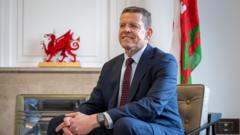
Politics in Cardiff Bay is currently addicted to a specific type of theater. The latest performance features Rhun ap Iorwerth, leader of Plaid Cymru, unveiling a "government in waiting." The press release is predictable. The headshots are polished. The messaging centers on readiness and the supposed failures of the Welsh Labour machine.
But here is the reality that nobody in the Senedd wants to admit: Shadow cabinets in devolved nations are mostly an expensive form of cosplay.
By mimicking the Westminster structure of "Ministers" and "Departments," Plaid Cymru is falling into a trap that has kept them in the passenger seat for twenty-five years. They are organizing themselves to manage a system they claim is broken, rather than positioning themselves to dismantle it. If you want to actually change how Wales functions, you don't start by naming a Shadow Minister for Social Justice. You start by admitting that the title itself is a hollow vessel.
The Myth of the Government in Waiting
The conventional wisdom suggests that a party must look like a government to become one. This is the "lazy consensus" of political consultancy. It assumes voters are looking for a mirror image of the current administration, just with different colored ties.
I have watched opposition parties spend thousands of man-hours and millions in donor capital trying to perfect this optics-led approach. It fails because it ignores the fundamental power dynamic in Wales. Welsh Labour isn't just a political party; it is an integrated ecosystem that has fused with the civil service, the third sector, and the public purse over nearly three decades.
You do not defeat a structural monopoly by creating a smaller, less-funded version of its org chart.
When ap Iorwerth announces his team, he isn't signaling strength. He is signaling conformity. He is telling the electorate that Plaid Cymru accepts the current bureaucratic constraints of the Senedd. They are essentially saying, "We will sit in the same chairs and push the same buttons, but we’ll do it with more heart."
In any other industry, this would be called "incrementalism." In a country with the lowest PISA scores in the UK and a health service on life support, incrementalism is a death sentence.
Why Portfolios are Political Prisons
The moment a politician accepts a "Shadow Portfolio," their horizon shrinks to the size of a departmental budget.
Standard political analysis asks: "Is this person qualified for Health?" or "Will they resonate in the Valleys?" These are the wrong questions. The right question is: "Does the existence of this portfolio prevent systemic thinking?"
Take the climate or economy briefs. In a standard shadow cabinet, these are siloed. One person talks about carbon targets; another talks about GDP. In reality, you cannot fix the Welsh economy without a radical, unified overhaul of land use, energy production, and education. By splitting these into "ministers," Plaid is adopting the same fragmented thinking that has led to the current stagnation.
The Expertise Fallacy
We are told these appointments show "depth of talent." This is a stretch. Being a spokesperson is not the same as being an executive. In the private sector, if you want to overhaul a failing $20 billion entity, you don't hire the person who has been shouting at the CEO from the back of the room for five years. You hire a turnaround specialist.
Plaid’s reliance on the "career politician" model for their top team ensures that even if they win, the civil service will eat them alive within six months. The civil service knows how to manage a Minister. They do not know how to manage a disruptor. By choosing the former, ap Iorwerth is choosing a path of least resistance that leads directly to the status quo.
The Data of Discontent
Let’s look at the numbers the "consensus" media ignores.
Plaid Cymru’s polling has remained stubbornly stagnant for years, oscillating between 18% and 23%. If the "government in waiting" strategy worked, we would see a correlation between shadow cabinet refreshes and a bump in "Best to lead" metrics. We don't.
Voters aren't looking for a shadow minister for local government. They are looking for someone to explain why their town center is a ghost town and why their child can't get a dentist appointment.
- Plaid’s Strategy: Appoint a spokesperson to critique Labour’s dental plan.
- The Contrarian Strategy: Propose the total dissolution of the current Health Board structure in favor of a direct-delivery model that bypasses the Cardiff bureaucracy.
One is a press release. The other is a platform for power.
The Cost of Professionalization
There is a hidden cost to this obsession with looking "statesmanlike." It kills the radical edge.
Plaid Cymru started as a movement. It is ending up as a department. When you prioritize the aesthetics of the "Ministerial Code" over the urgency of the "National Interest," you lose the ability to speak the truth.
I’ve sat in rooms where "shadow teams" debate the wording of a motion for three hours, worrying about how it will look to the BBC. Meanwhile, the actual levers of power—private investment flows, energy grid constraints, and demographic shifts—are ignored because they don't fit into a tidy "ministerial" box.
Imagine a scenario where Plaid didn't appoint a shadow cabinet. Instead, they appointed "Action Taskforces" led by industry experts, community leaders, and a single politician.
- Taskforce A: How to make Wales the first post-subsidy agricultural economy.
- Taskforce B: How to repatriate the 30,000 graduates who leave Wales every decade.
That isn't a government in waiting; that is a government in action. But it doesn't happen because it doesn't look like Westminster. And the Welsh political class is terrified of not looking like Westminster.
The Labour Trap
Rhun ap Iorwerth is playing on a pitch designed by Welsh Labour.
Labour loves a shadow cabinet. It gives them a specific target to hit. It allows them to frame every debate as a technical disagreement between two sets of bureaucrats. "Our policy says X, the Plaid spokesperson says Y."
This is a gift to the incumbent. It keeps the conversation focused on the process of governing rather than the purpose of the nation.
By unveiling these ministers, Plaid is essentially asking for a job interview for a position that Labour currently holds. They are saying, "Hire us for the same role." But the role itself is the problem. The Welsh Government as currently structured is a delivery mechanism for UK Treasury policy with a slight Celtic tint.
If Plaid wants to be "The Party of Wales," it needs to stop trying to be "The Party of the Welsh Government."
Stop Shadowing and Start Overtaking
The "Shadow Minister" title is a psychological anchor. It suggests that your only job is to follow the real Minister around and point out when they trip. It is a reactive, secondary role.
If ap Iorwerth wanted to disrupt the 2026 election, he would have spent this week firing his front bench and replacing them with a decentralized network of regional coordinators tasked with building parallel institutions.
Build a Plaid-led cooperative energy company. Create a Plaid-sponsored vocational training scheme. Don't tell us what you would do with the levers of power; show us you can build your own levers.
The current strategy is a bet on Labour's continued decline. It is a "wait and see" approach dressed up in the finery of executive office. But in politics, if you wait for your opponent to fall, you usually end up getting dragged down with them.
The unveiling of a new shadow team isn't a bold leap forward. It is a retreat into the comfort of tradition. It is the sound of a party deciding that being a respectable second-place finisher is safer than being a dangerous alternative.
Wales doesn't need a shadow cabinet. It needs a wrecking ball.
Stop measuring the drapes in Cathays Park and start asking why the building is still standing.