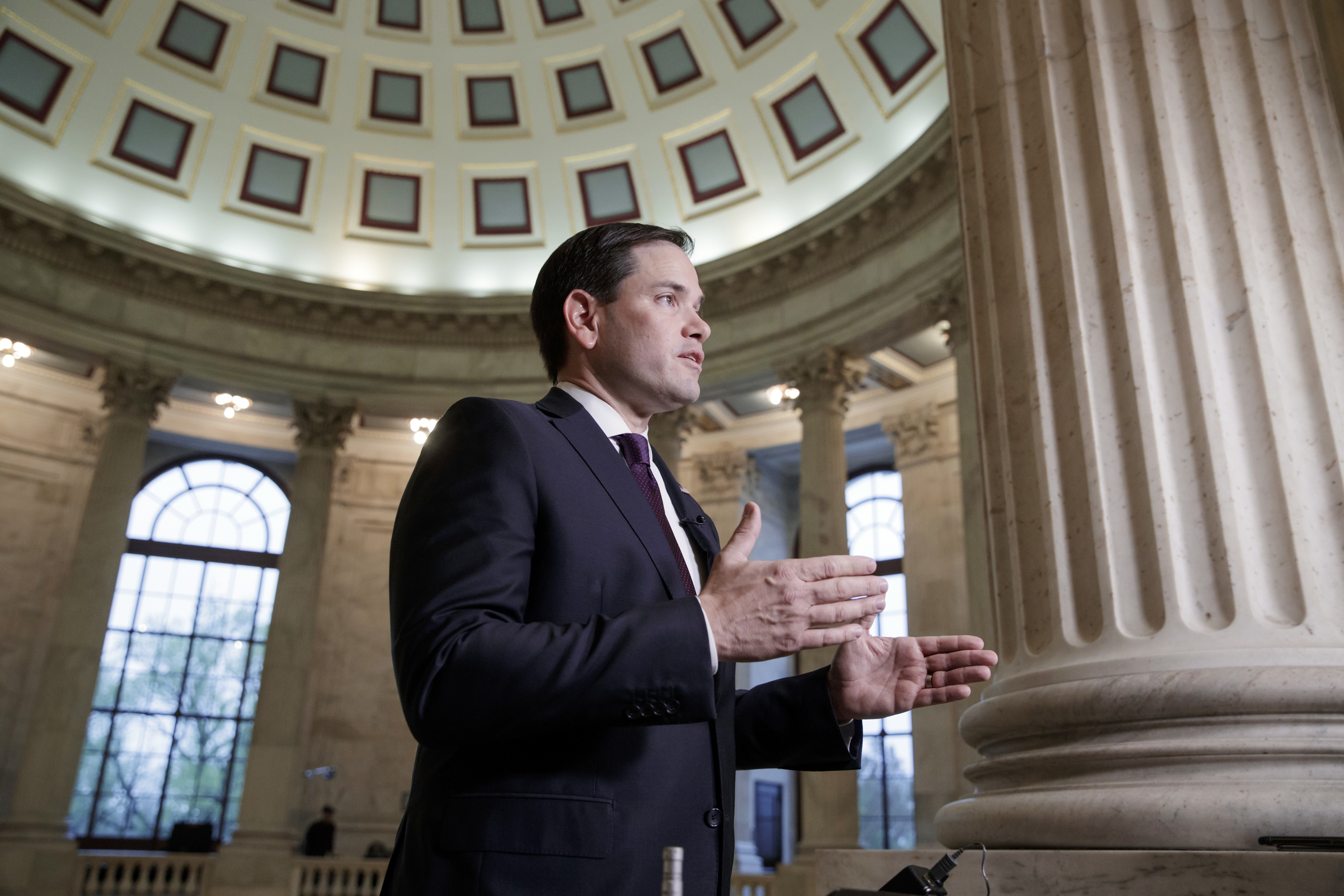
Rachel Reeves walked into the International Monetary Fund headquarters in Washington with a heavy leather briefcase and the weight of a nation’s skeptical ledger. Outside, the cherry blossoms had long since fallen, replaced by the humid, transactional heat of a city that lives and dies by the decimal point. Inside, the air was conditioned to a precise, sterile chill. The IMF is not a place for poetry. It is a place for math. And right now, the math is screaming.
The Chancellor’s mission was simple in theory and Herculean in practice: convince the world’s financial police that the United Kingdom is not the "sick man" of the G7 once again. But numbers have a way of hardening into narratives before you even open your mouth. Days before her arrival, the IMF had already sharpened its red pen, trimming the UK’s growth forecasts and casting a shadow over the "growth, growth, growth" mantra that had carried the Labour Party into Downing Street.
Consider a small business owner in Leeds—let’s call him David. David runs a light manufacturing firm. He wants to buy a new CNC machine. It costs £150,000. To David, that machine isn't just steel and software; it’s the ability to hire two more local kids and fulfill a contract for a German automotive firm. But David is paralyzed. He’s watching the news from Washington because the interest rate on the loan he needs is tethered by an invisible string to the performance Rachel Reeves puts on in those marble hallways. If the IMF doesn't buy her story, the markets won't buy British bonds. If they don't buy the bonds, David’s interest rate climbs. The machine stays in the catalog. The kids stay on the job hunt.
This is the human face of a "downngrade." It is the sound of a shop shutter clicking closed because the macro-economic weather turned cold.
The Ghost of 2022
The ghosts of the Truss-Kwarteng mini-budget still haunt the corridors of 1900 Pennsylvania Avenue. You can feel them in the way the IMF staff look at British Chancellors—with a tilted head and a raised eyebrow. The memory of a G7 economy nearly self-immolating in a matter of days is not easily erased. Reeves knows this. She carries the burden of proving that she is the "adult in the room," a phrase that has become a mantra for the new Treasury.
However, being the adult in the room is remarkably expensive.
The IMF’s recent projections suggest the UK’s leeway is practically non-existent. When an institution like the IMF "downgrades" a forecast, they aren't just guessing. They are looking at the structural rot: sluggish productivity, a labor market that hasn't quite recovered its pulse since the pandemic, and the lingering, dull ache of Brexit trade frictions. They see a country that is spending more on servicing its debt than it is on building its future.
Reeves’s argument is that the previous forecasts were based on a "business as usual" model that she intends to break. She talks about "invest to grow." It sounds sensible. It sounds logical. But in the world of high finance, "investment" is often just a polite word for "borrowing." And the IMF is tired of watching Britain borrow.
The Taxpayer’s Invisible Ceiling
Imagine you are sitting at your kitchen table with a stack of bills. You have a steady job, but your roof is leaking. You can ignore the leak and pay the bills, or you can take out a credit card to fix the roof, hoping that a dry house will somehow make you more productive at work. That is the gamble Reeves is presenting to the global stage.
She is signaling a change to the "fiscal rules"—the self-imposed guardrails that dictate how much the government can borrow. By tweaking these rules, she hopes to unlock billions for infrastructure, green energy, and tech. It’s a bold play. It’s also a terrifying one for those who remember the bond market tantrum of two years ago.
The IMF’s skepticism acts as a ceiling. If they signal that her "rule-tweaking" is actually just "debt-masking," the cost of UK borrowing will spike. We are talking about a feedback loop where the very act of trying to stimulate growth makes the debt so expensive that it cancels out the gains.
The Chancellor is trapped in a room where the walls are slowly closing in. On one side is the desperate need for public investment to fix broken hospitals and crumbling schools. On the other is an international financial community that has lost its appetite for British exceptionalism.
The Language of Doubt
The IMF isn't a villain in this story. It’s a mirror. When it downgrades the UK, it is reflecting back the cumulative choices of the last fifteen years. It sees the underinvestment. It sees the political volatility. It sees a nation that has spent a decade arguing with itself while the rest of the world moved on to the next industrial revolution.
Reeves’s presence in Washington is an exercise in tone management. She has to be confident enough to inspire investment but humble enough to acknowledge the precariousness of the position. She has to use the language of "iron discipline" while simultaneously preparing the British public for a budget that will likely involve painful tax rises.
Think about the tension of that contradiction. To the IMF, she must be the frugal bookkeeper. To the voters back home, she must be the architect of renewal. It is a performance that requires a level of political gymnastics that would make an Olympian dizzy.
The real danger isn't a sudden crash. It’s the "slow fade." It’s the IMF being right—not because Reeves is incompetent, but because the inertia of the UK's economic problems is too great for any one budget to overcome. The danger is that the UK becomes a "legacy economy," a place people remember being important, like a grand old department store that everyone visits for nostalgia but no one actually buys anything from.
The Silent Corridor
Late at night in the Treasury, the lights stay on. There is a specific kind of silence in those offices—the silence of people looking at spreadsheets and realizing the numbers don't add up to the promises made on the campaign trail.
Reeves arrived at the IMF with very little leeway. Every word she speaks is scrutinized for "fiscal slippage." Every smile is checked for overconfidence. But beyond the technical jargon of "debt-to-GDP ratios" and "fiscal multipliers" lies a very simple, very human truth.
A country is just a collection of people trying to build a life. If the Chancellor fails to convince the grey-suited analysts in Washington, the ripples will eventually reach the supermarket aisles in Manchester and the construction sites in Birmingham. It will be felt in the mortgage offers that are £200 a month higher than they should be. It will be felt in the "Closed" signs on the high street.
The IMF downgrade isn't a verdict; it’s a warning. It’s a signal that the world is watching, and its patience is paper-thin.
As Reeves prepares to head back to London to finalize a budget that will define the next decade of British life, the red box she carries contains more than just papers. It contains the hope that math can, for once, be defeated by vision. But as she walks through the airport, the digital tickers on the wall continue to move, indifferent to her mission, recording the cold, hard reality of a world that no longer gives the United Kingdom the benefit of the doubt.
The briefcase is locked. The plane is waiting. The room is still empty.