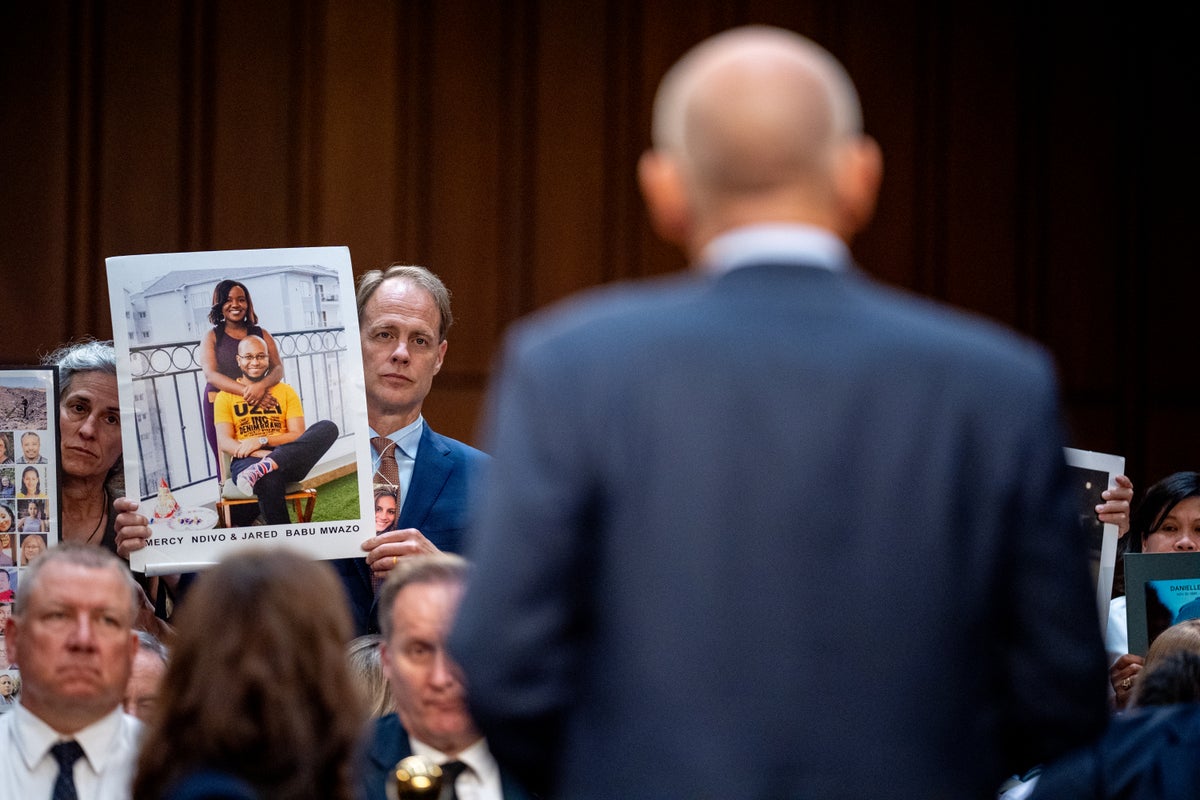
A federal jury in Chicago has ordered Boeing to pay $49.5 million to the family of Samya Rose Stumo, a 24-year-old health worker killed in the 2019 Ethiopian Airlines 737 Max crash. The verdict represents a massive financial rebuke for a single passenger. It also exposes the limits of Boeing's long-running legal strategy to settle its way out of corporate accountability. While the aerospace giant has quietly closed more than 90% of the wrongful death claims resulting from the 346 lives lost in the twin 737 Max disasters, a determined group of holdout families is using civil courtrooms to force public transparency that federal prosecutors let slip away.
Corporate legal strategies are built to contain crises. In this instance, the playbook failed because the Stumo family refused to sign a 2021 stipulation that traded guaranteed compensatory payouts for a waiver on punitive damages. By forcing the case to trial, they put a public price tag on the terror inside the cabin.
The jury broke down the $49.5 million award with chilling precision. They awarded $21 million specifically for the pain, suffering, and emotional distress Stumo experienced during the final six minutes of Ethiopian Airlines Flight 302. Another $16.5 million was awarded for the family's loss of companionship, and $12 million for their grief. This is the second major civil verdict against Boeing in recent months, following a $28 million award to the family of United Nations worker Shikha Garg.
The numbers are rising because juries are hearing the details of what happened in those cockpits.
The Engineering Shortcut that Defied Aviation Principles
Understanding why juries are reacting with such severity requires looking at the actual mechanism of the 737 Max failures. Aviation safety has historically relied on redundancy. If one sensor fails, a second or third cross-checks the data.
Boeing broke this fundamental rule with the Maneuvering Characteristics Augmentation System, or MCAS.
When Boeing designed the 737 Max, it placed larger, more fuel-efficient engines further forward on the wings. This changed the aerodynamic profile of the aircraft, giving it a tendency to pitch upward under certain flight conditions. To fix this without requiring expensive, time-consuming flight-simulator retraining for airlines, engineers wrote software to automatically push the nose down.
The software relied on a single angle-of-attack sensor. It was a metal vane on the outside of the fuselage that was susceptible to bird strikes or mechanical failure.
- The Single Point of Failure: If that lone sensor sent faulty data indicating the nose was too high, MCAS triggered automatically.
- The Pilot Blindspot: Boeing deliberately omitted MCAS from pilot manuals to keep training minimal and sales high.
- The Mechanical Overlap: Pilots were left fighting an automated system they did not know existed, which repeatedly trimmed the stabilizer down every few seconds.
During the trial, the reality of those final minutes became the focal point. The $21 million award for pain and suffering reflects an understanding that the passengers were not victims of a sudden, instant explosion. They endured a prolonged, violent struggle as the flight crew fought an invisible software loop that eventually drove the aircraft into the ground at 500 miles per hour.
How the Justice Department Allowed a Private Resolution
The Stumo verdict is drawing intense scrutiny because it highlights a vacuum of criminal accountability. For seven years, the Department of Justice has engaged in a complex game of legal maneuvering with Boeing.
The timeline reveals how a major corporation avoided a public criminal trial.
[2021] DOJ grants Boeing a Deferred Prosecution Agreement ($2.5B settlement)
   │
[2024] Alaska Airlines door-plug blowout violates agreement; DOJ threatens fraud charges
   │
[2024] Boeing agrees to a criminal guilty plea to avoid a public trial
   │
[2025] DOJ reverses course, offering a Non-Prosecution Agreement that dismisses the case
This shifting approach by federal prosecutors has infuriated safety advocates and victims' families. Last year, US District Judge Reed O’Connor heavily criticized the government's non-prosecution agreement. He noted in a 10-page judicial order that the arrangement failed to secure the necessary accountability to ensure the safety of the flying public.
When the government stepped back, the civil tort system became the only remaining venue for a public reckoning. Civil trials do not carry jail time, but they prevent corporate defense teams from burying evidence behind confidential settlement agreements.
The attorneys representing the Stumo estate, Shanin Specter and Elizabeth Crawford, have already stated they intend to use this momentum to pursue punitive damages against Boeing executives and parts manufacturers on appeal. Those claims were initially dismissed by the trial judge, but the fight is shifting toward holding individual decision-makers financially liable.
The Financial Realities of the Aviation Market
To an ordinary observer, a $49.5 million payout sounds catastrophic. To Boeing, it is a manageable line item on a corporate balance sheet. The company has already paid out more than $3.8 billion in fines, penalties, and legal settlements related to the 737 Max program.
The aviation industry operates under a unique economic reality. Airlines cannot simply stop buying from Boeing. The global commercial aircraft market is a strict duopoly shared with Airbus. Airbus order books are filled deep into the 2030s, meaning carriers that want to expand or replace aging fleets have no choice but to wait for Boeing deliveries.
This structural reality has allowed Boeing to weather the storm financially, even as its safety culture remains under intense scrutiny. Federal oversight has changed; the Federal Aviation Administration now has inspectors personally sign off on every individual 737 Max aircraft before it leaves the factory, stripping the company of its previous self-certification privileges.
Yet, the tension between production speed and engineering precision persists under new CEO Kelly Ortberg. The civil court system remains the only mechanism actively extracting a public cost for corporate negligence. The Stumo family's victory demonstrates that while a corporation can buy its way out of criminal prosecution, it cannot completely control the citizens sitting in a jury box.