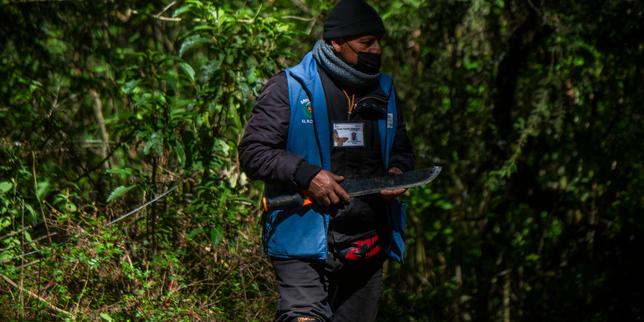
The sound of a chainsaw in the Lacandon Jungle doesn't sound like industry. It sounds like a heartbeat skipping. For the people who live under the canopy of Chiapas or among the pine-covered peaks of Michoacán, that mechanical whine is a herald of many things: the arrival of an avocado cartel, the expansion of an illegal mine, or the beginning of a funeral.
In Mexico, the earth is not just dirt. It is a battlefield. Over the last decade, 199 people who stood up to protect their water, their trees, and their ancestral soil have been hunted down and killed. That is one person murdered every eighteen days for ten years.
These are not soldiers. They are fathers who didn't want their children drinking heavy metals from a nearby mine. They are indigenous leaders who believed a monarch butterfly sanctuary was worth more than a logging permit. They are the invisible wall between global consumption and the total collapse of North America's most vital ecosystems.
The Man Who Loved Butterflies
Consider the case of a man like Homero Gómez González. He wasn't a radical. He was a former logger who had a change of heart. He realized that the millions of monarch butterflies that traveled from Canada to the forests of Michoacán were a miracle that belonged to the world, not to the charcoal kilns.
He became the manager of the El Rosario sanctuary. He posted videos on social media, grinning as thousands of orange-and-black wings fluttered around his head. He was a face for a cause that is usually faceless.
Then, in early 2020, he vanished.
When they found him two weeks later at the bottom of a holding tank, his death was officially ruled an accidental drowning. But the bruises on his head told a different story. In the hills of Michoacán, everyone knows that the "Green Gold"—the multi-billion dollar avocado industry—is protected by men who do not like activists. When a forest is cleared for an orchard, the money flows. When a man stands in the way, the money stops.
This is the math of the Mexican environmental crisis. A tree is worth more dead than alive. A defender is worth more silent than shouting.
The Geography of Blood
The violence is not evenly distributed. It follows the money. From 2012 to 2022, the states of Sonora, Chihuahua, and Oaxaca became "red zones" where the overlap of corporate interests and organized crime created a lethal vacuum for the law.
Mexico is currently the third most dangerous country in the world for environmentalists, trailing only Colombia and Brazil. But the Mexican context has a specific, chilling flavor. Here, the line between the "narco" and the "state" is often a smear. A community leader might go to the police to report illegal logging, only to find the same police escorting the trucks out of the woods the next morning.
In 2021 alone, 54 defenders were killed. This wasn't a spike; it was an escalation. These victims are overwhelmingly indigenous. The Yaqui in the north, the Balleza in the Sierra Tarahumara, and the Mixtec in the south. These communities view the land as a relative, not a resource. When a mining company arrives with a permit signed in a distant city, the community sees an invasion.
Why We Should Care About a Patch of Scrubland
It is easy to look at a statistic like 199 deaths and feel a distant, academic pity. It is a tragedy "over there." But the threads of this violence lead directly to the grocery stores of Chicago, the jewelry shops of London, and the tech hubs of Silicon Valley.
The minerals extracted from those contested mines end up in our pockets. The avocados on our toast are often watered with the blood of the forests these 199 people died to protect. We are the silent partners in this trade.
When a defender is killed, a library of local knowledge dies with them. They knew which springs were drying up. They knew which species of bird hadn't returned this year. They were the early warning system for a planet that is increasingly feverish. By killing the messenger, the world loses its ability to hear the message.
The Architecture of Impunity
The real horror isn't just the murder. It is the silence that follows.
In Mexico, 95 percent of crimes against environmental defenders go unpunished. There is no CSI-style investigation. There are no dramatic courtroom reveals. There is usually just a body on the side of a dirt road and a family that is told to keep quiet if they want to live.
The legal system is a labyrinth designed to exhaust the poor. If a community wants to fight a dam, they must hire lawyers they cannot afford, navigate bureaucracy in a language that might not be their first, and do it all while being followed by SUVs with tinted windows.
Corruption is the grease that keeps the machinery of extraction moving. It is cheaper to pay a hitman than it is to conduct a legitimate environmental impact study. It is easier to "disappear" a village elder than it is to honor a land treaty from 1920.
The Cost of the Sierra Tarahumara
High in the mountains of Chihuahua, the Rarámuri people have lived for centuries. They are the "light-footed ones," famous for their ability to run hundreds of miles. But you cannot outrun a bullet.
Isidro Baldenegro López was a Rarámuri leader who won the Goldman Environmental Prize—the "Green Nobel." He spent his life fighting against the illegal logging that was stripping the old-growth forests of the Sierra Madre. In 2017, he was shot six times.
His crime was simply existing in the way of a profit margin.
When Isidro died, a piece of the mountain died with him. The trees he saved are still standing, for now. But his murder sent a clear signal to every other Rarámuri youth: the price of leadership is your life. This is how you kill a movement. You don't have to kill everyone. You just have to kill the bravest person in the room.
A Legacy Written in Soil
We often talk about the environment as a collection of CO2 parts per million or hectares of biodiversity. We forget that the environment is actually a collection of people.
The 199 people lost in Mexico over the last decade were not martyrs by choice. They were farmers, teachers, and grandmothers. They were people who reached a point where they could no longer watch the world they loved be dismantled for a quick buck.
They are the front lines. They are the only thing standing between us and a world where the natural landscape is replaced by a sterile, industrial monoculture.
The next time you hold a piece of fruit or look at a map of a distant forest, remember that someone might have died to keep that place green. The earth in Mexico is soaked in the blood of its protectors. Their ghosts are in the water. Their voices are in the wind through the pines. They are gone, but the land they died for remains, a living monument to a courage that most of us will never have to summon.
The chainsaw starts again. The question is no longer just about the trees. It is about who is left to stand in front of them.