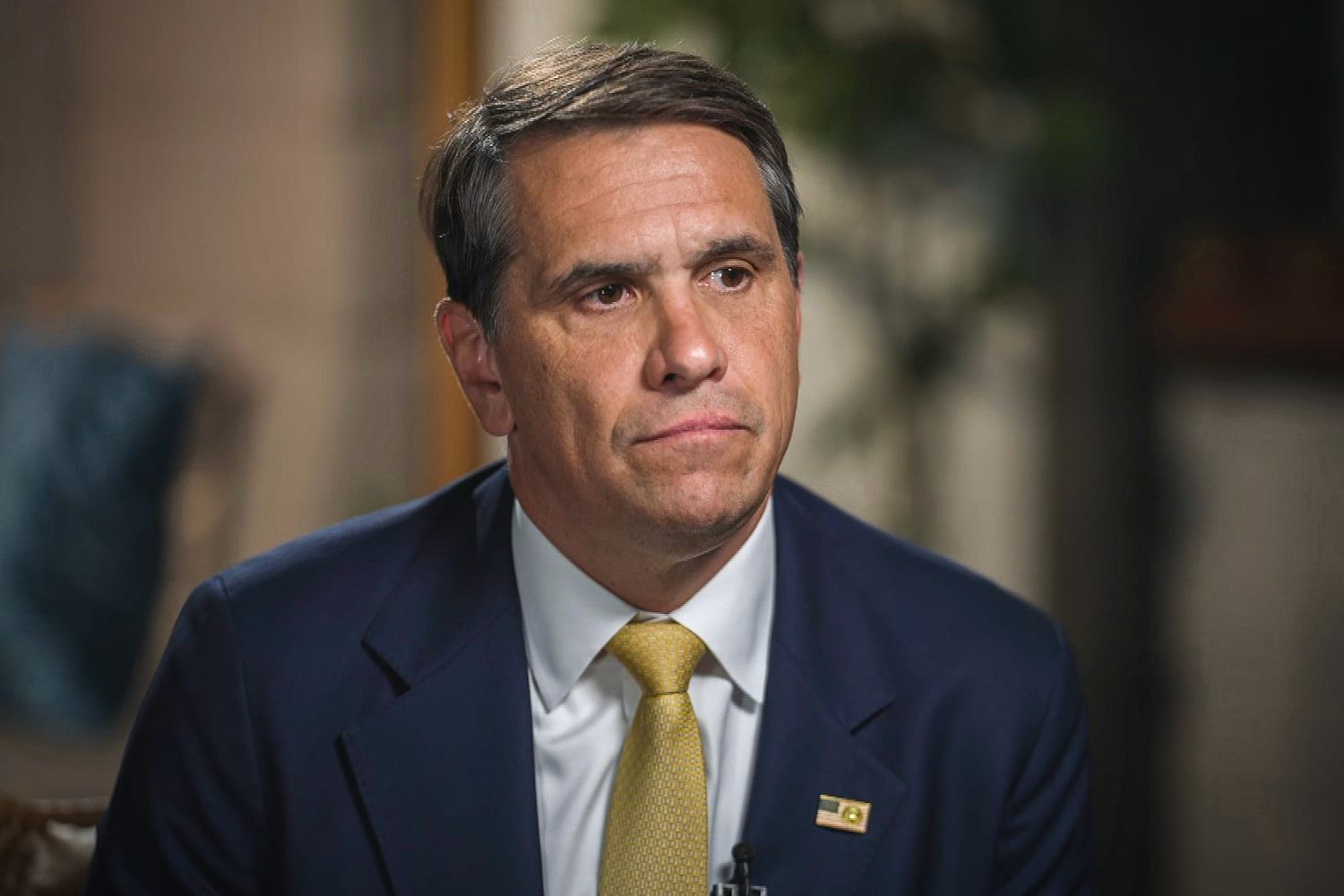
Todd Blanche is telling you the truth, and the pearl-clutching legal establishment is terrified because he’s ripping the mask off a hundred-year-old lie. The "independent" Department of Justice is a myth. It’s a ghost in the machine designed to protect unelected bureaucrats from the consequences of the ballot box. If you think a President being "deeply involved" in the DOJ is a threat to democracy, you’ve been sold a sedative by people who want to run the country without ever having to stand for an election.
Mainstream commentary treats the DOJ like a sacred, untouchable monastery where "The Law" exists in a vacuum, free from the grubby hands of politics. That’s a fantasy. Every decision a prosecutor makes—from which crimes to prioritize to how to allocate a multi-billion dollar budget—is inherently political. By pretending otherwise, we’ve created a fourth branch of government that answers to no one.
Blanche’s assertion that Americans should be "happy" about a President’s direct involvement isn’t just a defense of a client; it’s a radical call for transparency in executive power.
The Myth of the Sterile Prosecutor
The United States Constitution is remarkably clear. Article II, Section 1 begins: "The executive Power shall be vested in a President of the United States of America." It doesn’t say "vested in a President, except for the guys with badges and law degrees."
For decades, the "lazy consensus" among the D.C. elite has been that the DOJ should operate as an island. They cite the post-Watergate norms as if they were etched in stone tablets. But those norms haven't produced a neutral system; they’ve produced a system that operates on the personal whims and career ambitions of career civil servants who are insulated from public accountability.
When the DOJ decides to spend ten years chasing white-collar tax evasion instead of human trafficking, that is a policy choice. When they decide to "defer" prosecutions of major banks because they are "too big to fail," that is a political calculation. If the President—the only person in the executive branch the entire country actually voted for—isn't the one making those calls, then who is?
I’ve watched regulatory bodies and legal departments operate from the inside for twenty years. I’ve seen how "independence" is often just code for "we don't want the boss seeing how the sausage is made." When you remove the President from the chain of command, you don't get objective justice. You get a fragmented collection of fiefdoms where mid-level directors play God with people’s lives based on their own narrow ideologies.
Why "Deep Involvement" Actually Protects You
The critics argue that a President involved in the DOJ will use it as a weapon against enemies. This assumes the DOJ isn't already used as a weapon. The difference is that when a President is involved, the weapon has a serial number. We know exactly whose finger is on the trigger.
Consider the alternative: The "Independent" DOJ.
- It chooses its own targets.
- It sets its own metrics for success.
- It creates its own internal culture of what constitutes a "threat."
- If it fails or overreaches, the President shrugs and says, "Not my department."
That is the definition of a deep state. It is a power structure that exists outside the reach of the voter. If a President directs the DOJ to focus on a specific area—say, border enforcement or antitrust litigation against Big Tech—that is the democratic process in action. The President was elected on a platform. The DOJ is the tool to implement that platform. To suggest the tool should refuse to work for the craftsman is a recipe for institutional paralysis.
Dismantling the "Rule of Law" Strawman
"But the Rule of Law!" cry the pundits. Let's define that term before we worship it. The Rule of Law means that laws are applied equally and predictably. It does not mean that the people executing those laws should be an autonomous priesthood.
In a scenario where the DOJ is truly "independent," it becomes a black box. Look at the history of the FBI under J. Edgar Hoover. That was the pinnacle of an "independent" law enforcement agency. It was also a decade-long exercise in unchecked surveillance, blackmail, and personal vendettas. Hoover wasn't controlled by the White House, and that was exactly the problem. He was a king in a suit.
Real accountability requires a direct line of sight. If the DOJ does something the public hates, and the President is "deeply involved," the public knows exactly who to fire in the next election. If the DOJ is independent, the public is shouting at a brick wall while the bureaucrats keep their pensions and their power regardless of who wins the White House.
The Efficiency of Alignment
In the business world, we call this organizational alignment. If the CEO of a global conglomerate has a vision for the company, but the legal department decides to operate on its own separate strategy, the company collapses.
The United States government is the largest, most complex organization on Earth. The idea that its legal arm should be "independent" from its leadership is a management nightmare that would be laughed out of any boardroom. Direct presidential involvement ensures that the massive resources of the federal government are pulling in the same direction. It eliminates the friction of internal power struggles and forces the DOJ to justify its actions against the administration's stated goals.
Is there a risk of overreach? Of course. Every exercise of power carries that risk. But the risk of a President abusing the DOJ is far easier to manage than the risk of a DOJ that has become its own sovereign entity. We have courts, we have Congress, and we have the ballot box to check a President. We have almost nothing to check a career prosecutor who decides they have a "higher calling" than following the orders of the Commander-in-Chief.
Stop Asking the Wrong Question
The media keeps asking, "Is it dangerous for a President to control the DOJ?"
The real question is: "Why have we allowed the DOJ to pretend it isn't part of the Executive Branch for so long?"
The current outrage over Blanche’s comments isn't about protecting the law. It’s about protecting the status quo. It’s about a class of D.C. insiders who are terrified that the curtain is being pulled back. They want you to believe that "independence" is the same thing as "integrity." It isn't. Independence is just a lack of oversight.
If you want a government that actually does what it said it would do during the campaign, you need a President who isn't afraid to walk into the DOJ and give orders. You need a leader who treats the Attorney General as a subordinate, not a co-equal sovereign.
The "happy" part of Blanche’s statement isn't about partisan victory. It’s about the return of the buck stopping where it’s supposed to: on the desk in the Oval Office.
We’ve spent fifty years trying to build a government that runs on autopilot. It hasn't worked. It’s time to put a driver back in the seat, even if the people in the back of the bus don't like how fast he's going.
The era of the "independent" DOJ is a failed experiment in bureaucratic insulation. Ending it isn't a threat to the Republic; it’s the only way to save it from the people who think they own it.
Stop pretending the DOJ is a church. It’s an agency. Start acting like it.