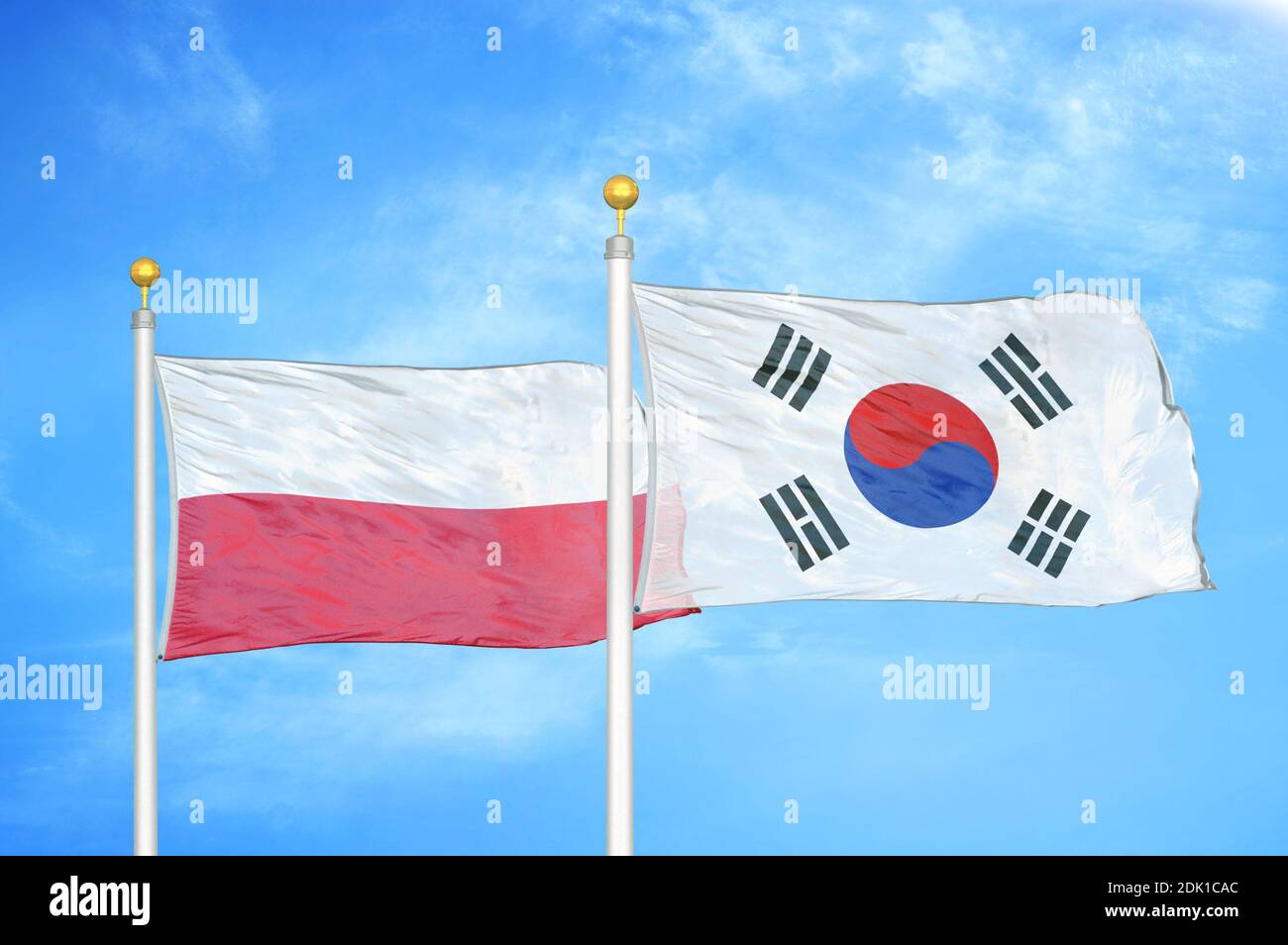
The mainstream media is drooling over the "unprecedented" defense bromance between Warsaw and Seoul. They call it a masterstroke of geopolitical alignment. They call it a diversification of security interests. They are wrong. What we are witnessing isn't a calculated strategic pivot; it is a frantic, high-stakes gamble born of industrial desperation and a crumbling trust in Western European manufacturing.
Poland isn't buying South Korean K2 tanks and K9 howitzers because they’ve found a "key ally after the US." They are buying them because the European defense industry is a hollowed-out museum of its former self, and the American supply chain is choked by its own bureaucratic girth and domestic political instability.
This isn't a partnership of choice. It’s a marriage of convenience between two nations who are terrified for completely different reasons.
The Myth of the European Arsenal
For decades, the "lazy consensus" suggested that if war ever returned to the Continent, the combined industrial might of Germany and France would provide the shield. That myth died in February 2022. While Berlin debated for months whether to send helmets or heavy armor, Warsaw looked at the math.
The German Leopard 2 is a magnificent piece of engineering. It is also an industrial nightmare. Production rates are glacial. To replace the tanks Poland sent to Ukraine, they couldn't wait five to seven years for a handful of units from Krauss-Maffei Wegmann. They needed steel on the ground.
South Korea’s Hanwha Aerospace and Hyundai Rotem operate on a "war-time footing" during peace. They don't just build tanks; they build them at a scale that makes the rest of the OECD look like they’re running a boutique hobby shop. When Donald Tusk calls Seoul a "key ally," he is actually admitting that the European Union has failed its primary duty of collective industrial defense.
Buying Speed at the Cost of Sovereignty
The shiny new K2 Black Panther tanks arriving in Gdynia come with a hidden price tag: total technical dependency on a nation 8,000 kilometers away.
Critics focus on the $14 billion price tag. That’s the easy part. The real danger lies in the long-term logistics. By integrating South Korean hardware into the heart of NATO’s eastern flank, Poland is creating a bifurcated military. They are now running a Frankenstein’s monster of American M1 Abrams, German Leopards, and South Korean K2s.
Imagine the nightmare of a logistics officer trying to source spare parts, ammunition calibers, and specialized technicians across three different proprietary ecosystems during a hot conflict.
- Interoperability is a buzzword; the reality is friction.
- Maintenance cycles for South Korean tech are calibrated for the Korean Peninsula, not the bogs of Eastern Europe.
- The "K-PL" localization project—the promise that Poland will build these tanks domestically—is a massive industrial hurdle that Poland hasn't cleared yet.
I’ve seen governments blow billions on "local production" promises that end up as little more than assembly lines for foreign kits. If Poland cannot achieve true domestic manufacturing of the K2, they haven't bought security; they've bought a subscription service to Seoul's foreign policy.
The Washington Shadow
The narrative that South Korea is the "new US" for Poland is a dangerous misunderstanding of power dynamics. Seoul doesn't provide a nuclear umbrella. Seoul doesn't have the diplomatic weight to force a ceasefire in the Kremlin.
Warsaw’s pivot to South Korea is actually a desperate hedge against the United States. They see the political volatility in Washington. They see the "America First" rhetoric and the wavering commitment to NATO. By loading up on South Korean hardware, Poland is trying to buy its way out of a potential US abandonment.
But here is the counter-intuitive truth: South Korea is even more dependent on the US than Poland is. If the US-South Korea alliance ever fractures, or if North Korea forces Seoul to look inward, Poland’s supply line for spare parts evaporates instantly. You cannot hedge against a superpower by buying from that superpower's most vulnerable client state.
The "K-Defense" Industrial Complex is a Bubble
South Korea is currently the fastest-growing arms exporter in the world. They are the "Amazon Prime" of the defense world—order today, get your tanks in eighteen months. This speed is their only real competitive advantage.
However, this rapid expansion relies on a hyper-aggressive financing model. Much of these deals are fueled by Polish state-guaranteed loans and South Korean credit exports. We are seeing a massive accumulation of defense debt. If the global economy takes a hit, or if interest rates remain high, the "deal of the century" could become the "default of the decade."
Re-evaluating the "Key Ally" Label
People also ask: "Is South Korea now a global superpower?" No. It is a specialized industrial powerhouse with a shrinking population and a massive security threat on its own border.
The idea that Seoul will become a permanent fixture of European security is a fantasy. South Korea’s interest in Poland is purely commercial and tactical. They want a foothold in the EU market to sell more hardware. They want to lower their own per-unit costs by increasing production volume. Once those contracts are signed and the initial hulls are delivered, Seoul’s focus will return to the 38th Parallel.
Warsaw is mistaking a sales representative for a savior.
The Actionable Reality for the Defense Sector
If you are an investor or a policy analyst, stop looking at the press releases and start looking at the "transfer of technology" (ToT) clauses.
- Watch the Steel: If Poland fails to start pouring its own hulls for the K2PL by 2026, the deal is a failure.
- Monitor the Ammunition: The real profit—and the real security—is in the "consumables." If Poland remains dependent on Korean-made shells, they have no strategic autonomy.
- Evaluate the Debt: The financing of these deals is opaque. Look for the moment the Polish taxpayer realizes they are subsidizing the South Korean industrial base at the expense of their own healthcare and infrastructure.
The Hard Truth
This isn't a new era of cooperation; it’s a symptom of a broken West.
Poland is buying Korean because Europe is empty and America is distracted. Every K2 tank that rolls off a ship in Poland is a silent indictment of the French and German defense industries. It is a sign that the "European Project" has failed its most basic test of survival.
Warsaw is playing a game of musical chairs, and they’ve decided that South Korean chairs are better than no chairs at all. Just don't expect the music to keep playing forever.
The moment South Korea needs those tanks for its own survival, Poland will find out exactly what "key ally" means in the cold light of realpolitik. It means you're on your own.
Stop celebrating the purchase and start questioning the dependency.