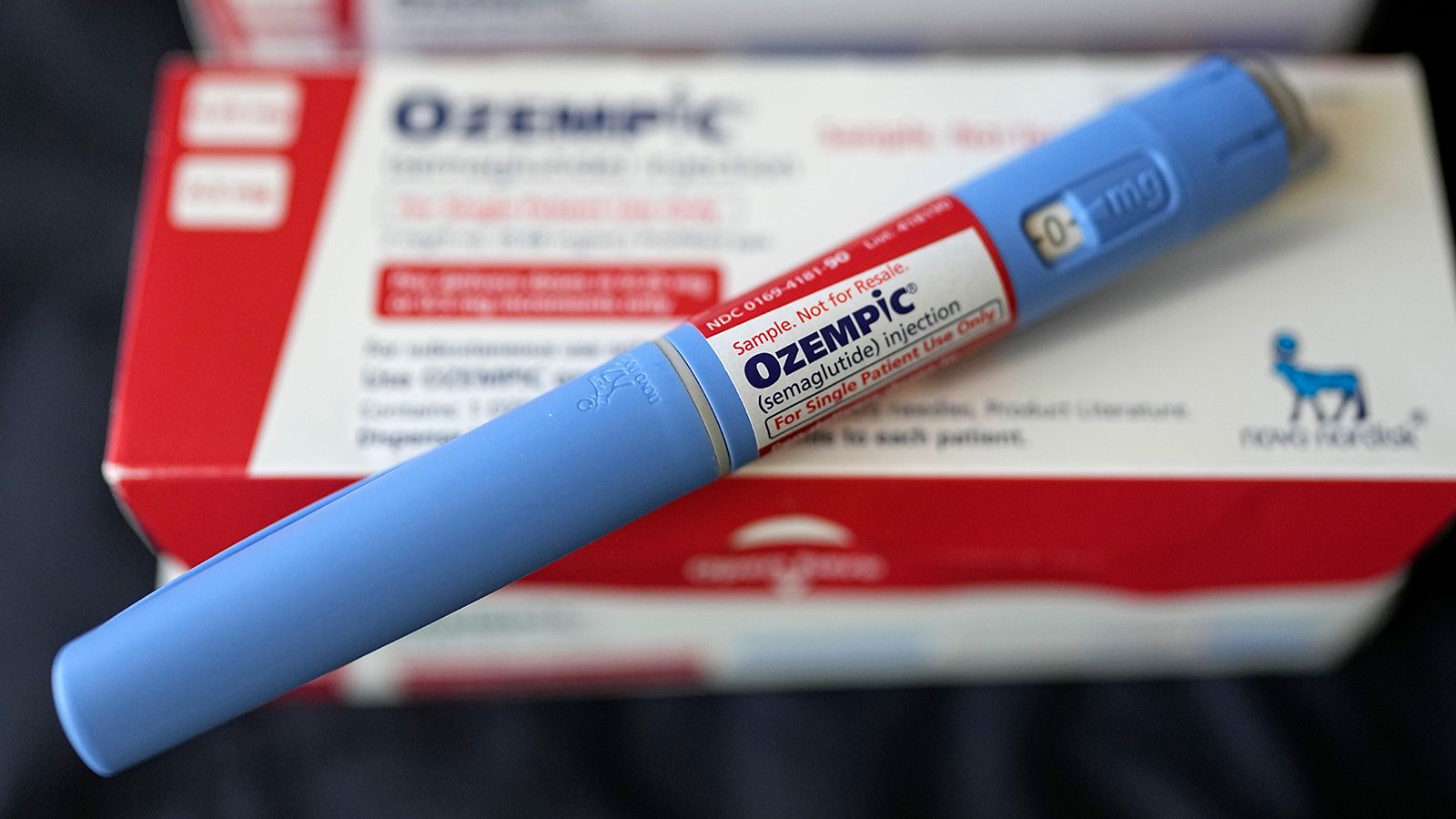
Novo Nordisk is not cutting prices out of the goodness of its corporate heart. The Danish pharmaceutical giant announced this week that it will slash the U.S. list price of its blockbuster GLP-1 drugs—Wegovy, Ozempic, and Rybelsus—to a uniform $675 per month starting January 1, 2027. For Wegovy, which currently carries a sticker price of roughly $1,349, this represents a 50% reduction. For Ozempic and Rybelsus, the cut sits at approximately 35%.
On the surface, this looks like a victory for the American patient. It is, in reality, a sophisticated defensive maneuver designed to protect market share against a resurgent Eli Lilly and a federal government that has finally found its teeth. By preemptively lowering the "list price," Novo Nordisk is attempting to solve a PR nightmare while bracing for the impact of the Inflation Reduction Act (IRA) and the new "TrumpRx" era of direct-to-consumer pharmacy. Read more on a similar issue: this related article.
The move specifically targets a narrow but vocal segment of the market: patients with high-deductible health plans or coinsurance. These are the people who walk up to the pharmacy counter and are told they owe 30% of a $1,350 drug. By lowering the baseline, Novo reduces that immediate sting. However, for the vast majority of insured Americans, the "net price"—the actual amount Novo collects after paying secret rebates to middlemen—may hardly move at all.
The Rebate Trap and the PBM Standoff
To understand why a 50% price cut isn't as altruistic as it sounds, you have to look at the "gross-to-net" bubble. For years, drugmakers have inflated list prices so they could offer massive rebates to Pharmacy Benefit Managers (PBMs). These PBMs, the powerful gatekeepers of insurance formularies, often prioritize drugs with higher rebates because they keep a slice of that spread. Additional analysis by Reuters Business highlights comparable perspectives on the subject.
By dropping the list price to $675, Novo Nordisk is essentially "popping" part of this bubble. This creates a fascinating, albeit dangerous, game of chicken with PBMs.
- The Risk: If Novo lowers the list price, there is less "rebate" money to pass back to the PBMs.
- The Consequence: If the PBMs lose their kickbacks, they might retaliate by moving Ozempic or Wegovy to a "non-preferred" tier, making it harder for patients to get the drug covered.
Novo is betting that the sheer, unquenchable demand for these medications—now taken by an estimated one in eight American adults—is so high that PBMs cannot afford to drop them from coverage. They are leveraging patient demand to force the supply chain to accept a more transparent, lower-margin reality.
Defensive Posturing Against the Lilly Onslaught
The timing of this announcement is not a coincidence. It follows a disastrous week for Novo Nordisk in the clinical arena. On February 23, 2026, the company’s next-generation obesity candidate, CagriSema, failed to beat Eli Lilly’s Zepbound in a head-to-head trial. CagriSema delivered a 23% weight reduction, which would have been a miracle five years ago, but it fell short of Zepbound’s 25.5%.
The market reaction was swift and merciless. Novo Nordisk’s shares plummeted 16% in a single session, erasing billions in market cap.
Market Share Erosion (Late 2024 vs. Late 2025)
| Category | Novo Nordisk Share (2024) | Novo Nordisk Share (2025) |
|---|---|---|
| Obesity Market (Branded) | 68% | 51% |
| GLP-1 Diabetes Market | 53% | 46% |
| Overall Diabetes Market | 35% | 31% |
With Eli Lilly capturing nearly 70% of new branded obesity prescriptions at the end of 2025, Novo Nordisk had to change the narrative. If you cannot win on clinical superiority, you must win on access and affordability. By slashing the list price, Novo is trying to make its products the path of least resistance for employers and cash-strapped insurance plans.
The 2027 Collision Course
January 1, 2027, is the "D-Day" of American drug pricing. This is the date when the federal government’s negotiated prices under the IRA officially take effect. The Department of Health and Human Services (HHS) has already set the maximum fair price for Medicare patients at $274 per month for these drugs.
By setting a commercial list price of $675, Novo is trying to close the optics gap. It is difficult to justify charging a private-sector teacher $1,350 for the same box of pens the government gets for $274. The $675 figure serves as a "soft landing." It is still more than double the Medicare price, but it’s no longer a 500% markup.
Furthermore, the "TrumpRx" platform—a direct-to-consumer initiative launched by the current administration—has already forced Novo's hand. Novo and Lilly have already been selling through these channels for as low as $349 for injectables and $149 for the new Wegovy pills. The traditional insurance-based list price had become an embarrassing relic of a dying system.
The Looming Threat of the Compounders
For the last two years, Novo Nordisk and Eli Lilly have been playing a high-stakes game of "Whac-A-Mole" with compounding pharmacies. Under U.S. law, when a drug is on the FDA’s shortage list, compounding pharmacies are allowed to create "knock-off" versions. Platforms like Hims & Hers have built billion-dollar businesses selling compounded semaglutide for a fraction of the branded price.
Novo Nordisk has spent millions on litigation to shut these operators down, claiming safety risks. But as supply stabilizes, the legal loophole for compounders begins to close. To finally kill the compounding market, Novo knows it can't just rely on lawyers; it has to compete on price. A $675 list price, combined with existing $199-a-month "self-pay" cards, makes the risk of a "bootleg" pharmacy much less appealing to a suburban mom or a cost-conscious retiree.
A Bitter Pill for Investors
For the "Novo-growth" era, the party is officially over. The company’s 2026 guidance, released earlier this month, projects a decline in sales and operating profit of up to 13%. Management is shifting the goalposts from margin to volume.
The strategy is simple: If you can't charge $1,000 for one person, you charge $500 for three people. Novo is planning DKK 55 billion in capital expenditures to build the massive manufacturing plants required to support this "high-volume, lower-margin" future. They are no longer a high-flying biotech darling; they are becoming a high-utility industrial machine.
This pivot is necessary because the competition is no longer just Eli Lilly. Dozens of smaller biotechs are racing to market with oral GLP-1s and "triple-agonist" drugs that promise even fewer side effects. By 2027, the market will be flooded with options. Novo is cutting prices now to lock in "loyalty" before the walls truly cave in.
Investors who bought in at $90 a share are now staring at a stock trading near $40. The valuation reset is a recognition that the obesity "gold rush" has entered its consolidation phase. The easy money has been made; now comes the grueling work of maintaining a global infrastructure while prices trend toward the floor.
Verify your insurance coverage now, because while the list price is dropping, the "prior authorization" hurdles are only going to get taller as insurers fight to keep their own costs from exploding under the weight of a suddenly affordable miracle drug.