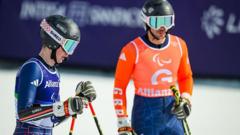
Winning feels good, but it isn't the only way to measure a revolution in sport. If you looked strictly at the medal table after the recent Winter Paralympics, you’d see Great Britain sitting with a single bronze. On paper, it looks like a disaster. It looks like a step backward from the multi-medal hauls of Pyeongchang or Sochi. But if you talk to the athletes, the coaches, and the performance directors at ParalympicsGB, they aren't hanging their heads. They’re actually quite bullish about where things are headed.
Success in elite sport is often a lagging indicator. The medals you see today are the result of decisions made five years ago. Conversely, a lack of medals today doesn't always mean the system is broken. Sometimes, it means the system is changing its shape. For Great Britain, this cycle was never about "medal or bust." It was about depth, debutants, and a massive shift in how the UK approaches snow sports.
The Strategy Behind the Numbers
The raw data is simple. One medal. However, that number ignores the "near misses" that actually signal a healthy program. At these Games, British athletes secured more top-eight finishes than in several previous cycles. In the world of high-performance funding, those top-eight spots are vital. They prove that a skier or snowboarder is "in the mix."
When you have a young squad, which GB currently does, you expect some volatility. You expect the nerves of a first Paralympics to cost a few seconds here or a gate there. What you don't want is to see your athletes finishing 20th. GB didn't do that. They were hovering right on the edge of the podium in multiple disciplines.
It’s also worth noting the sheer level of competition. The global standard for para-winter sports has skyrocketed. Countries like China, which previously had almost no presence in these events, have poured millions into infrastructure. For a nation like Britain—which, let’s be honest, isn't exactly a mountainous alpine mecca—staying competitive requires a different kind of ingenuity.
Why Experience Trumps Metal This Time
We often fetishize the gold medal. It’s the ultimate validation. But for a program looking toward 2030 and beyond, the "debutant experience" is arguably more valuable than a single bronze won by a retiring veteran.
A significant portion of the British squad in these Games were experiencing the Paralympic environment for the very first time. You can’t simulate the pressure of a televised run with the world watching. You can't practice the fatigue of a two-week village stay. By getting these young athletes through the gate now, ParalympicsGB is essentially "banking" experience.
Think of it as an investment. They’ve seen the hill. They’ve felt the ice. They know exactly how much faster they need to be to catch the Norwegians or the Americans. That internal fire is often more sustainable than the complacency that can follow a lucky podium finish.
The Reality of Winter Sport Funding
UK Sport operates on a famously ruthless "no compromise" funding model. Usually, if you don't win, you don't get paid. However, there's been a subtle shift in how they evaluate winter sports. They recognize that snow sport is inherently more unpredictable than track cycling or rowing. A bit of wind or a patch of soft snow can ruin a four-year plan in a heartbeat.
The "positivity" coming out of the camp suggests that the funders are seeing the same progress the coaches are. They see the technical improvements in the alpine skiers. They see the increased speed in the Nordic sit-skiers. If the funding holds steady despite the low medal count, that’s the ultimate vote of confidence. It means the people holding the purse strings believe the "one medal" is an anomaly, not a trend.
Turning Potential Into Future Podiums
So, where does the team go from here? The focus shifts immediately to narrowing the gap in technical disciplines. While GB has traditionally been strong in visually impaired categories, there's a concerted effort to broaden the talent pool across sitting and standing classes.
The coaching staff is looking at the data. They’re analyzing every turn and every transition. They aren't interested in excuses. They know that "nearly winning" doesn't get your face on a postage stamp. But they also know that you can't build a powerhouse program on a foundation of sand.
The foundation they’ve built over this last cycle is solid. It’s made of young, hungry athletes who now know they belong on the world stage. They’ve tasted the atmosphere, and they’ve felt the sting of coming fourth or fifth.
If you want to support the growth of British winter sports, stop staring at the 2026 medal table. Start looking at the world cup results over the next two winters. That's where the real story will be told. Watch for the names that hovered just outside the medals this time. Those are the athletes who will be standing on the top step in four years. The positivity isn't a delusion; it's a recognition of the work that's already been done and the clear path that lies ahead. Keep an eye on the technical splits and the season-over-season improvements. That’s where the true progress lives.