The air in London usually tastes of damp pavement and exhaust, but on a Tuesday night in the city’s industrial fringes, it suddenly turned to copper and melting plastic. Silence is the first thing that breaks. It starts with the rhythmic clack-clack-clack of a bicycle chain—a sound so mundane it’s invisible—and ends with the roar of a chemical accelerant meeting an open flame.
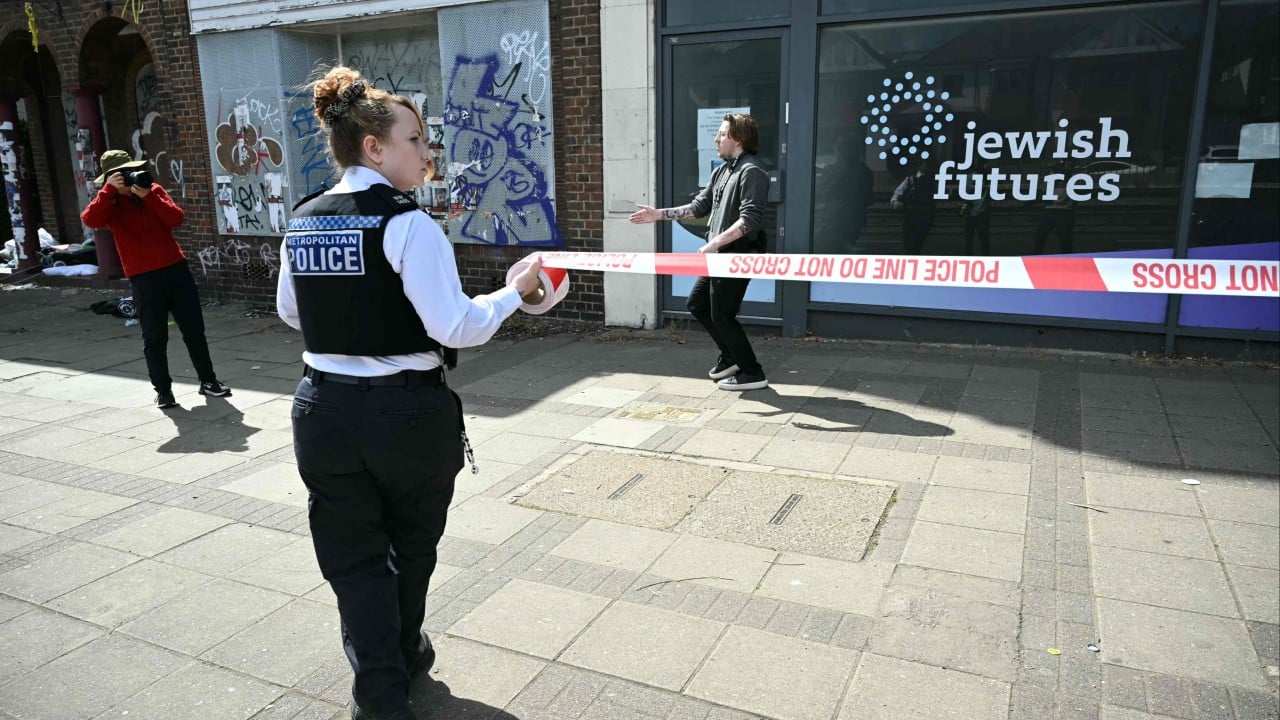
When the warehouse on an unremarkable street in Leyton began to bleed orange light into the low-hanging clouds, it wasn't just a local fire. It was a signal. Within hours, the standard-issue blue and white tape of the Metropolitan Police was replaced by the presence of Counter Terrorism Command. This wasn't an accident of faulty wiring or a disgruntled employee. It was an act of arson with fingerprints that stretched far beyond the East End.
The Invisible Front Line
Consider a man we will call Elias. He lives three blocks from the site. He didn’t hear the explosion, but he felt the vibration in his floorboards—a dull thud that rattled the glass of water on his nightstand. For Elias, a fire is a tragedy of property and insurance. For the investigators now sifting through the charred remains of a logistics firm, the fire is a data point in a shadow war.
The British security services are currently untangling a web of incidents that look like isolated crimes but function like a coordinated campaign. Over the last year, London has seen a spike in these "message" fires. They target specific businesses, often those linked to international supply chains or logistical support for foreign conflicts.
The strategy is simple: plausible deniability.
If a state actor launches a missile, it is an act of war. If a hired hand with a backpack and a bottle of petrol sets fire to a shipping depot at 3:00 AM, it is a police matter. Or so the perpetrators hope. The stakes aren't just the millions of pounds in charred inventory. The stakes are the fundamental sense of safety in a global city. When the arsonists strike, they aren't just burning wood and steel; they are testing the skin of a nation to see how easily it punctures.
The Anatomy of a Modern Saboteur
Who pulls the trigger on a lighter for a few hundred pounds? The reality is often less cinematic than a spy novel. Intelligence briefings suggest a shift toward "proxy-for-hire" models. Criminal gangs, desperate individuals, or radicalized fringe actors are being recruited via encrypted messaging apps to carry out "low-level" disruptions.
These individuals often have no idea who is actually paying the bill. They are told a story—perhaps that the business is unethical, or that they are helping a cause—but the true architect sits in an office thousands of miles away, watching the news feed for the first sign of smoke.
This is the democratization of sabotage. You don’t need a specialized unit of commandos when you can find a local with a grudge and a map. The police are now forced to look at every "routine" arson through a different lens. They have to ask: Is this a domestic dispute, or is this a strike by a foreign intelligence service trying to destabilize the UK's internal security?
The Heavy Cost of Distant Echoes
The smoke from the London arson attacks carries the scent of geopolitics. We are seeing a spillover from conflicts in Eastern Europe and the Middle East. When nations cannot fight directly on the battlefield without risking a global catastrophe, they move the fight to the "gray zone."
The gray zone is where we live. It is the grocery store, the warehouse, the fiber-optic cable under the street, and the shipping port.
When a logistics company in London is targeted because it handles goods destined for a particular front line, the ripples are felt by people like Elias. His commute is delayed by police cordons. His insurance premiums edge upward. The local park, once a place of late-night jogs, becomes a place of suspicion. This is the intended "slow-burn" effect of gray-zone warfare. It wears down the psyche of a population. It creates a low-frequency hum of anxiety that never quite goes away.
The Digital Paper Trail
Counter-terror officers aren't just looking for DNA on a discarded petrol cap anymore. They are hunting for digital ghosts.
Every arson attack leaves a trail of metadata. There are the pings from cell towers, the grainy footage from doorbell cameras, and the financial records of cryptocurrency transfers. The investigation into the latest London fire involves a massive "sucking" of data—gathering every bit of digital information within a three-mile radius to find the one device that shouldn't have been there.
It is a grueling, thankless form of detective work. One officer described it as trying to find a specific grain of sand in a desert during a windstorm. But the patterns are emerging. The timing of the attacks often aligns with major diplomatic shifts or announcements of military aid packages. The fires are a form of violent feedback.
Why We Look Away
It is easier to believe in a lone arsonist. We want to believe that the fire down the street is just a random act of a troubled mind because the alternative is much more frightening. The alternative is that our neighborhood has become a chess square in a game played by giants.
We see the headlines and we move on. "Another fire in London," we think. "The police are on it." We ignore the fact that the Counter Terrorism Command doesn't show up for a simple insurance scam. Their presence is a confession: the world is smaller than we thought, and its conflicts are closer than we are comfortable admitting.
The Fragility of the Ordinary
Walking past the charred skeleton of a building the morning after an attack is a haunting experience. The smell lingers—a sour, oily stench that clings to your clothes. You see the mundane objects of a working day destroyed. A melted coffee machine. A stack of half-burnt delivery notes. A calendar frozen on the day the world changed for that business.
These objects ground the high-level intelligence reports in a painful reality. Someone's livelihood was here. Someone's daily routine was anchored in this space. Now, it is a crime scene being analyzed for traces of foreign interference.
The transition from a peaceful city to a target happens quietly. It doesn't always start with a bang. Sometimes it starts with a flicker in the corner of an eye, a shadow moving where it shouldn't, and the sudden, terrifying realization that the heat against your face isn't the sun, but the burning remnants of a world you thought you understood.
The sirens eventually fade. The investigators pack up their kits and return to their offices to cross-reference their findings with global intelligence databases. The street is reopened. But for the people who live there, the darkness of the night feels a little deeper. They look at the warehouses and the shipping containers not as signs of commerce, but as potential tinder.
The fires are out, for now. But the embers of this shadow war are still glowing, hidden beneath the surface of the city, waiting for the next spark to catch. We are all living in the draft.