The air in Iowa City usually tastes like popcorn and cheap beer on a Friday night. It is a sensory overload of sticky bar floors, the rhythmic thumping of bass vibrating through brick walls, and the high-pitched hum of thousands of students shedding the weight of a week’s worth of organic chemistry and late-night library sessions. Pedestrian Mall is the heart of it all. It is a place of transit, where the academic world of the University of Iowa dissolves into the neon-soaked chaos of the nightlife district.
But at 2:00 AM, the soundtrack changed.
The rhythm of the night didn't fade out. It was punctured.
Crack. Crack. Crack.
For a heartbeat, the crowd didn't run. We have been conditioned to think of backfires or fireworks first. It is a defense mechanism of the modern mind—a refusal to believe that the space between a taco stand and a bookstore has become a theater of war. Then the screaming started. It was a jagged, visceral sound that stripped away the veneer of a weekend party.
The Ped Mall, usually a sanctuary of youthful indiscretion, was suddenly a grid of cold concrete and long shadows. Three students were down. The bullet, a small piece of lead and copper, does not care about a GPA or a graduation date. It does not care that you were just trying to find your friends or get a slice of late-night pizza.
The Geography of a Nightmare
To understand what happened, you have to understand the layout of the space. The University of Iowa isn't a walled-off fortress. It bleeds into the city. The bars sit across the street from the lecture halls. This proximity is what makes the school legendary, but it’s also what makes it vulnerable.
When the shots rang out near the intersection of College and Linn Streets, the geography of the city shifted. Safe zones became kill zones. The authorities—the Iowa City Police Department and University of Iowa Police—descended on the area with a speed that felt both heroic and terrifying. The blue and red lights reflecting off the storefront windows created a strobe effect, making the scene look like a fragmented movie.
Panic is a physical weight. It’s the feeling of your lungs refusing to expand because the air is suddenly too thick with the smell of gunpowder and ozone. Students who had been laughing moments before were now huddled behind planters, their phones trembling in their hands as they typed "I'm okay" to parents sleeping soundly hundreds of miles away.
The Human Cost of a Statistic
The headlines will tell you the numbers. Three students. Transported to the University of Iowa Hospitals and Clinics. Non-life-threatening injuries.
"Non-life-threatening."
It is a clinical phrase that does a lot of heavy lifting. It suggests that because they will live, they are fine. But a bullet wound is never just a physical trauma. Consider a hypothetical student—let’s call her Sarah. Sarah is a junior, an aspiring nurse who spent her evening celebrating a passed exam. When the metal tore through her shoulder, it didn't just damage muscle and bone. It shredded her sense of agency.
Now, every time she hears a door slam, her heart will hit 120 beats per minute. Every time she walks past the Ped Mall, her eyes will scan the rooftops. The "life" that wasn't threatened is now a different life entirely. The trauma ripples outward. It hits the roommates who stayed home and now feel a sick sense of relief. It hits the professors who look at an empty chair on Monday morning and feel a hollow pit in their stomachs.
The authorities are searching for a suspect, but the suspect is often a ghost in these moments—a blur captured on a grainy security camera, a figure disappearing into the maze of alleys that web through the downtown core. The police issued a "Hawk Alert," the digital scream that hits every student’s phone simultaneously.
Run. Hide. Fight.
It is the mantra of a generation that has grown up under the shadow of the metal detector.
The Invisible Stakes
Why does this keep happening in the places we call home?
The nightlife district is a paradox. It is designed for release, for the shedding of inhibitions. But when you mix that lack of inhibition with the staggering availability of firearms, the math becomes lethal. We like to think of these events as anomalies, as "isolated incidents" (another phrase the police use to keep the public from vibrating out of their skins). But when an isolated incident happens in the center of a university town, it isn't isolated. It is a breach of the social contract.
The contract says: You come here to learn, to grow, and to stumble into adulthood, and we will provide the stage where you can do that safely.
When the gun smoke clears, the stage looks different. The lights are too bright. The music is too loud. The silence that follows the sirens is the loudest thing of all.
Iowa City is a resilient place. The Old Capitol dome still glitters in the sun, and the Iowa River still flows gray and steady past the dorms. But there is a smear on the sidewalk that wasn't there before. There is a collective flinch.
The Aftermath of the Echo
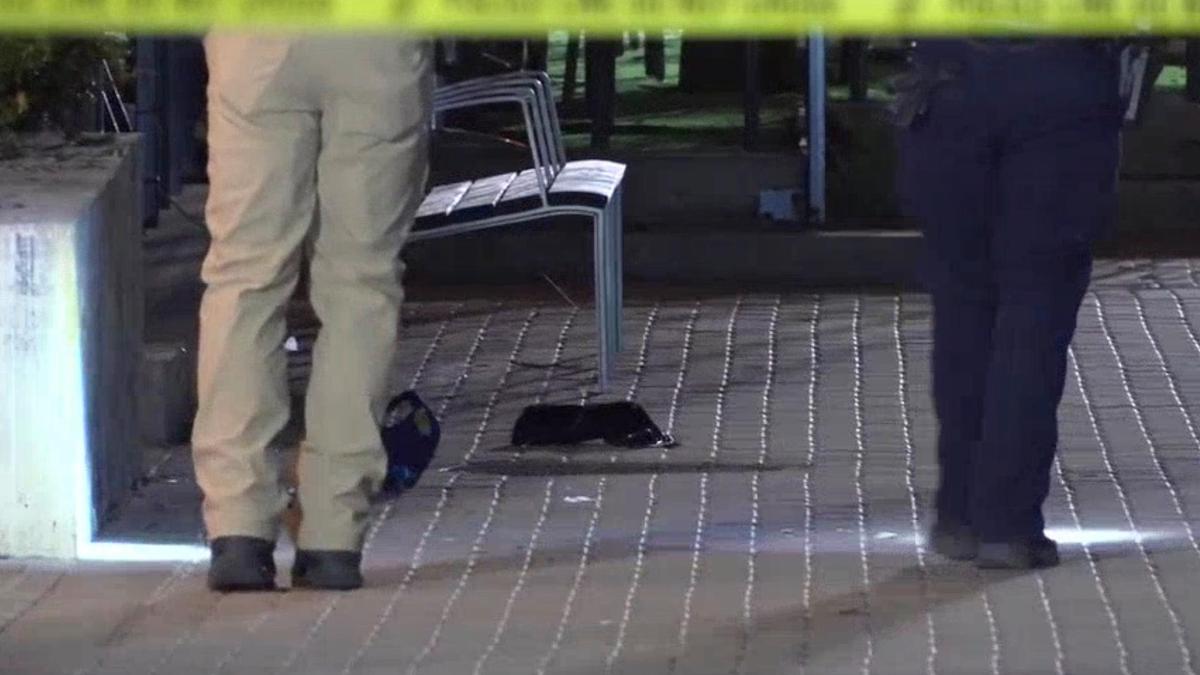
The investigation continues. Shell casings are bagged and tagged. Statements are taken. The police will look for a motive, as if a motive could ever make sense of a nineteen-year-old bleeding out near a fountain. Was it a fight that escalated? A random act of cruelty? In the end, the why matters less than the is.
What is true is that three families are sitting in a hospital waiting room right now. The air there is different than the air on the Ped Mall. It smells like industrial cleaner and anxiety. They are watching the clock, waiting for a doctor to tell them that their child’s "non-life-threatening" injury is stable. They are wondering how a Friday night turned into a lifetime of "what ifs."
We talk about the "nightlife district" as a destination. A place to go. But for these students, it became a destination they can never truly leave. They are tethered to that moment on the concrete, to the sound of the shots, and to the terrifying realization that the world is much smaller and much sharper than they were told.
The city will clean the streets. The bars will open again. The students will return, because that is what the young do—they reclaim their spaces. They will dance and they will drink and they will shout into the night.
But for three of them, and for anyone who was standing close enough to feel the wind of a passing bullet, the neon will never look quite as bright again. The shadows in the corners of the Ped Mall have grown longer. They are filled with the memory of the night the music stopped, replaced by the hollow, metallic sound of a world that has forgotten how to be young without being afraid.
The sirens are gone now. The Hawk Alerts have been cleared. But if you stand in the center of the Mall and close your eyes, you can still feel the vibration of the panic. It stays in the brick. It stays in the marrow. It waits for the next Friday night, a ghost in the machinery of the American dream, reminding us that safety is a thin, fragile veil, and tonight, it was torn wide open.