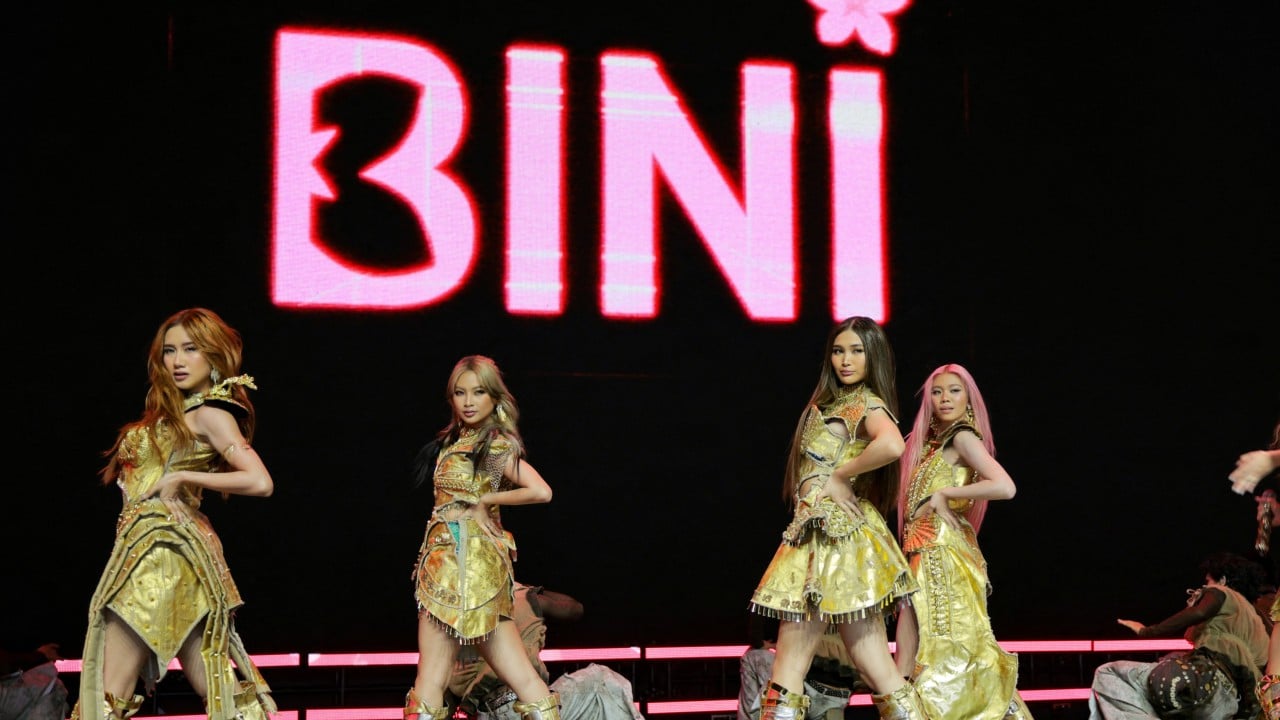
The air in the Seoul Olympic Gymnastics Arena doesn't circulate; it vibrates. It is a thick, humid soup of strawberry-scented perfume, industrial-grade hairspray, and the sharp, metallic tang of stage pyrotechnics. If you stand in the front row, the bass from the subwoofers doesn't just hit your ears. It rearranges your heartbeat.
Then, the lights die.
A sea of candy-colored light sticks—thousands of them—flicker into existence. This is the habitat of Twice. For ten years, these nine women have lived in the center of this hurricane, a collective machine of precision and pop perfection. They are the "Nation's Girl Group," a title earned through a relentless release schedule that would break most professional athletes.
But when the music stops and the house lights come up, a different kind of silence sets in. It’s the silence of a high-performance engine cooling down in a dark garage. For Nayeon, Jeongyeon, Momo, Sana, Jihyo, Mina, Dahyun, Chaeyoung, and Tzuyu, the last decade hasn't just been a climb to the top of the Oricon and Billboard charts. It has been a marathon run in four-inch heels while the rest of the world watched for a single stumble.
The Machinery of Magic
To understand how Twice exploded into a global phenomenon, you have to look past the bright pink aesthetic and the "shashasha" viral moments. You have to look at the math. In an industry where a "standard" career might involve one comeback a year, Twice often doubled or tripled that output. They were the blue-collar workers of the idol world.
Consider a hypothetical trainee. Let's call her Ji-soo. Ji-soo wakes up at 5:00 AM for vocal lessons, spends six hours in a windowless dance studio perfecting a four-minute routine, and then undergoes "personality training" to ensure she never says the wrong thing on a live stream. This isn't a summer camp. It is an incubator.
Twice didn't just survive this incubator; they mastered it. They became the bridge between the traditional K-pop powerhouses and the new, digital-first era. They were the first girl group to truly conquer both Korea and Japan simultaneously in the streaming age. But the sheer volume of work required to maintain that territory is staggering. Since their debut in 2015, they have released over 30 albums, EPs, and repackages.
That is a new project every four months for a decade. The mental load of memorizing hundreds of choreographies and lyrics while maintaining a public persona of perpetual sunshine is a weight most of us will never feel. It is a beautiful, gilded pressure cooker.
When the Hunters Arrive
Success of this magnitude attracts more than just fans. It attracts a specific kind of scrutiny. In the digital underworld, a subculture emerged—one that the industry has started to whisper about with a mixture of fear and fascination. They are the "KPop Demon Hunters."
The name sounds like something out of a high-fantasy anime, but the reality is grounded in the harsh logistics of modern fame. These aren't literal exorcists. They are a loose collective of obsessive fans, anti-fans, and digital detectives who believe the "perfect" image of groups like Twice is a mask that needs to be stripped away.
They hunt for "demons"—the perceived flaws, the tired expressions, the momentary lapses in choreography, or the private relationships that threaten the fantasy of the "pure" idol.
The stakes are invisible until they aren't. We saw this manifest when members had to take hiatuses for anxiety. In the K-pop world, admitting to a mental health struggle was once a career-ending move. But when the hunters began circling, Twice did something unexpected. They leaned into their humanity. They didn't hide the cracks; they let the light shine through them.
Jeongyeon’s intermittent breaks from the group due to panic and physical health issues weren't just medical leaves. They were acts of defiance against a system that demands 100% uptime. By stepping away, she signaled to the hunters that there was a person underneath the sequins—a person who was allowed to be tired.
The Physics of Longevity
Most girl groups hit a "seven-year itch." This is usually when contracts expire and members decide they’ve had enough of the 20-hour workdays. They pivot to acting, they get married, or they simply disappear into the blissful anonymity of civilian life.
Twice broke the physics of the industry by renewing their contracts as a full nine-member unit in 2022. This wasn't just a business deal. It was a statistical anomaly.
Why stay? The answer lies in the emotional core of the group’s dynamic. In a landscape—excuse me—in a world where groups are often manufactured by placing strangers together in a dorm, Twice developed a sibling-like dependency. They became each other’s shock absorbers.
When the "Demon Hunters" would find a video of a member looking exhausted on a variety show and try to spin a narrative of laziness, the other eight would close ranks. They became a phalanx. This internal solidarity is the only reason they haven't burned out.
The transition from "idols" to "artists" is a perilous bridge to cross. For Twice, this meant taking the creative reins. They started writing their own lyrics. They started voicing their own musical directions. This shift moved the "stakes" from whether they could execute a dance move perfectly to whether they could communicate a genuine feeling to their audience.
The Global Pivot and the New Reality
As they moved into their second decade, the strategy changed. The explosion of K-pop in the West meant Twice had to adapt to a different kind of stardom. In Korea, an idol is a "shining example." In the West, a star is expected to be "authentic," which often means being messy.
Twice found a middle ground. They traded some of the hyper-produced bubblegum sound for something more sophisticated—disco-infused pop and synth-heavy anthems that reflected their growth into adulthood. They weren't just singing about crushes anymore; they were singing about the complexities of staying true to yourself when everyone wants a piece of you.
But the digital hunters followed them across the ocean. The scrutiny didn't lessen; it just changed languages. Now, the debates aren't just about vocal stability; they are about "global relevance" and "chart longevity."
The pressure to compete with younger, "fresher" groups like NewJeans or IVE is constant. The industry is obsessed with the new. Yet, Twice remains the steady heartbeat of the genre. They are the proof that you don't have to be a flash in the pan. You can be a slow-burning sun.
The Ghost in the Machine
We often forget that K-pop is an export. It is soft power. It is a multi-billion dollar pillar of the South Korean economy. When a group like Twice "explodes," they aren't just making music; they are carrying the cultural weight of a nation.
Imagine the responsibility. You are 25 years old. If your song doesn't hit number one, stock prices for your agency might dip. If you are caught looking unhappy at an airport, it becomes a headline in three different time zones.
The "Demon Hunters" thrive on this pressure. They wait for the moment the mask slips. But the paradox of Twice is that the more they have shown their exhaustion, their struggles, and their genuine friendship, the more untouchable they have become. The "hunters" are looking for a fake idol to tear down. They don't know what to do with a group of women who admit they are human.
There is a specific kind of bravery in being "bright" for ten years. It isn't the absence of darkness; it is the choice to keep the neon lights on even when the power is flickering.
The Final Bow
At the end of a concert, there is a moment when the backing tracks fade and the fans begin to leave. The nine members stand on the stage, stripped of the choreography, waving at the lingering faces in the nosebleed seats.
They look smaller without the camera angles. They look like nine women who have spent a decade in a high-speed chase with their own shadows.
The Demon Hunters are still out there, scrolling through 4K fan-cams, looking for a reason to say the reign is over. They are waiting for the "demons" of age, fatigue, or changing tastes to finally catch up.
But they miss the point.
Twice didn't just explode; they endured. They redefined what it looks like to win. Winning isn't about never falling. It's about being the only ones left standing on the stage when the decade ends, still holding each other’s hands, while the rest of the world wonders how they didn't break.
The lights in the arena eventually go dark. The strawberry scent fades. The members walk down the ramp into the quiet of the backstage.
The hunt continues tomorrow. But for tonight, the music was enough.