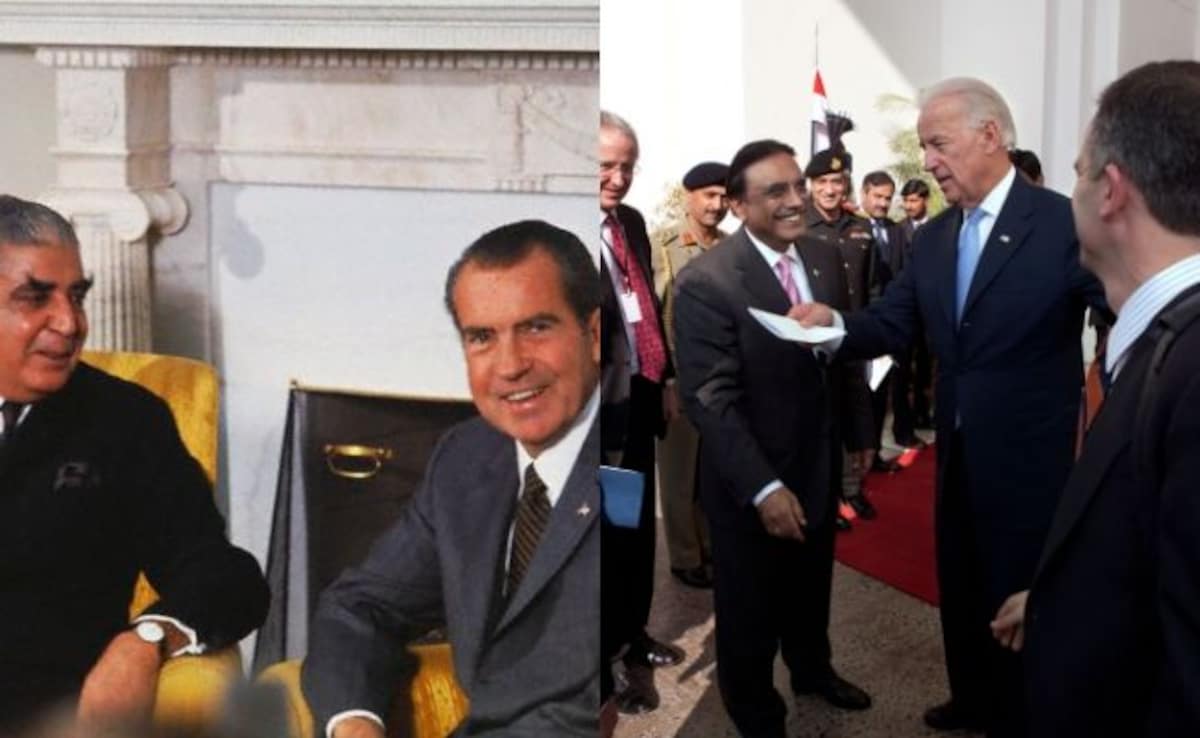
The history of US-Pakistan relations isn't a "long-standing friendship." It’s a series of transactional one-night stands masquerading as a marriage.
Most analysts look at the timeline from Nixon to Clinton to Obama and see a "shifting landscape" of diplomacy. That’s the first lie. The reality is far grittier. Every time a US President touched down in Islamabad, it wasn't to build a nation or "foster democracy." It was to rent a base, buy a silent partner, or manage a nuclear-armed headache.
If you think these visits were about shared values, you’ve been reading the wrong history books.
The Nixon Delusion and the Kissinger Cold War
Richard Nixon’s 1969 visit is often cited as the high-water mark of the alliance. The "Great Pivot." In truth, Nixon didn't care about Pakistan. He cared about China.
Pakistan was merely the mailman. Nixon and Henry Kissinger used Yahya Khan’s regime as a secret channel to reach Mao Zedong. The "special relationship" was a cold-blooded calculation that ignored the internal rot of the Pakistani military state. While the US praised Pakistan’s "stability," the country was spiraling toward a civil war and the eventual secession of Bangladesh in 1971.
The US didn't stop the genocide in East Pakistan. They looked the other way because they needed the post office to stay open. This set the template for the next fifty years: ignore the domestic disaster as long as the external utility remains high.
Jimmy Carter’s "Peanuts" and the Afghan Trap
By the late 70s, the relationship was dead. Then the Soviets invaded Afghanistan. Suddenly, the "pariah" state under General Zia-ul-Haq became the "frontline ally."
The US didn't send a President during this era—they sent billions in hardware and CIA handlers. This is where the modern tragedy began. The US traded Pakistan’s long-term social fabric for a short-term victory against the USSR. We funded the radicalization of the border regions, and when the Wall fell, we vanished.
When people ask, "Why is Pakistan like this?" they usually blame local corruption. They should look at the 1980s. The US treated the country like a discarded tool. We didn't just leave; we slapped them with the Pressler Amendment and walked away from the mess we helped create.
Bill Clinton’s Five-Hour Stopover
Fast forward to March 2000. Bill Clinton’s visit was the ultimate insult.
He spent five days in India and five hours in Pakistan. He didn't even stay the night. He delivered a televised lecture to the Pakistani people, telling them that "borders cannot be redrawn in blood." It was a drive-by scolding.
The US had realized that India was the real economic prize. Pakistan was now the "problem child" with nukes. Clinton’s visit wasn't diplomacy; it was a wellness check on a mental patient. He wanted to ensure the nuclear buttons weren't being pressed, and then he caught the first flight out.
The Bush Era The $20 Billion Shakedown
George W. Bush’s 2006 visit was the peak of the transactional era. Following 9/11, Pakistan was given a choice: "You’re either with us or against us."
Pervez Musharraf, a military dictator, was rebranded as a "courageous leader." The US pumped nearly $20 billion into the country over the next decade. Where did it go? Not into schools. Not into infrastructure. It went into the military’s coffers to maintain a double-game that everyone—including the CIA—knew was happening.
We paid them to fight the very insurgents they were sheltering. It wasn't a failure of intelligence; it was a failure of will. The US needed a supply route into Afghanistan, and Pakistan knew it could charge whatever rent it wanted.
Obama, Trump, and the Biden Silence
Barack Obama never visited. Neither has Joe Biden.
Trump met Imran Khan at the White House, but the vibe was "let’s get out of Afghanistan and I’ll give you a tweet." The lack of a Presidential visit since 2006 tells you more than any state department briefing ever could.
The US has finally realized that the "Strategic Partnership" was a ghost. When Obama authorized the raid on Abbottabad to kill Osama bin Laden without telling the Pakistanis, the mask finally slipped. You don't hide a raid from a "major non-NATO ally" if you actually trust them.
The Nuclear Elephant in the Room
Why do we still talk to them at all? It’s not the economy. It’s not the geography—not anymore. It’s the 170 nuclear warheads.
Every interaction between a US President and a Pakistani leader is governed by one fear: Command and Control. We aren't worried about Pakistan using a nuke on India; we’re worried about a colonel with a beard handing one to a non-state actor during a coup.
The "relationship" is actually a long-term hostage negotiation where the hostage is global security.
Stop Asking the Wrong Question
Standard media outlets ask: "When will Biden visit Pakistan to reset the relationship?"
That is the wrong question. The right question is: "Why are we pretending there is a relationship to reset?"
The US-Pakistan dynamic is a relic of the 20th century. In a world where the US is decoupling from China and embracing India as a counterweight, Pakistan has lost its utility as a middleman. It is now a Chinese client state with a massive debt problem.
The Harsh Reality of 2026
If you’re waiting for a return to the "golden age" of US-Pakistan ties, you’re waiting for a fantasy. There was no golden age. There was only a series of emergencies.
- Nixon used them for China.
- Reagan used them for the Mujahideen.
- Bush used them for Al-Qaeda.
Now, the US has no immediate "use" for Pakistan, and the silence from the White House is deafening. Pakistan is no longer the "frontline state." It’s a footnote in the Indo-Pacific strategy.
The next time you see a "history of visits," don't look at the handshakes. Look at what the US was buying at the time. The price was always too high, and the product was always defective.
The era of the Presidential visit as a symbol of alliance is over. What remains is a cold, clinical management of a neighbor we can’t afford to ignore but can no longer pretend to like.
Accept the divorce. It’s been final for years.