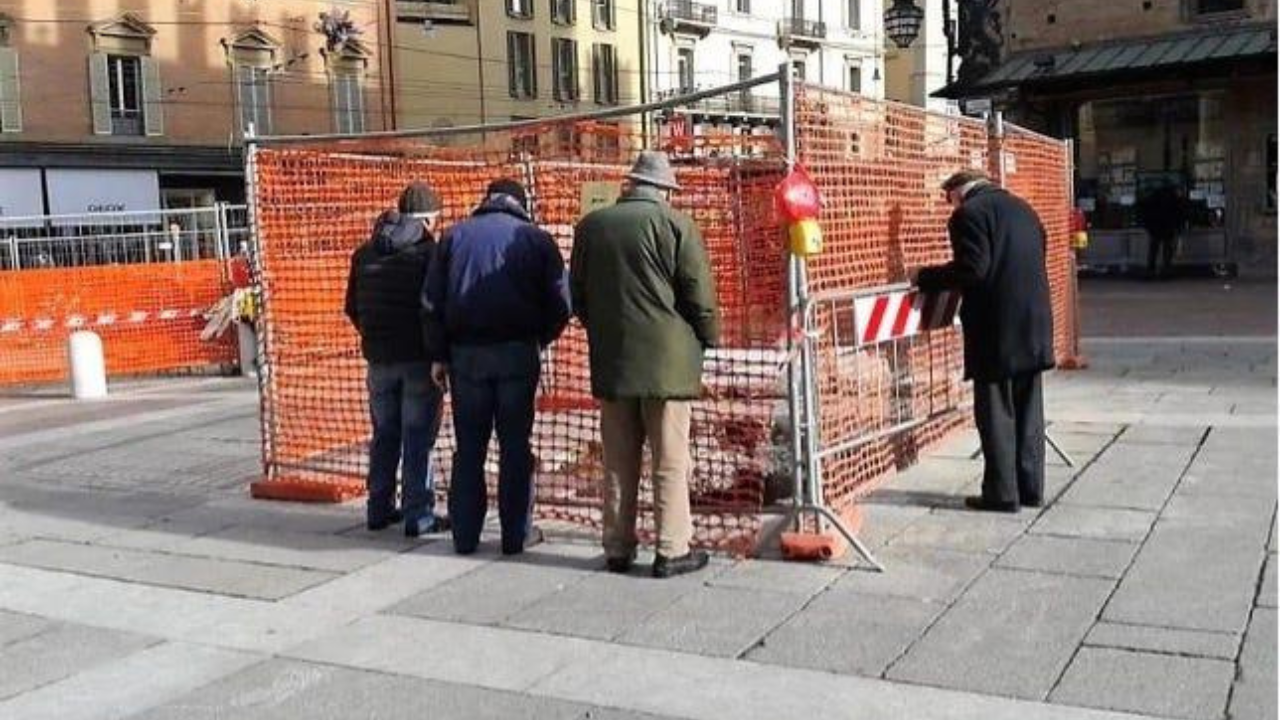
The internet treats the umarell like a quirky postcard from Bologna. They paint a picture of a hunched man in a beige jacket, hands clasped behind his back, staring at a backhoe with nothing better to do. The media calls it a "cultural curiosity" or a "cute retirement hobby."
They are wrong.
What the world sees as a nuisance or a meme is actually the last vestige of informal quality control in a world obsessed with bureaucratic "safety" at the expense of actual competence. We have traded the seasoned eyes of the master craftsman for the digital checklist of a twenty-something project manager who hasn't ever held a shovel.
The umarell isn't a bored pensioner. He is an unpaid, high-level auditor with fifty years of institutional memory. If you think they are "giving orders without being asked," you’ve missed the point entirely. They are pointing out that your foundation is off by three centimeters because they saw the same mistake crumble in 1974.
The Death of the Eyeball Test
Modern construction relies on sensors, BIM software, and rigorous certification. We assume that because a process is digital, it is precise. But anyone who has spent a week on a live site knows that "as-built" rarely matches "as-planned."
The umarell represents the "Eyeball Test." This isn't just staring; it is a form of cognitive pattern recognition honed over decades in the trades. When an elderly man tells a foreman that the concrete mix looks too "thirsty," he isn't being annoying. He is detecting a slump variable that the onsite tech might have missed while checking their Instagram.
We have devalued this experiential knowledge. We call it "anecdotal." We prefer "data-driven" insights, forgetting that data is often lagged, corrupted, or misinterpreted by people who lack the context to understand what they are looking at. The umarell is real-time edge computing in a flat cap.
Why Management Hates the Unpaid Auditor
Why do companies put up fences? Why do they complain about these men? It isn't just safety. It's because the umarell is the only person on the street with the balls to call out inefficiency.
In a standard corporate structure, a junior engineer won't correct a senior site lead for fear of hierarchy. The subcontractor won't complain about the materials because they want the next contract. The umarell has no skin in the game other than the civic pride of his neighborhood. He is the ultimate "independent consultant" because he cannot be fired, bought, or intimidated by a human resources department.
I have watched project budgets balloon by 40% because of "unexpected" soil shifts that the local old-timers predicted on day one. They knew where the old streams ran. They knew which quarries were selling subpar stone in the eighties. We ignored them because they didn't have a LinkedIn profile.
The Architecture of Boredom vs. The Architecture of Observation
The "lazy consensus" suggests these men watch construction because they are lonely. This is a patronizing, shallow take.
They watch because construction is the only place left where something is actually happening. In a service-dominated economy, most "work" is invisible. It's moving pixels. It's "aligning stakeholders." Construction is visceral. It is the literal manifestation of human will over the physical world.
The umarell is a critic of the built environment. By standing there for six hours, he is performing a ritual of accountability. He is the ghost of the guild system, reminding the modern worker that someone is watching the seams. When the work is shoddy, the umarell’s silence is more deafening than his critique.
The Cost of Losing the Critic
Italy is currently facing a demographic shift that will eventually kill off the original generation of umarells. This is a disaster for urban development.
When they are gone, we lose the "informal archive." We lose the man who remembers that under this specific intersection lies a Roman ruin that wasn't properly mapped, or a gas line that "officially" doesn't exist but definitely does.
We are replacing this organic supervision with "Smart City" sensors. We think a vibration sensor on a pile driver is a substitute for a man who knows what the ground is supposed to sound like. It isn't. Sensors tell you when something is breaking; an umarell tells you it's about to break.
Stop Calling Them "Pensioners"
Stop using the language of decline. The umarell is a guardian of the commons.
If you are running a project and you see a group of men gathered at the fence, don't ignore them. Don't hide behind a "Keep Out" sign. Bring them a coffee. Ask them what they see. You will spend ten euros on espresso and save ten thousand on a structural mistake that your "certified" software hasn't flagged yet.
The reality is that these men provide more value to the civic infrastructure of Italy than half the "consultants" sitting in glass offices in Milan. They are the only ones holding the line against the cheapening of the world.
The next time you see an umarell, don't smile at the "cute" old man. Look at what he’s looking at. He sees the cracks you’re trying to paint over.
He’s not watching you work. He’s watching you fail.


