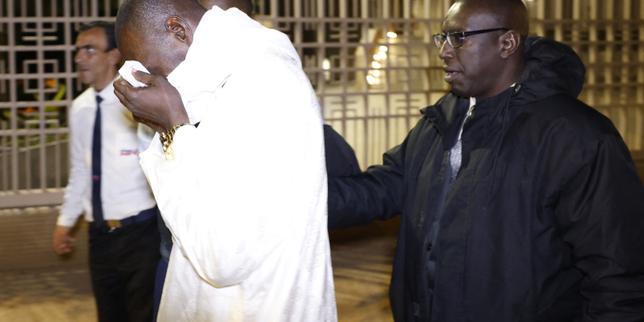
The final whistle of a football match usually signals the end of a contest, but for a group of Senegalese supporters in Rabat, it was merely the beginning of a long-term legal nightmare. While the African Cup of Nations (CAN) is often marketed as a festival of continental unity, the judicial aftermath of the recent tournament tells a much grimmer story of security crackdowns and diplomatic silence. Moroccan courts have officially upheld the prison sentences for several Senegalese fans accused of "hooliganism" and "assaulting public officials," a decision that effectively slams the door on immediate hopes for a political pardon or a quick return home. These fans, many of whom claim they were caught in the crossfire of crowd control measures, now face months behind bars in a foreign land.
The situation exposes a jagged rift between the joyous image of the "Beautiful Game" and the hard-line security apparatus that keeps it under control. This isn't just about a few broken chairs or a scuffle in the stands. It is an indictment of how host nations balance the ego of a successful tournament with the rights of visiting citizens who lack local legal protection.
Security Overreach and the Hooliganism Label
The term "hooliganism" is a convenient catch-all. In the context of the Rabat rulings, it has been used to justify sentences ranging from six months to a year for individuals who traveled across the continent to support the Teranga Lions. The prosecution’s case rested heavily on video evidence and police testimony alleging that the fans resisted arrest and damaged public property following a high-tension match. However, the defense paints a different picture. They describe a chaotic environment where language barriers and aggressive policing tactics escalated minor disagreements into criminal charges.
The Moroccan judiciary has been increasingly sensitive to stadium violence over the last decade. Following several high-profile domestic incidents involving local "Ultras," the government enacted strict laws aimed at stamping out dissent and disorder in sports venues. While these laws were designed to curb internal gang-like behavior within Moroccan football, they are now being applied with full force against foreign nationals who may not have understood the severity of the local legal climate.
The fans weren't prepared for this. They expected a yellow card or a fine, not a prison cell. This gap in understanding is where the tragedy lies. For the Moroccan state, the priority is maintaining an image of absolute order as it prepares for future international hosting duties, including the 2030 World Cup. Allowing foreign fans to "disrupt" that order without consequence would, in the eyes of Rabat, set a dangerous precedent.
The Diplomatic Vacuum
Where is the Senegalese government in all of this? While there have been formal "follow-ups" from the Senegalese embassy, the lack of a forceful public demand for the repatriation of these citizens is glaring. Senegal and Morocco share a deep, historical relationship built on trade, religion, and regional security. It is a partnership that neither side wants to jeopardize over a handful of football supporters.
This silence is tactical, but it carries a human cost. When a state prioritizes its bilateral relations over the individual liberty of its citizens abroad, it sends a message that the "Lion’s roar" only carries weight within its own borders. The families of the detained men in Dakar have been left to organize protests and social media campaigns, hoping to embarrass the government into action. So far, the response has been a lukewarm promise to "ensure a fair trial," a promise that feels empty now that the appeals have been rejected and the sentences confirmed.
- Case Study of Inaction: During similar incidents in other regional tournaments, swift diplomatic intervention has led to "administrative deportations" rather than criminal sentencing.
- The Contrast: When high-profile figures or corporate sponsors face legal hurdles, the phone lines between Dakar and Rabat buzz with activity. For the average fan in the cheap seats, the line is dead.
The judiciary’s refusal to overturn these sentences suggests that the Moroccan authorities are not interested in a "diplomatic out." They want a conviction that stays on the books. It serves as a warning to every other fan base on the continent: when you enter a Moroccan stadium, you are under the jurisdiction of a state that does not view "passion" as a legal defense.
The Infrastructure of Control
Modern football stadiums are no longer just places to watch a game; they are sophisticated zones of surveillance. In Rabat, the use of facial recognition and high-definition CCTV played a massive role in identifying the defendants. This technological edge makes it nearly impossible for a defense team to argue against "presence at the scene," even if the specific actions of the individual are obscured by the crowd.
We have moved into an era where the stadium is a laboratory for social control. The "hooligan" is the perfect bogeyman to justify the expansion of these powers. By labeling the Senegalese fans as such, the state bypasses the nuance of the situation. It doesn't matter if a fan was pushed or if they were reacting to a perceived injustice on the pitch. Once the "hooliganism" tag is applied, the legal machinery moves toward a predetermined outcome.
The conditions of the detention itself have also come under fire. Reports from legal observers suggest that the language barrier has hampered the ability of the Senegalese fans to participate in their own defense. While the court provides translators, the nuances of the "Wolof" or "Senegalese French" dialects are often lost in the rigid Arabic-led legal proceedings of the Moroccan court. This isn't just a failure of justice; it's a structural barrier that ensures a conviction.
The Burden on the Families
Back in Dakar, the economic ripple effects are devastating. Most of those detained were the primary breadwinners for their families. They spent their savings on a plane ticket and a dream of seeing their national team lift a trophy. Now, their families are selling assets to pay for Moroccan legal fees that lead nowhere.
There is a cruel irony in the fact that the very tournament meant to celebrate African success has become a source of financial and emotional ruin for these households. The Confederation of African Football (CAF) has remained largely silent on the matter, viewing it as a "local police issue." By washing their hands of the legal fallout, CAF effectively gives host nations a blank check to treat visiting fans however they see fit. This lack of a unified "Fans’ Rights" charter at the continental level leaves every traveling supporter vulnerable.
If CAF wants to continue hosting tournaments in North Africa, it must establish a legal liaison office that can intervene in these cases before they reach the point of no return. Without it, the risk of attending an away match becomes too high for the average person.
The 2030 Horizon
Morocco’s hard-line stance must be viewed through the lens of its 2030 World Cup ambitions. The country is currently in a phase of "reputation building." It wants to prove to FIFA and the world that it can handle large, volatile crowds with absolute efficiency. Part of that proof involves showing that the judicial system will not hesitate to punish anyone who threatens the peace.
The Senegalese fans are, in many ways, collateral damage in a much larger geopolitical branding exercise. To show leniency would be to show "weakness" in the eyes of international observers who equate strictness with safety. This is the dark side of the "Global Game." The fans provide the atmosphere that the broadcasters sell, but when that atmosphere turns sour, the fans are the only ones who pay the price.
The legal system in Morocco is not broken; it is working exactly as intended. It is designed to protect the state and the event, not the individual. For the men sitting in a Rabat prison tonight, the cheering crowds of the CAN final are a distant, bitter memory. They are learning the hard way that in the modern world of sports, the most dangerous place to be is in the middle of someone else’s success story.
The confirmed sentences should serve as a wake-up call for football federations across Africa. It is time to stop pretending that these tournaments are just about sport. They are high-stakes political events where the supporters are often the most vulnerable people in the stadium. Protecting them requires more than just a ticket and a scarf; it requires a legal and diplomatic framework that values a citizen's freedom as much as a striker's goal. Until that changes, the "Home of African Football" will remain a place where a celebration can turn into a sentence with the blow of a whistle.