The sun over the borderlands is not a friend. It is a weight. By ten in the morning, the light doesn't just illuminate the scrub brush and the rusted tracks; it presses down on them with a physical, bruising force. In the middle of summer, the air stops moving entirely. It just sits there, cooking.
Imagine a grain hopper. It is a massive, windowless vessel of corrugated steel designed to hold thousands of pounds of dry bulk. It is efficient. It is durable. And when the southern heat hits that steel, the car ceases to be a piece of industrial equipment. It becomes a furnace. If you liked this piece, you should check out: this related article.
Six people died inside one of those cars recently.
They weren't just "migrants," a word that has become so politically loaded it has lost its human pulse. They were sons. They were likely brothers or fathers. They were people who believed, with a desperation most of us will never have to summon, that a dark, windowless box was a doorway to a better life. They were wrong. The door didn't lead to a new beginning; it led to a temperature of 130 degrees Fahrenheit. For another perspective on this story, see the recent update from Associated Press.
The Physics of a Trapped Breath
Steel is an incredible conductor of thermal energy. In the direct glare of the afternoon, the exterior of a rail car can easily surpass 150 degrees. Inside, the air has nowhere to go. There is no cross-breeze. There is no relief. The oxygen stays, but it thickens. It begins to shimmer with the scent of hot metal and old grain dust.
When the human body encounters that kind of heat, it tries to fight back. It sweats. It pumps blood to the skin’s surface to dump the heat. But in a closed steel box, the humidity from six people breathing and sweating creates a localized greenhouse effect. The sweat stops evaporating. The cooling mechanism fails.
The heart starts to race. It is trying to move heat that has nowhere to go.
Medical examiners often speak of heatstroke in clinical terms: "Hyperthermia leading to multi-organ failure." But the reality is a slow, agonizing descent into confusion. The brain starts to swell. The muscles begin to break down, releasing proteins into the bloodstream that clog the kidneys. You lose the ability to think clearly. You lose the ability to scream for help. Eventually, you just drift into a feverish, heavy sleep from which there is no waking up.
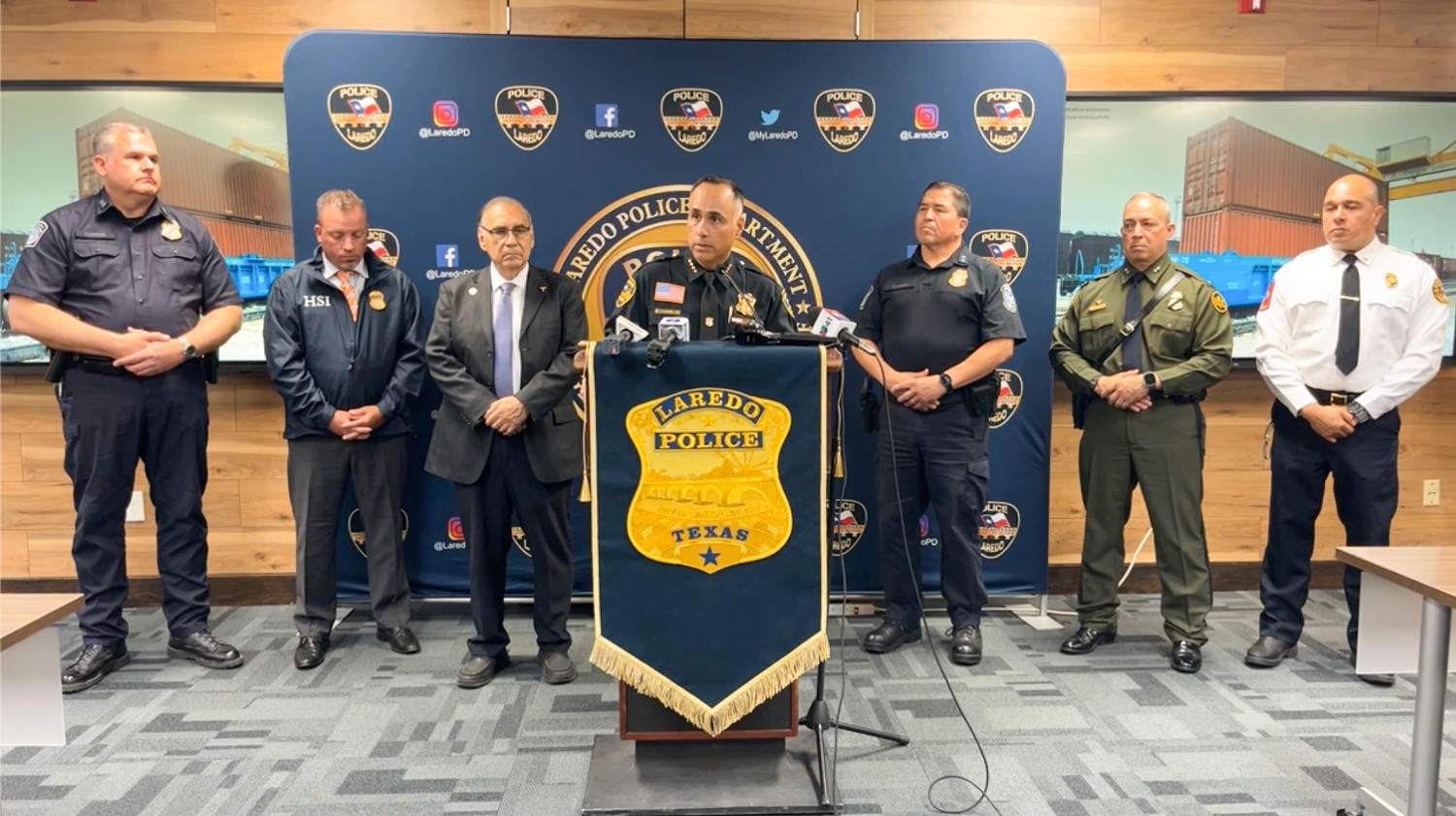
The authorities found them when the train stopped. Six bodies in the corner of a car that had become a tomb.
The Invisible Stakes of the Journey
Why do they get in?
It is easy to sit in an air-conditioned room and judge the "recklessness" of such a choice. We look at the statistics—hundreds of deaths along the border every year—and wonder how anyone could take the risk. But that perspective ignores the math of the desperate.
If you are standing on one side of a line and your life is defined by violence, starvation, or a total lack of a future, the "risk" of the train car starts to look like a "chance." It is a horrific gamble, but when the alternative is a guaranteed slow death of the soul, people choose the gamble every single time.
Consider a hypothetical young man named Elias. He isn't real, but he represents a thousand real people. Elias has eighty dollars in his pocket and a sister who needs medicine he can't afford. He hears about the "train of death." He knows it is dangerous. But he also knows that if he stays, nothing changes. He looks at the steel car and doesn't see a furnace. He sees a ticket. He sees a way to be the hero of his family’s story.
He climbs in. He pulls the hatch shut. He thinks he is being clever by hiding. He doesn't realize that he is locking himself into a vacuum of heat.
The tragedy of the six found in that train car isn't just that they died. It’s that they died in a world that has become remarkably efficient at moving goods and remarkably indifferent to moving people. We can track a shipment of grain across three continents with GPS precision. We know exactly when a cargo container will arrive at a port. But six human beings can suffocate and cook in a car for days, and the system doesn't blink until the smell reaches a worker at a rail yard.
The Cold Reality of the Tracks
The logistics of the border are brutal. Trains are searched, yes, but they are miles long. A single freight train can have over a hundred cars. Checking every nook, every grain hopper, and every tanker is a task that the current infrastructure isn't designed to handle. The focus is on contraband, on weight, on schedules.
The human element is a ghost in the machine.
When we talk about border security or immigration policy, we often get bogged down in the "how many" and the "where." We argue about walls and sensors. We talk about "flows" of people as if they are water or electricity. We forget that every "unit" in that flow is a person who felt the scorching heat of that steel wall against their back.
The death toll is rising. As climate patterns shift and the heat in the Southwest breaks records year after year, the "death traps" of the rail lines become even more lethal. What might have been a grueling, miserable journey ten years ago is now a death sentence. The margin for error has vanished.
There is a specific kind of silence that follows a tragedy like this. It is the silence of a rail yard at night, the humming of the engines, the clicking of cooling metal. It is the sound of a world moving on. The car will be hosed out. It will be refilled with corn or soy or gravel. It will be sent back out on the tracks, rolling through the same desert, under the same sun.
But the ghosts remain.
They remain in the scuff marks on the interior walls where someone tried to find a way out. They remain in the forgotten water bottles, now melted and warped by the heat. They remain in the hearts of families in small towns hundreds of miles away, who are still waiting for a phone call that will never come.
We like to think of ourselves as a connected society. We are more "in touch" than ever before. Yet, we live in a world where six people can die in a box while the rest of us check our weather apps to see if it’s too hot to go for a jog. The disconnect is the real tragedy.
The sun will rise again tomorrow. The steel will start to hum. The heat will begin its slow, steady climb toward 130 degrees. Somewhere, right now, someone is looking at a train car and wondering if this is the one that finally takes them home. They are weighing the heat against the hope.
The metal is already getting warm.