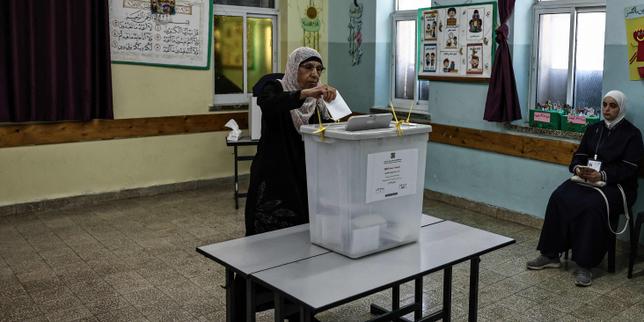
The postponement or restricted execution of Palestinian municipal elections serves as a diagnostic tool for the structural failure of the Oslo-era institutional framework. While often framed as a simple democratic exercise, these elections function as a high-stakes stress test for the legitimacy of the Palestinian Authority (PA) against the rising influence of Hamas and the logistical constraints of Israeli administrative control. The central friction point is not the act of voting, but the systemic inability to synchronize political cycles between the West Bank and Gaza, creating a bifurcated governance model that ensures institutional decay.
The Dual-Track Legitimacy Crisis
The Palestinian electoral system operates within a zero-sum game between two competing power centers. Each municipal contest is less about local service delivery—waste management, zoning, or water rights—and more about the validation of a national narrative. For another look, read: this related article.
- The Fatah Consolidation Model: For the PA, municipal elections in the West Bank are a mechanism to reassert dominance and maintain a semblance of democratic process without risking the total loss of control inherent in a general or presidential election. By focusing on local councils, the PA attempts to co-opt local tribal leadership and professional elites into its patronage network.
- The Hamas Obstruction-Participation Paradox: In Gaza, the absence of these elections is a deliberate policy of Hamas to prevent the PA from gaining an institutional foothold. Conversely, in the West Bank, Hamas often chooses to boycott or run through "independent" lists to undermine the PA’s claim to a unified national mandate.
This division creates a "legitimacy trap." If the PA holds elections only in the West Bank, it acknowledges the territorial and political separation from Gaza. If it cancels them due to Gaza’s non-participation, it proves its own administrative impotence.
Structural Bottlenecks in Municipal Sovereignty
Local governance in the Palestinian territories is governed by a complex set of overlapping jurisdictions. To understand why municipal elections often fail to translate into improved living conditions, one must map the three primary constraints on council power. Further insight on this trend has been provided by Al Jazeera.
Area C and the Zoning Ceiling
Over 60% of the West Bank is designated as Area C, where Israel retains full civil and security control. Municipalities that overlap with or border Area C are structurally unable to execute long-term urban planning. A mayor elected in a Palestinian city cannot authorize infrastructure—such as a sewage treatment plant or a primary road—if it enters Area C without a permit from the Israeli Civil Administration. This creates a "sovereignty ceiling" where the electoral mandate is nullified by external administrative veto.
The Fiscal Dependence Variable
Palestinian municipalities suffer from a chronic revenue-to-expenditure gap. Revenue streams are primarily limited to local property taxes and service fees (electricity and water). However, the PA’s Central Government frequently intercepts or delays the transfer of "clearance revenues" (taxes collected by Israel on behalf of the PA) to the local level.
- Net Lending: This is the process where Israel deducts unpaid utility bills from Palestinian municipalities directly from the PA’s tax revenues. This creates a feedback loop of debt: local councils cannot pay the PA, the PA cannot pay Israel, and Israel deducts the debt at the source.
- Result: The newly elected council inherits a structural deficit that makes the fulfillment of campaign promises mathematically impossible.
The Logistics of Fractional Voting
The execution of these elections follows a "phased approach," a term used by the Central Elections Commission (CEC) to manage the impossibility of a single-day national vote. This phasing is not an optimization strategy but a tactical retreat.
Phase One: The Rural Skew
Initial rounds of voting typically target smaller, rural villages where tribal (Hamula) affiliations outweigh partisan ideology. These areas are easier to manage from a security perspective and are less likely to produce a "protest vote" against the PA establishment. Success in Phase One is then used as a propaganda tool to build momentum for Phase Two.
Phase Two: The Urban Center Volatility
Large urban hubs—Nablus, Hebron, Ramallah—are the true indicators of political sentiment. These centers house the professional class, students, and ideological blocs. High turnout in these areas often correlates with high levels of dissatisfaction. When the PA senses a potential sweep by opposition-aligned lists in these hubs, the probability of "indefinite postponement" for security or technical reasons increases exponentially.
The Security Coordination Factor
A critical, often overlooked variable is the role of security forces. The ability to hold an election depends on the cooperation (or at least the non-interference) of the Israeli Defense Forces (IDF). If candidates are arrested during the campaign period or if movement between towns is restricted via checkpoints, the democratic integrity of the vote is compromised.
Furthermore, the "Security Coordination" between the PA and Israel creates a paradox for voters. Candidates who are seen as too cooperative with the PA are branded as agents of the status quo, while those who are too defiant face the risk of detention. This produces a "hollowed-out candidate pool," where the most capable technocrats often refuse to run to avoid becoming collateral damage in the PA-Hamas-Israel triangle.
Quantifying Voter Apathy
Data from recent municipal cycles suggests a diverging trend between registration and turnout. While registration remains high (often above 90%), actual turnout fluctuates wildly based on the perceived impact of the vote.
- Turnout in Contested Districts: 50%–60%.
- Turnout in Non-Contested (Single List) Districts: 0% (appointments are made by consensus).
The prevalence of "acclamation" or single-list wins in hundreds of villages indicates a shift away from competitive democracy toward a tribal-consensus model. This trend suggests that the Palestinian public increasingly views the municipal election not as a choice of policy, but as a distribution of local resources among established families.
The Cost Function of Postponement
Every time an election is delayed, the cost of future governance increases. This "Governance Debt" manifests in several ways:
- Institutional Atrophy: Long-term acting councils lose the legal authority to sign major contracts, leading to stalled infrastructure.
- Radicalization of the Outsider: When formal political channels are closed, opposition shifts to informal, often violent, sectors.
- Donor Fatigue: International aid is increasingly tied to "democratic benchmarks." Continuous delays erode the PA’s ability to secure budgetary support from the EU and other multilateral organizations.
Strategic Realignment
The current trajectory of Palestinian municipal elections is not leading toward a national democratic revival. Instead, it is cementing a fragmented reality where local councils act as crisis managers rather than policy makers. The disconnect between the voter’s intent and the council’s actual power ensures that the outcome of any election—regardless of who wins—remains largely decorative.
To break this cycle, the focus must shift from the act of voting to the powers of the office. Without a fundamental restructuring of the fiscal relationship between the Central Government and the municipalities, and a resolution of the zoning restrictions in Area C, elections will continue to function as a pressure valve for public frustration rather than a vehicle for administrative reform. The strategic play for observers and stakeholders is to monitor the "uncontested list" rate; as this number rises, the relevance of the PA as a central administrative body inversely declines.