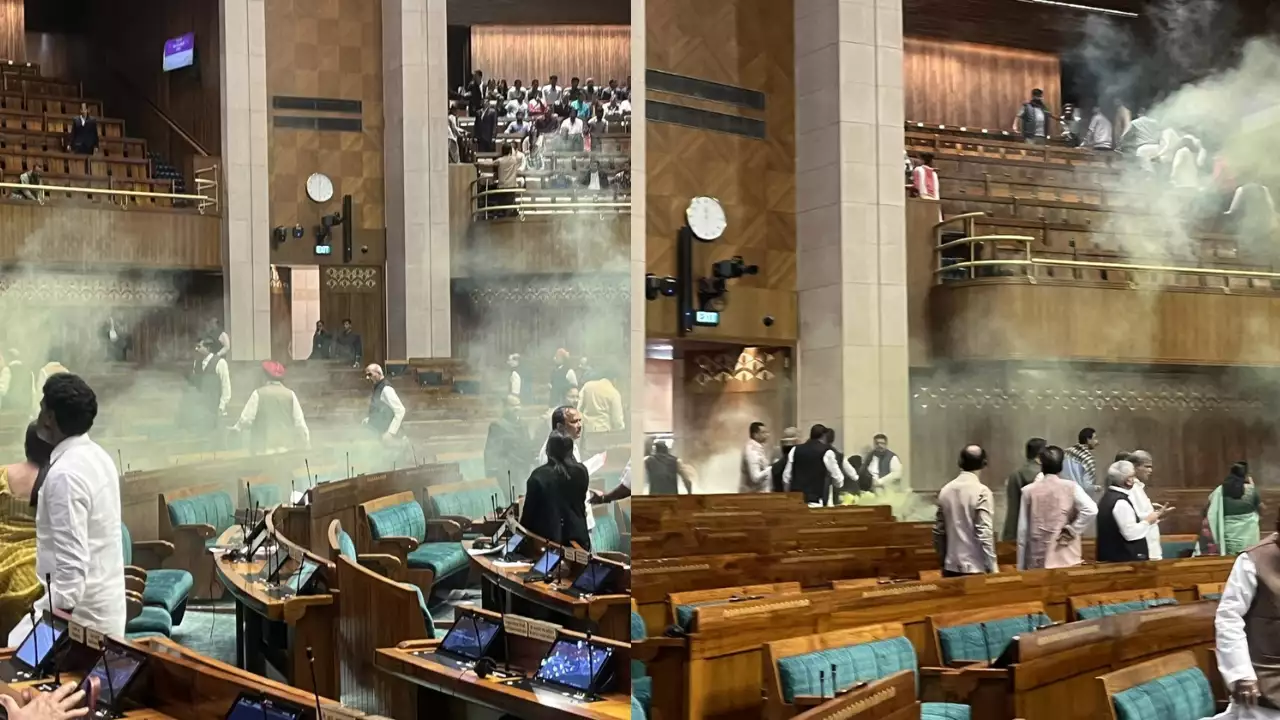
The security situation in Mali has shifted from a simmering border conflict into a direct assault on the nation's urban arteries. While initial reports focused on the visceral imagery of smoke rising over military outposts, the strategic reality is far more calculated. This isn’t just a series of random raids. It is a coordinated effort by Al-Qaeda-linked militants and regional factions to prove that the state cannot protect its most vital centers. By targeting northern and central cities simultaneously, these groups are forcing the Malian Armed Forces (FAMa) to overextend their resources, leaving vast rural stretches unguarded while they scramble to secure city gates.
The conflict has entered a stage of high-visibility warfare. For years, the fight was contained in the "three borders" region, a lawless stretch where Mali, Niger, and Burkina Faso meet. Now, the violence has migrated. The recent attacks on Gao, Sévaré, and Timbuktu represent a psychological offensive. The goal is to isolate these hubs, cutting off supply lines and creating a "siege mentality" among the civilian population. When a city is cut off from food, fuel, and medical supplies, the government's legitimacy erodes faster than any battlefield defeat could manage.
The Failure of Traditional Buffer Zones
For decades, the strategy relied on maintaining a presence in remote outposts to intercept militants before they reached population centers. That doctrine is now dead. The withdrawal of international forces and the subsequent reliance on private military contractors has altered the chemistry of the battlefield. The militants are no longer hiding in the scrubland; they are infiltrating the peripheries of major towns, using the local population as a shield against airstrikes.
Military commanders in Bamako face a brutal math problem. To secure a city like Gao, they need thousands of boots on the ground. However, every soldier stationed behind a concrete barrier in a city is a soldier not patrolling the highways. The insurgents know this. They wait for the convoys. They plant improvised explosive devices (IEDs) on the only roads that connect the north to the south. This turns the Malian geography into a series of islands, where the government holds the "land" but the insurgents control the "water" between them.
The Weaponization of Information and Imagery
Propaganda has become as lethal as the Kalashnikov. Within minutes of an attack, high-definition footage of burning barracks or captured equipment floods encrypted messaging apps. This isn't amateur hour. These media wings are professionalized, designed to demoralize the rank-and-file soldier and convince the international community that the current security apparatus is failing.
The government often responds with silence or delayed denials. This creates an information vacuum. In that void, rumor becomes fact. When the state fails to provide a timely, credible narrative, the public turns to the very sources seeking to destabilize the country. We are seeing a masterclass in asymmetrical psychological warfare where the "image" of an attack often carries more weight than the tactical outcome of the skirmish itself.
The Economic Cost of the Siege
War is expensive, but instability is costlier. The targeting of transport hubs has effectively choked Mali’s internal trade.
- Market Inflation: Basic goods in Timbuktu have seen price spikes of over 40 percent in some quarters because trucks simply cannot get through.
- Displacement: Thousands are fleeing toward the south, putting an unsustainable strain on the infrastructure of Mopti and Bamako.
- Resource Diversion: Funds meant for education and healthcare are being redirected into "emergency defense spending" that rarely makes it to the frontlines in a meaningful way.
This economic strangulation is the quiet killer. A hungry population is a frustrated population, and frustration is the primary recruiting tool for extremist ideologies. The insurgents don't need to win every firefight if they can make the cost of living under the government unbearable.
Wagner and the New Security Architecture
The elephant in the room is the presence of the Wagner Group, or the "Africa Corps" as it is being rebranded. While the Malian government touts this partnership as a move toward true sovereignty, the results on the ground are mixed. These contractors bring heavy firepower and a willingness to engage in high-risk operations, but they lack the deep cultural intelligence required to hold territory long-term.
Their presence has also complicated Mali’s relationships with its neighbors. The disintegration of the Algiers Accord—a peace deal that once held a shaky truce between the government and northern Tuareg rebels—is a direct consequence of this new, more aggressive military posture. By pursuing a "total victory" strategy, the state has inadvertently pushed secular rebel groups and hardline jihadists into a marriage of convenience against a common enemy.
The Tuareg Factor
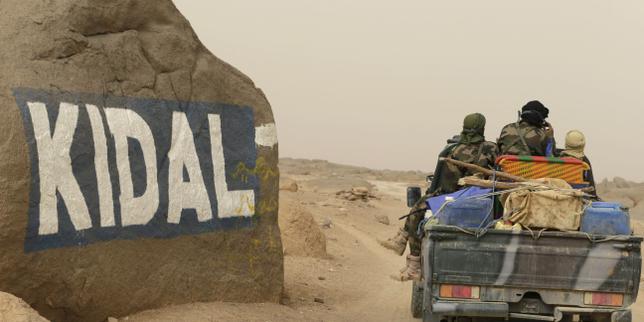
The resurgence of the CSP-PSD (Permanent Strategic Framework for Peace, Security, and Development) adds a third dimension to the chaos. These are not jihadists; they are secessionists and federalists who feel betrayed by the collapse of previous peace agreements. When the Malian army moved to retake Kidal, it was framed as a national triumph. In reality, it opened a Pandora’s Box. The Tuareg fighters didn't disappear; they melted into the desert, waiting for the army to overreach. Now, the FAMa is fighting a two-front war against religious extremists on one side and ethnic nationalists on the other.
Technical Superiority vs Ground Reality
On paper, the Malian military is better equipped than it was five years ago. They have Bayraktar drones, Mi-17 helicopters, and modern surveillance gear.
But drones cannot hold a street corner.
Technology provides an "eye in the sky," but it doesn't solve the problem of human intelligence. In many of the recently attacked towns, the militants had been living among the residents for weeks, scouting weaknesses and identifying the homes of government collaborators. No amount of satellite imagery can replace the trust of a local village elder who chooses not to report a stranger in town because he fears the government more than the militant.
The hardware is also suffering from the harsh Saharan environment. Maintenance cycles for sophisticated aircraft are grueling, and the supply chain for parts is often bogged down in the same logistical nightmares that affect food and water. A grounded drone is just an expensive pile of carbon fiber and electronics.
The Regional Domino Effect
Mali does not exist in a vacuum. The instability is bleeding into the "Littoral States"—Ivory Coast, Ghana, Togo, and Benin. The northern regions of these coastal nations are already seeing an uptick in "scout" activity. The goal of the insurgents in Mali is to create a massive corridor of instability that stretches from the Sahel to the Atlantic. If the Malian state loses control of its southern transit corridors, the entire West African economic bloc faces a systemic threat.
The Intelligence Gap
The most glaring weakness in the current defense strategy is the breakdown of regional intelligence sharing. Since the coups in Mali, Burkina Faso, and Niger, cooperation with the ECOWAS bloc has withered. This has created "blind spots" at the borders. Militants move across lines that exist on maps but not in the sand, shifting their bases of operation whenever the heat gets too high in one specific country.
To fix this, there must be a move away from "Fortress Cities." Locking the army behind T-walls in Gao or Bamako only cedes the rest of the country to the opposition. A more fluid, intelligence-led approach is required—one that prioritizes protecting the movement of people and goods over the static defense of government buildings.
The focus must return to the "social contract." Security is not just the absence of gunfire; it is the presence of functioning courts, schools, and markets. As long as the Malian state defines its success solely by the number of "terrorists neutralized," it will continue to lose the broader war. The real victory lies in making the state more relevant to the daily survival of its citizens than the men with the guns.
Stopping the cycle of urban attacks requires a shift from reactive military strikes to proactive community stabilization. If the government cannot ensure that a truck can drive from Bamako to Gao without being blown up, no amount of patriotic rhetoric will save the administration from the eventual weight of public despair. The clock is ticking, and the desert does not forgive indecision.