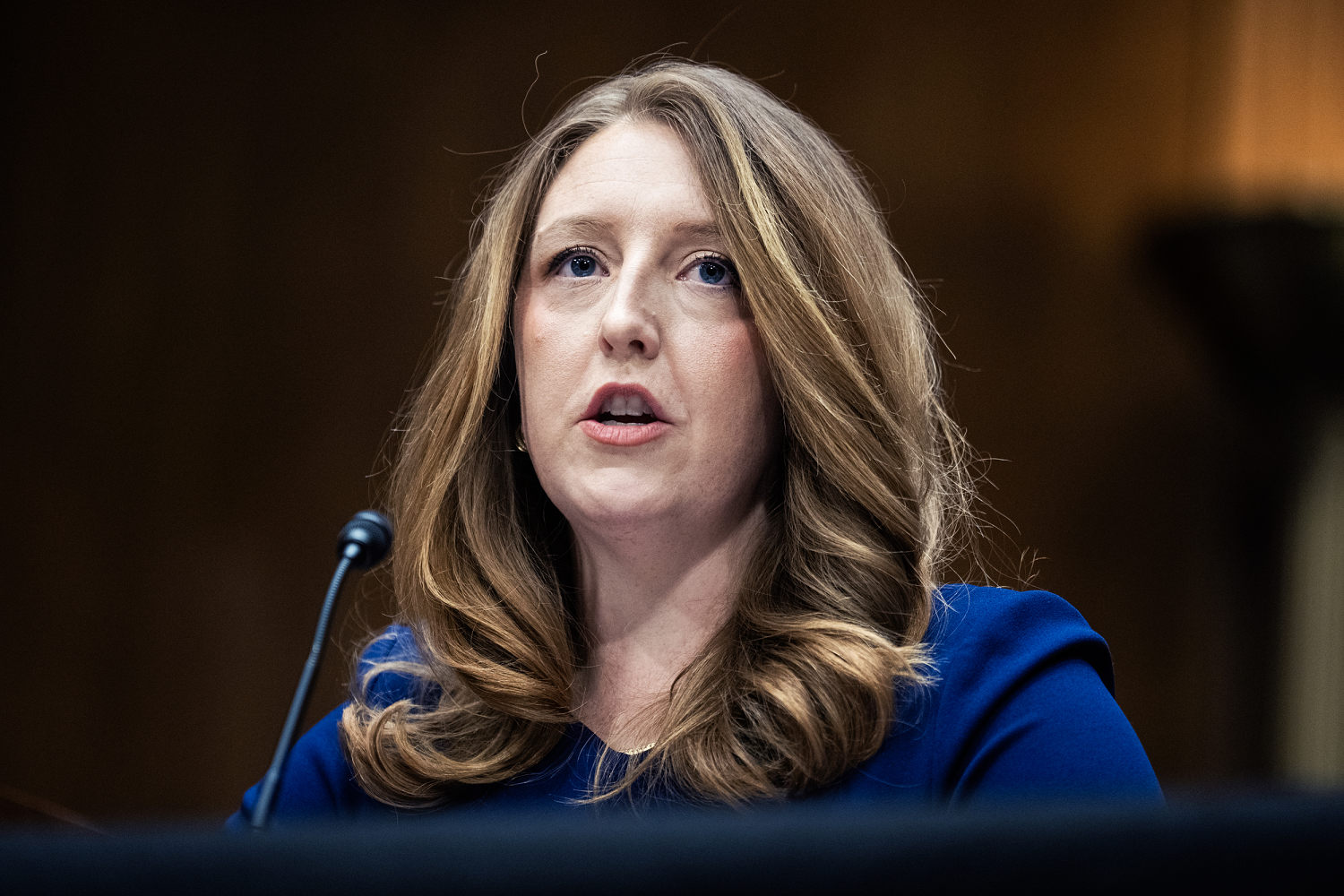
The experimental era of the "Make America Healthy Again" (MAHA) movement hit its first major legislative wall this week. After months of defiant support, President Trump officially withdrew the nomination of Dr. Casey Means for U.S. Surgeon General on April 30, 2026. The move ends a protracted, high-stakes standoff with the Senate and signals a pragmatic retreat by a White House that found itself unable to translate influencer-style health disruption into a confirmable government appointment.
Trump quickly pivoted to Dr. Nicole Saphier, a radiologist at Memorial Sloan Kettering and a familiar face on Fox News, to fill the void. While the transition was framed as a response to Republican "intransigence," the reality is more clinical. The nomination of Casey Means was not just a political choice; it was a stress test for the American medical establishment that ultimately failed its primary exam: the Senate confirmation hearing. If you enjoyed this article, you should read: this related article.
The Anatomy of a Failed Confirmation
The collapse of the Means nomination was not a sudden event. It was a slow-motion wreck that began in February, when the 38-year-old Stanford-educated physician sat before the Senate Health, Education, Labor, and Pensions (HELP) Committee. Means, who famously walked away from her surgical residency to advocate for metabolic health and metabolic-focused lifestyle changes, faced a firing squad of questions that her unconventional resume simply couldn’t deflect.
The resistance was not just from across the aisle. Key Republican senators, including Bill Cassidy of Louisiana and Susan Collins of Maine, signaled early on that they would not provide the rubber stamp the White House expected. Cassidy, a physician himself, led a grueling interrogation that focused on two specific vulnerabilities: For another look on this development, refer to the recent update from The New York Times.
- Clinical Credentials: Means did not complete her residency and does not hold an active medical license. In the world of the U.S. Public Health Service Commissioned Corps—the 6,000-person elite cadre the Surgeon General leads—this is more than a technicality. It is a fundamental breach of protocol.
- Vaccine Policy: While Health Secretary Robert F. Kennedy Jr. has attempted to soften his public stance on immunizations, Means was pinned down on her past comments regarding the hepatitis B birth dose. Her refusal to offer a full-throated defense of the standard pediatric vaccine schedule alienated moderate Republicans who were already wary of the MAHA platform.
The MAHA Warrior vs. The Senate Gatekeepers
For the MAHA movement, Casey Means was the perfect vessel. She spoke the language of systemic change, focusing on the root causes of chronic disease rather than the "pill-for-an-ill" model. To her supporters, her lack of a traditional medical career was a feature, not a bug. They saw her as an untainted outsider capable of dismantling a bloated "sick-care" system.
However, the Surgeon General is not a revolutionary role by design; it is a communication and administrative one. The "Nation’s Doctor" is expected to be a stabilizing force during public health crises. By nominating someone who questioned the very foundations of current public health policy, Trump and Kennedy effectively asked the Senate to authorize an insurgency. The Senate declined.
The pressure campaign from the Kennedy-aligned group MAHA Action, which urged followers to flood the offices of Murkowski and Collins with calls, backfired. Instead of intimidating the senators, it solidified the perception that Means was a political activist rather than a public health official.
Nicole Saphier and the Return to the Fox News Pipeline
The selection of Nicole Saphier represents a tactical retreat toward the familiar. Unlike Means, Saphier is a practicing physician at one of the world's most prestigious cancer centers. She has a traditional, recognizable pedigree that is far harder for Senate Republicans to pick apart.
Saphier is not a departure from Trump's preference for media-savvy doctors, but she offers a significantly "safer" version of the MAHA message. Her 2020 book, also titled Make America Healthy Again, argues for personal responsibility and lifestyle changes—but it does so within the context of a conventional medical career.
She is a "star" in the eyes of the President specifically because she can bridge the gap between MAGA populism and medical reality. She carries the same brand of health-focused reform as Means but arrives with the armor of a board-certified radiologist. This is the "Kennedy-lite" approach that the administration now hopes will glide through a committee that has already rejected two prior attempts to fill the post (the first being Janette Nesheiwat).
A Leadership Void in Public Health
The fallout from this withdrawal extends beyond a single office. The Surgeon General's post has been a revolving door or a vacant desk for much of the current term. This instability is mirrored across the federal health apparatus:
- The CDC: Currently operating without a permanent, Senate-confirmed leader.
- The NIH: Marred by leadership gaps and ongoing disputes over funding and focus.
- Agency Vacancies: Roughly 80% of top-tier positions at the CDC remain unfilled or are held by acting officials.
When the leadership at the top is in a constant state of flux, the rank-and-file agencies lose their ability to execute long-term strategies. The withdrawal of Means is a admission that the administration cannot fill these roles with ideological firebrands alone. They need people who can survive a committee vote.
The Real Cost of the Delay
While the White House blames "political games," the cost of the Means saga is measured in lost time. Since May 2025, the Surgeon General’s office has been effectively sidelined as a cultural battleground rather than a functional tool of government. The MAHA movement’s goals—reducing chronic disease, addressing ultra-processed foods, and reforming metabolic health—are popular across party lines in the abstract. But by tying those goals to a nominee who could not pass basic medical scrutiny, the administration has delayed the implementation of its own agenda.
Dr. Saphier will likely face a much smoother path, but she enters an office that has been significantly diminished by the drama of the last twelve months. She will have to prove she is more than just an "incredible communicator" and that she can actually manage the Public Health Service Commissioned Corps, a group that remains deeply skeptical of the administration’s ultimate goals.
The transition from Means to Saphier marks the end of the honeymoon phase for the Kennedy-Trump health alliance. It is a signal that the "warriors" are being replaced by "professionals" who can speak the language of the movement without the baggage of its most controversial stances. Whether this shift results in actual policy change or just more effective televised messaging remains the central question of the 2026 health landscape.
The Senate has proven that while it will tolerate a populist presidency, it still demands a resume for the person in charge of the nation's health. Casey Means remains a powerful voice in the MAHA movement, but she will be fighting that battle from the private sector, not the West Wing. The administration has learned a hard lesson: you can’t disrupt a system that you haven't yet learned how to staff.
Find a candidate who can actually win a vote. That is the new mandate for the White House.