A light flickers in a small apartment in Chennai. It is a mundane thing. A ceiling fan hums, pushing the heavy, humid air of the Bay of Bengal in circles, allowing a student to finish her engineering diagrams. Thousands of miles north, in a place where the wind screams across the Siberian tundra and the ground stays frozen for ten thousand years, a valve turns.
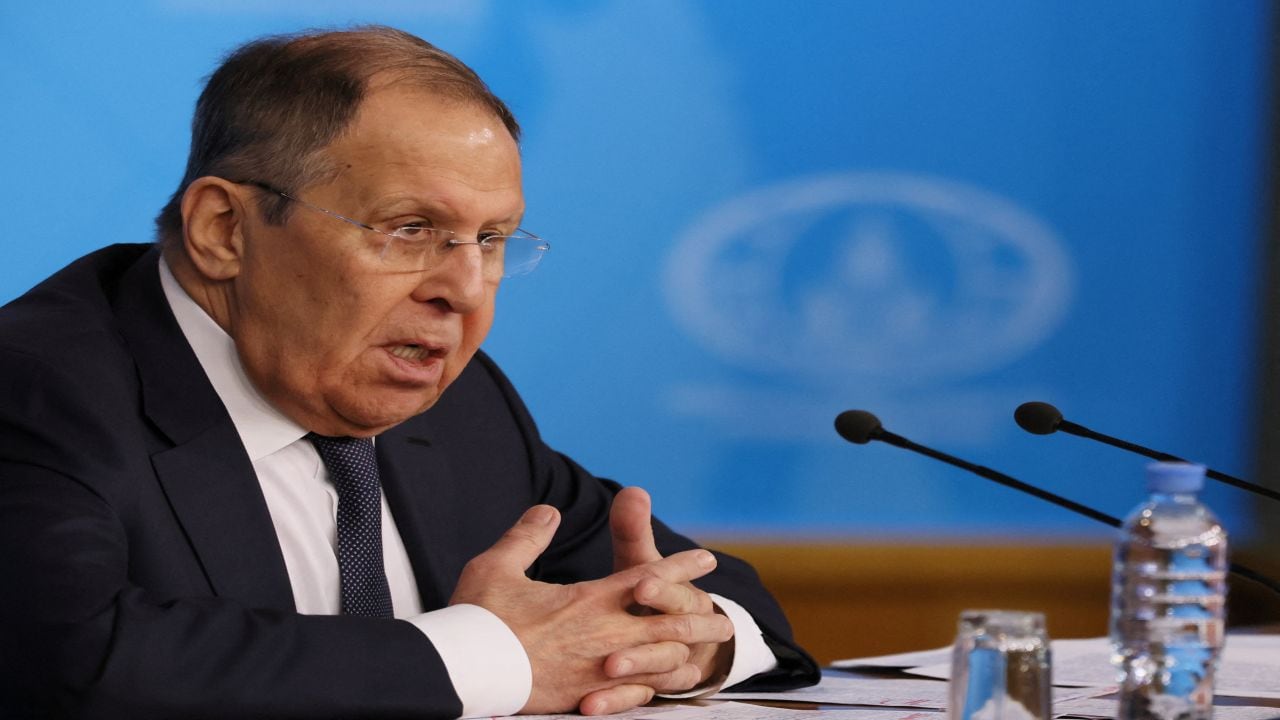
These two moments are tethered by a thousand invisible threads. We often speak of geopolitics as a game of chess played by men in suits within marble halls, but the reality is far grittier. It is about the movement of molecules. It is about the friction of the physical world. When Sergey Lavrov, Russia’s Foreign Minister, stands before a microphone to declare that Moscow will fulfill every single agreement on energy supply to India, he isn't just reciting a diplomatic script. He is describing a massive, industrial pulse that keeps the lights on for 1.4 billion people.
The world is currently obsessed with the "great decoupling." We are told that the global economy is splintering, that old alliances are crumbling under the weight of sanctions and shifting tides. Yet, beneath the noise of the headlines, the pipes are still full. The tankers are still crossing the Indian Ocean. The math of survival remains remarkably consistent.
The Weight of a Promise
Consider the logistics of a single barrel of Urals crude. It starts in the depths of the earth, pressured by the weight of the Russian crust. It travels through thousands of miles of pipeline, protected against the biting sub-zero temperatures of the north, eventually reaching the ports of Primorsk or Novorossiysk. From there, it begins a marathon journey across the sea, dodging geopolitical minefields and navigating the complex insurance requirements of a world that has grown increasingly hostile to its passage.
For India, this isn't about ideology. It’s about the basic, non-negotiable requirement of growth. You cannot build a modern superpower on empty tanks. India's energy demand is a ravenous beast, growing faster than almost anywhere else on the planet. To feed it, the country must look toward those who have what they need and are willing to send it.
Lavrov’s recent affirmations in New Delhi weren't just a friendly gesture. They were a cold, hard acknowledgement of mutual necessity. Russia needs a market that isn't the European Union. India needs a price that doesn't collapse its budding middle class. When these two needs meet, the result is a massive increase in trade volume—surpassing $60 billion in recent years. This isn't a trickle. It’s a flood.
The Invisible Toll of the Switch
There was a time, not long ago, when the energy map of the world looked very different. India’s refineries were tuned to specific grades of oil from the Middle East. Changing the "diet" of a refinery is not as simple as switching brands of milk at the grocery store. It is a delicate, dangerous engineering feat.
Imagine a chemist at a refinery in Jamnagar. He is staring at a sample of Russian crude. It’s heavier, perhaps higher in sulfur than what they used to process. He has to recalibrate the massive catalytic crackers—steel towers the size of cathedrals—to handle this new chemistry. If he gets it wrong, the equipment corrodes. If he gets it right, the country saves billions.
This is the human element of "energy security." It is the anxiety of the engineer, the calculation of the harbor master, and the quiet relief of the truck driver who sees the price at the pump remain stable while the rest of the world sees costs skyrocket.
The shift has been seismic. Before 2022, Russia was a peripheral player in India’s energy basket. Today, it is the leading supplier. This didn't happen by accident. It happened because of a fundamental decision to prioritize the domestic hearth over international pressure.
The Language of Rupee and Ruble
One of the most complex hurdles in this narrative isn't the physical oil, but the ghosts of money used to pay for it. When the traditional financial plumbing—the SWIFT system—was restricted, the flow of energy was threatened.
Think of it like two neighbors who want to trade, but the bank in town refuses to process their checks. They have to find a new way to keep score. This led to the revival of the "Rupee-Ruble" mechanism, a financial dance that dates back to the Cold War but has been updated for the digital age. It’s a messy, imperfect system. It involves clearing houses, complex currency swaps, and a great deal of trust.
There is a certain irony here. In an era of high-speed digital finance, two of the world's largest economies are forced back into a form of sophisticated barter. It is a reminder that when the stakes are high enough—when the energy security of a nation is on the line—human ingenuity will always find a way around a blockade.
Beyond the Barrel
Lavrov’s visit wasn't solely about oil. The conversation has drifted toward the atom. In the town of Kudankulam, on the southern tip of India, Russian engineers are working alongside Indian technicians to build a massive nuclear power complex.
Nuclear energy is the ultimate long-term commitment. Unlike a shipment of coal or a tanker of gas, a nuclear plant is a marriage that lasts sixty years or more. It requires a constant exchange of parts, expertise, and fuel. When Lavrov speaks of "fulfilling agreements," he is also talking about the technicians who fly back and forth between Moscow and Tamil Nadu, sharing blueprints and safety protocols.
These plants are the backbone of India’s push for a "Green Transition." While the world scolds developing nations for their carbon footprint, the reality is that you cannot move a billion people toward renewables without a stable "baseload" of power. Solar panels don't work at night. Wind turbines go silent. But the reactors at Kudankulam hum with a steady, relentless energy.
The Geopolitics of the Dinner Table
We often forget that energy is the primary ingredient in food. Without natural gas, there is no fertilizer. Without fertilizer, the yields of the Punjab and Haryana wheat fields drop. If the energy supply chain breaks, it isn't just the cars that stop moving; it’s the price of bread that starts climbing.
This is why the relationship persists despite the optics. When the Indian government looks at the data, they aren't just looking at profit margins. They are looking at the stability of the dinner table. They see a partner in Russia that has remained a "reliable supplier" through decades of shifting political winds.
There is a sense of historical memory at play. India remembers the 1970s. It remembers the times when energy was used as a lever to force political compliance. By diversifying, by leaning into these long-standing agreements, India is effectively saying that it will no longer be vulnerable to the whims of any single power center.
The Friction of the Future
Of course, this path is not without its thorns. The logistics of the North-South Transport Corridor—a multi-modal route that would bypass the traditional sea lanes—is a logistical nightmare of mountains, deserts, and bureaucratic red tape. It involves moving goods from Russia through Iran and across the sea to India. It is a vision of a "Eurasian core" that bypasses the Western-dominated oceans.
The work is slow. It is grueling. It involves building railways through mountain passes where the air is thin and the political situation is even thinner. But the motivation remains. Every kilometer of track laid is a hedge against a future where sea lanes might be closed or sanctioned.
We are witnessing the construction of a parallel world. It is a world where the East looks to the North, and the North looks to the South, ignoring the traditional axis of power that has dominated the last century.
The Unseen Persistence
Rain begins to fall in Moscow, turning the streets gray and slick. In New Delhi, the sun beats down with a fierce, uncompromising heat. These two worlds could not be more different in climate, culture, or language. And yet, the flow continues.
The molecules move. The tankers sail. The valves turn.
In the end, diplomacy is just the foam on the surface of a very deep ocean. The real story is the relentless, physical necessity of power. It is the refusal to let the lights go out. It is the quiet, stubborn persistence of a relationship built on the most basic of human needs: the need to keep moving, to keep building, and to stay warm in a world that is often very cold.
The student in Chennai finishes her diagram. She doesn't think about the permafrost. She doesn't think about the Foreign Minister or the complex currency swaps. She simply flips the switch, and the room stays bright. That, more than any communique or treaty, is the ultimate fulfillment of an agreement. It is the victory of the physical over the political. It is the silent, humming proof that some bonds are forged in the very substance of the earth itself.