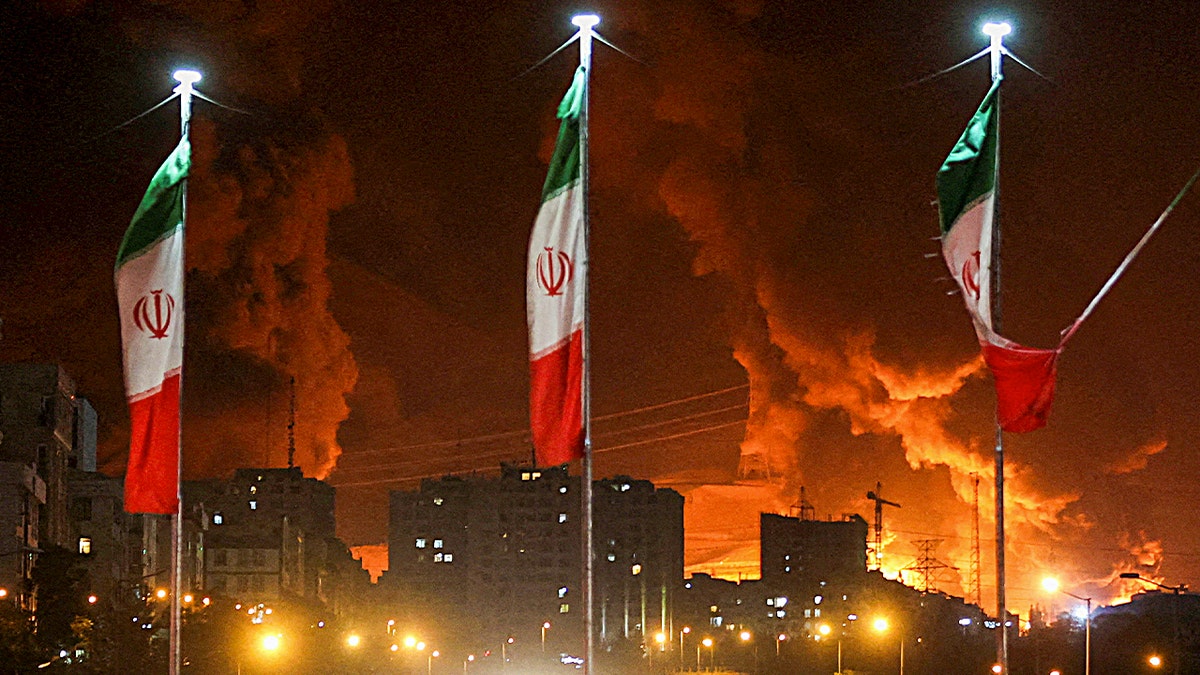
In a small, dimly lit grocery store on the outskirts of a bustling city, a man named Elias stares at a shelf that used to hold his favorite brand of cooking oil. The price tag beneath the empty slot has been crossed out and rewritten three times in two weeks. Elias doesn't track global geopolitical tensions. He doesn't read white papers from Washington or Tehran. He just knows that his paycheck feels lighter every time a headline mentions a drone, a strait, or a threat of retaliation.
This is where the high-stakes chess match between the United States and Iran actually plays out. It’s not just in the war rooms; it’s in the shopping carts of billions of people who have never set foot in the Middle East.
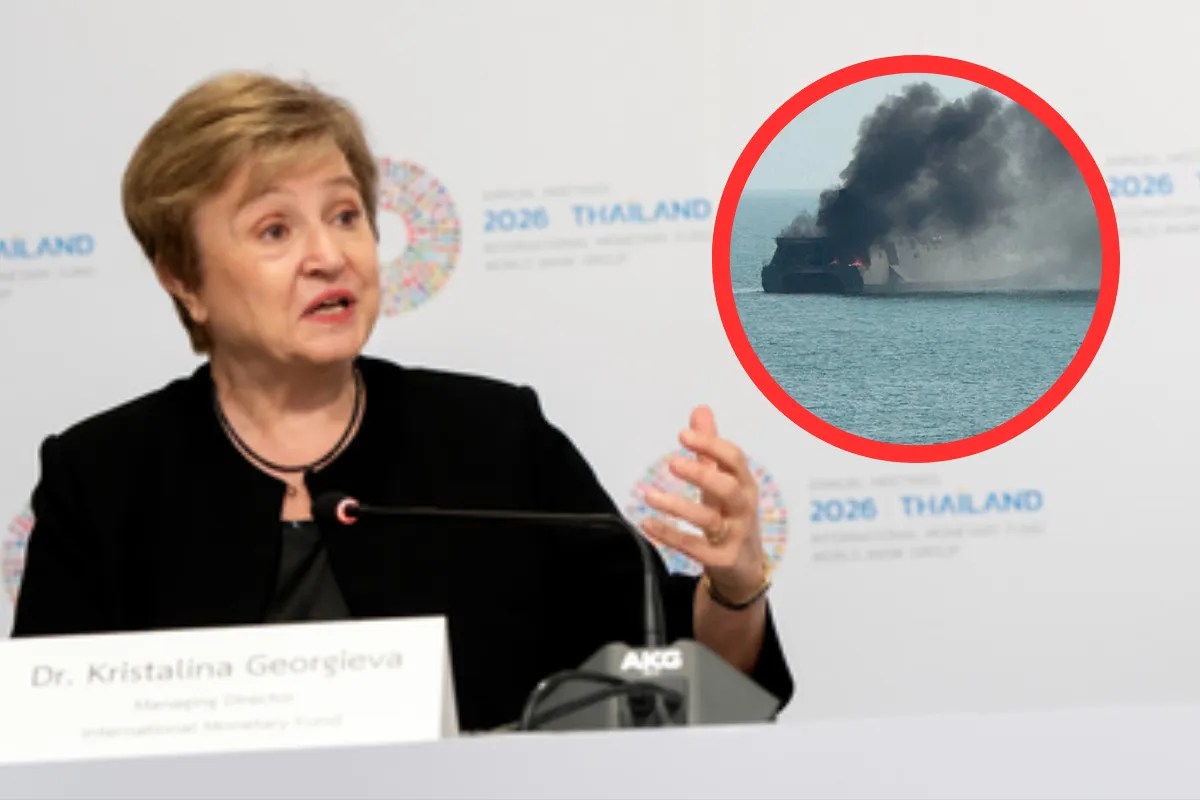
The International Monetary Fund (IMF) recently broke its usual stoic silence to issue a warning that should make every household take notice. While the world watches the military maneuvers with bated breath, the IMF is looking at the plumbing of the global economy—and they’ve found a leak that could lead to a flood.
The Ghost of 1973
History has a cruel way of repeating itself when we stop paying attention. To understand the gravity of the current tension, we have to look back at the oil shocks of the 1970s. Back then, a sudden shift in Middle Eastern stability didn't just cause a few lines at gas stations; it reshaped the entire global middle class. It turned savings into dust.
Today, the IMF warns that we are standing on a similar precipice. The conflict between the U.S. and Iran has moved beyond a localized dispute. It has become a systemic risk. If the Strait of Hormuz—a narrow stretch of water that carries roughly 20% of the world’s total oil consumption—is even partially restricted, the "economic ripple" will feel more like a tidal wave.
Imagine a single vein in the human body being pinched. The heart might keep beating for a while, but the extremities start to die first. In the global economy, those extremities are the developing nations and the lower-income families in developed ones. They are the first to feel the cold.
The Mathematics of Fear
Economists often talk about "market volatility" as if it’s an abstract weather pattern. It isn't. It is the collective pulse of human anxiety. When Iran and the U.S. trade threats, the price of Brent Crude doesn't just go up because there is less oil; it goes up because people are afraid there will be less oil.
The IMF’s latest data suggests that a sustained conflict could shave significant percentages off global GDP. For a billionaire, a 2% drop in global growth is a statistic. For a small business owner, it’s the difference between staying open and locking the doors for good.
Consider a hypothetical logistics company owner, let’s call her Sarah. She manages a fleet of fifteen delivery trucks. When fuel prices spike by 30% overnight due to a skirmish in the Persian Gulf, Sarah’s contracts—signed months ago at fixed rates—become a slow-motion financial suicide. She can’t just "innovate" her way out of a fuel crisis. She has to cut staff. She has to delay maintenance. The geopolitical tension becomes a personal tragedy.
Why This Time is Different
We often hear that the U.S. is now "energy independent," implying that what happens in the Middle East shouldn't matter to the average American or European. This is a dangerous misunderstanding of how the world works.
Oil is a fungible global commodity. If the supply drops in the East, the price rises in the West. Period. There is no such thing as an "insulated" economy in 2026. The IMF points out that our global supply chains are more tightly wound than ever before. We have traded resilience for efficiency. Our "just-in-time" delivery systems mean that we don't have deep reserves to fall back on. We live hand-to-mouth on a global scale.
The IMF's warning isn't just about the price of gas. It’s about the "Inflationary Feedback Loop." When energy costs rise, everything that requires energy to produce or transport also rises.
- The plastic in your toothbrush? Derived from petroleum.
- The wheat in your bread? Harvested by diesel-guzzling tractors and shipped via oil-burning freighters.
- The electricity in your home? Often generated by natural gas, which tracks the price of oil.
The Fragile Peace of the Ledger
There is a psychological component to this crisis that the IMF is deeply concerned about: the loss of trust in international cooperation. For decades, the global economy has functioned on the assumption that, despite political bickering, the major arteries of trade would remain open.
A full-scale escalation between the U.S. and Iran breaks that fundamental social contract. It tells the world that the "rules-based order" is secondary to raw military power. When that happens, countries stop cooperating and start hoarding. They build walls—both physical and economic.
The IMF notes that "fragmentation" is the greatest threat to our modern era. If countries begin to split into rival trading blocs—one aligned with the West, another with regional powers in the Middle East and their allies—the cost of living will permanently shift upward. We will lose the "peace dividend" that has kept goods cheap for thirty years.
The Human Cost of a Percentage Point
We often see the IMF as a cold institution of bankers in gray suits. But their warnings are born from a desperate desire to avoid the human chaos that follows economic collapse. When inflation spirals out of control because of energy shocks, governments become unstable. Protests break out. The social fabric begins to fray.
We saw this during the "Arab Spring," which was sparked in large part by the rising price of bread. We are seeing the shadows of it now. The tension in the Gulf isn't just a matter of who has the bigger navy; it's a matter of who will be able to afford to heat their home this winter.
The IMF's message is a plea for de-escalation, not just for the sake of diplomacy, but for the sake of the person standing in the grocery store, looking at an empty shelf. They are telling us that the "new turn" in the U.S.-Iran conflict isn't a headline—it’s a tax on every human being on the planet.
Beyond the Brink
What happens if the warning is ignored? The IMF predicts a scenario where central banks are forced to keep interest rates high to combat energy-driven inflation, even as the economy slows down. This is the dreaded "Stagflation"—a monster we haven't seen in its full glory for forty years. It’s an economic trap where you can’t find a job, but the price of milk keeps going up anyway.
It feels surreal to think that a decision made in a bunker halfway across the world can dictate whether a family in Ohio or a merchant in Mumbai can afford their monthly rent. Yet, that is the world we have built. We are all connected by a thin, oily thread.
As Elias walks away from the empty shelf, he isn't thinking about the IMF. He isn't thinking about the geopolitical "new turn." He is simply wondering what he will tell his children when they ask why dinner is smaller tonight.
The real power of the U.S. and Iran doesn't lie in their missiles. It lies in their ability to either protect or destroy the quiet, humble lives of people they will never meet. The warning has been issued. The ledger is open. The world is waiting to see if we value the flow of commerce more than the heat of conflict.
The price of a mistake has never been higher, and unfortunately, it is never the decision-makers who end up paying the bill.