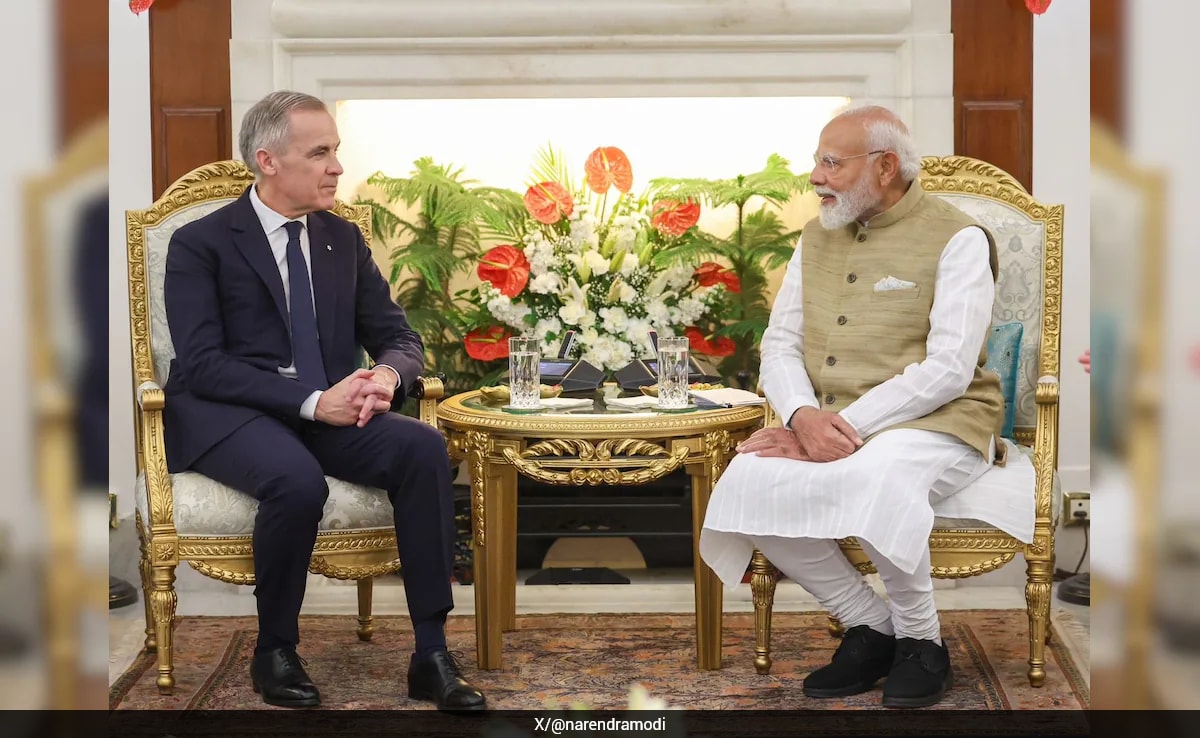
The frost has finally melted. After years of diplomatic cold shoulders, pointed accusations, and expelled diplomats, India-Canada ties gained new energy this week. Prime Minister Narendra Modi and Canadian Prime Minister Mark Carney met at Hyderabad House in New Delhi on March 2, 2026, marking a definitive end to the "deep freeze" that defined the Justin Trudeau era. It wasn't just a polite photo op. It was a calculated, strategic pivot driven by a shared reality: both countries need each other more than they need to hold a grudge.
For anyone who hasn't followed the soap opera of the last few years, the relationship hit rock bottom in 2023. Trudeau’s allegations about Indian involvement in the killing of a Canadian citizen turned a stable partnership into a shouting match. But Carney, who took the helm after Trudeau, has spent the last few months quietly scrubbing the stains off the diplomatic floor. This meeting in New Delhi is the "stamp" on that cleanup job.
The 50 Billion Dollar Handshake
The most glaring takeaway from the Modi-Carney summit is the ambitious goal to hit $50 billion in bilateral trade by 2030. That’s not a small jump. Currently, we’re looking at a base of roughly $13 billion. To get there, the two leaders are fast-tracking the Comprehensive Economic Partnership Agreement (CEPA). Negotiations for this deal have been gathering dust since 2010.
Carney’s visit to Mumbai before reaching Delhi was a tactical move. He wasn't just there for the sights; he was courting the big guns. Meeting with Indian CEOs and pension fund managers is a clear signal that Canada wants back into the Indian growth story. On the flip side, India sees Canada as a critical warehouse for resources it desperately needs to power its "Viksit Bharat" (Developed India) 2047 vision.
Energy and Uranium are Back on the Table
One of the most significant "new energy" moments came from the signing of a major nuclear agreement. Canada is set to supply uranium to India, a move that essentially restarts a vital part of the energy relationship that was previously caught in the crossfire of political bickering.
- Uranium Supply: Long-term contracts to fuel Indian reactors.
- LNG and LPG: Canada is looking to position itself as a reliable alternative to Middle Eastern and Russian energy.
- Critical Minerals: India needs lithium and cobalt for its EV transition; Canada has them in spades.
Walking Back the Narrative
Let’s be honest about what changed. Under the previous administration, the conversation was dominated by "transnational repression" and "interference." While those concerns haven't disappeared into thin air, the tone has shifted from public grandstanding to private security cooperation.
A senior Canadian official recently admitted that "robust diplomatic engagement" between national security advisers has cooled the temperature. Carney is effectively walking back the more aggressive rhetoric of the Trudeau years without losing face. By focusing on "shared democratic values" and "sovereignty," both leaders found a way to agree on the basics while burying the hatchet on the specifics of the 2023 fallout.
India, for its part, has been firm. New Delhi has always maintained that Canada’s tolerance for extremist elements was the root cause of the friction. By shifting the focus to organized crime, fentanyl smuggling, and cybersecurity, both countries have found a "security language" they can both speak without getting offended.
Why Mark Carney is Different
You might wonder why this is happening now. It’s not just about a change in faces; it’s about a change in the global map. Carney is dealing with a world where the United States—Canada's largest trading partner—is becoming increasingly protectionist. With tariffs looming and trade wars brewing under a new U.S. administration, Canada has to look East.
India is the natural choice. It's the world's fastest-growing major economy. For Canada to ignore India because of past diplomatic spats would be economic suicide. Modi knows this. He played the long game, waiting for Ottawa to realize that India is too big to be sidelined.
The New Roadmap
The two ministers, S. Jaishankar and Anita Anand, have been the architects behind the scenes. They’ve met six times since late 2025 to build a "Joint Roadmap." This isn't just a list of wishes; it's a checklist.
- Talent Mobility: Making it easier for professionals to move between the two nations.
- Maritime Awareness: Working together in the Indo-Pacific to counter-balance regional hegemony.
- Green Tech: A joint Renewable Energy and Storage Summit is already slated for later in 2026.
What Happens Next
If you're a business owner or an investor, the message is clear: the risk of "diplomatic whiplash" is fading. The resumption of visa services and the relaunch of the Ministerial Energy Dialogue aren't just bureaucratic fluff. They're the infrastructure for a more predictable trade environment.
The next big milestone is the formalization of the CEPA trade deal. Carney wants it signed by the end of 2026. If they pull that off, the "new energy" Modi talked about won't just be a headline—it’ll be the engine for a $50 billion partnership.
Keep an eye on the upcoming Indian ministerial delegation to Canada this summer. That’s where the actual contracts for critical minerals and energy supply will likely be inked. If those deals go through, the 2023 spat will officially be a footnote in the history books.


