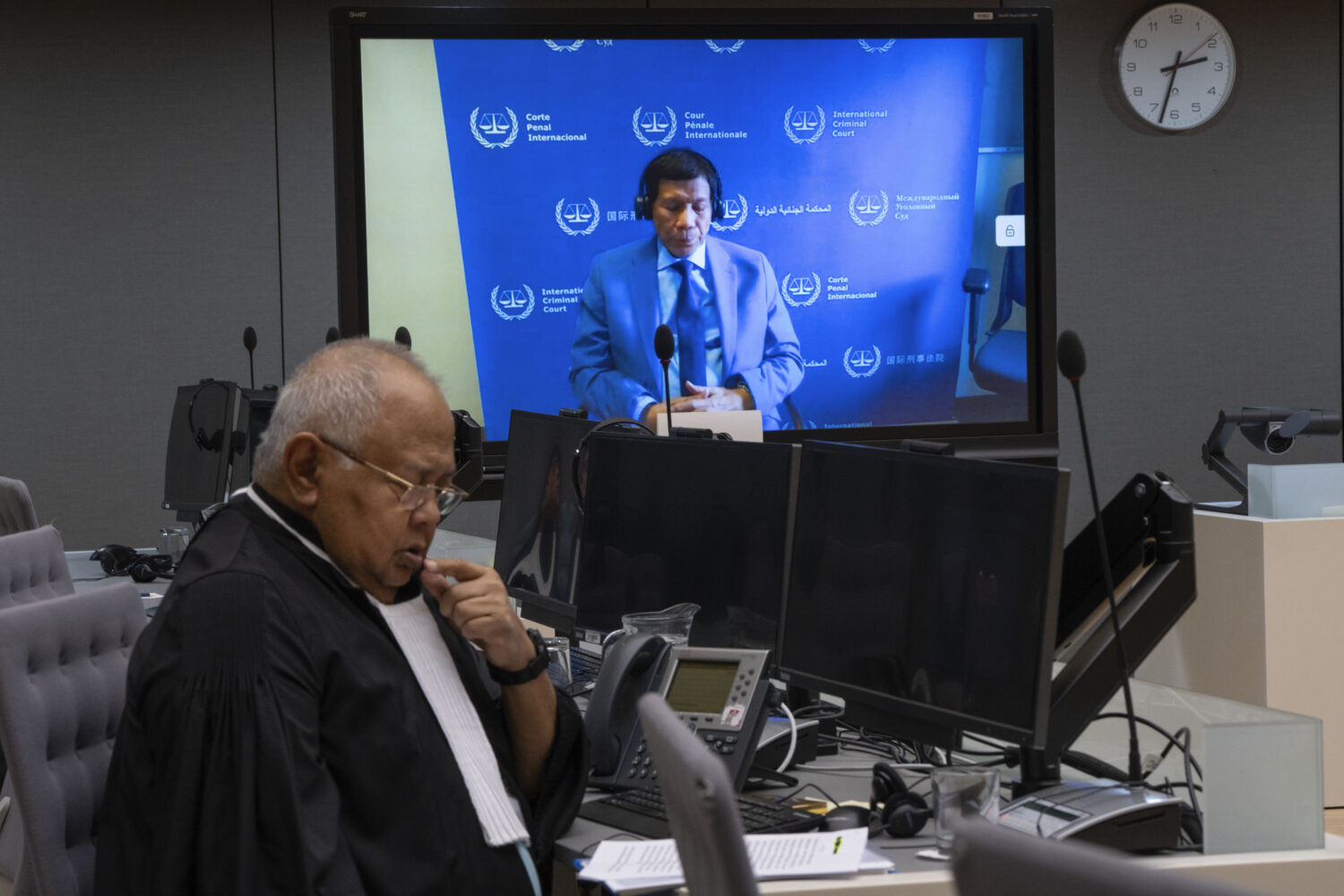
The International Criminal Court (ICC) thinks it is about to put the "Punisher" on trial. The media is salivating over the narrative of a fallen strongman facing a global reckoning for his bloody war on drugs. They are chasing a phantom. The headlines confirming a crimes against humanity trial for Rodrigo Duterte aren't reporting on a legal victory; they are reporting on a high-stakes piece of theater that has almost zero chance of resulting in a prison cell.
This isn't about defending Duterte’s methods. It’s about calling out the institutional delusion of the ICC. If you believe this trial will bring "justice" to the Philippines, you are falling for a legalistic fairy tale. The ICC is currently a hammer looking for a nail, and it has picked a target that is specifically designed to break the hammer.
The Sovereignty Trap You Are Ignoring
The loudest argument for the ICC trial is that "no one is above the law." It’s a beautiful sentiment. It’s also legally hollow in this context. The ICC operates on the principle of complementarity. It only steps in when a national legal system is "unwilling or unable" to prosecute.
The mainstream press loves to say the Philippine justice system is a failure. But from a cold, jurisdictional standpoint, the Philippine government has been busy filing just enough cases and conducting just enough internal investigations to gum up the ICC’s gears for a decade. The ICC isn't entering a vacuum; it’s entering a jurisdictional swamp.
When Duterte pulled the Philippines out of the Rome Statute in 2019, he didn't just walk away. He set a trap. By the time the ICC judges finish debating whether they even have jurisdiction over crimes committed while the country was a member, the witnesses will be gone, the evidence will be cold, and the political climate in Manila will have shifted three more times.
Why the Evidence is a House of Cards
The ICC relies heavily on "command responsibility." They want to prove that the killings weren't just the work of rogue cops, but a top-down policy directed by the Malacañang Palace.
I’ve seen how these international prosecutors work. They build cases on public speeches and NGO reports. Duterte gave them plenty of rhetoric—telling police he would "protect" them if they killed drug dealers—but translating "tough guy" political theater into a "policy to commit a widespread or systematic attack against a civilian population" is a massive legal leap.
In a standard domestic murder trial, you need a body, a weapon, and a motive. In a crimes against humanity trial, you need to prove an institutional apparatus of death. Duterte’s defense is already written: he was fighting a "state of lawless violence." He will argue that every death was a result of nanlaban—the suspect fought back. Unless the ICC has a smoking-gun memo signed by Duterte ordering the execution of non-combatants, this case is a collection of anecdotes, not a conviction.
The Rome Statute is a Paper Tiger
The ICC has no police force. It has no army. It relies on the "cooperation" of member states.
Let’s look at the reality. Duterte is currently protected by a domestic political shield. Even with the rift between the Marcos and Duterte families, no sitting Philippine president is going to hand over a former president to a foreign court. To do so would be political suicide and a total surrender of national sovereignty. It would trigger a constitutional crisis that would make the drug war look like a playground dispute.
The ICC is essentially a collection of lawyers in The Hague asking a sovereign nation to please arrest its own former leader and send him to Europe for a trial they don't recognize. It’s a joke. We saw this with Omar al-Bashir in Sudan. He traveled to ICC member states for years while under an arrest warrant, and nobody touched him. The idea that Duterte will be different is pure hubris.
The "People Also Ask" Delusion
People ask: "Will Duterte go to jail?"
The honest answer: No. Not at the hands of the ICC. If he ever faces a cell, it will be because of a domestic political shift in the Philippines, not a summons from the Netherlands.
People ask: "Does the ICC trial help the victims?"
In the short term, it gives them a platform. In the long term, it offers false hope. By centering the quest for justice on a distant, slow-moving international body, the focus is taken off the necessary reform of the Philippine local judiciary. You are outsourcing your justice to a group of people who couldn't find Davao on a map without a GPS.
The Geopolitical Irony
The West loves the ICC when it targets leaders in the Global South. But the moment the court looks at a superpower, the narrative changes. The United States literally passed the "Hague Invasion Act" to protect its own personnel from the ICC.
Duterte knows this. His supporters know this. When the ICC comes knocking, the "Punisher" doesn't look like a criminal to his base; he looks like a nationalist hero standing up to neo-colonial interference. The ICC isn't weakening Duterte’s legacy; they are inadvertently canonizing it for his followers.
The Cost of Symbolic Justice
International law is currently obsessed with "symbolic victories." They want the process because the result is unattainable. They will spend hundreds of millions of euros, employ thousands of clerks, and produce tens of thousands of pages of transcripts.
And at the end of ten years? Duterte will be an old man, likely living in his home in Davao, having successfully ignored every piece of paper sent his way. The ICC will have validated its own existence by "trying" him, but the actual reality on the ground in the Philippines won't have changed by a single inch.
Stop Waiting for the Hague to Save You
The "lazy consensus" says the ICC is the final frontier of human rights. The reality is that the ICC is a pressure valve for Western liberal guilt. It allows the international community to feel like they are "doing something" about human rights abuses without actually having to engage in the messy, difficult work of diplomatic or economic intervention.
If you want to see change in the Philippines, stop looking at the news from The Hague. Look at the local elections. Look at the bar associations in Manila. Look at the grassroots movements that are actually working within the system they have to live under.
The ICC trial is a ghost ship. It looks imposing on the horizon, but there’s nobody at the wheel and it has no engine. It is a distraction from the only kind of justice that actually matters: the kind that happens in the streets and courts of the country where the crimes were committed.
Duterte isn't afraid of the ICC. He’s laughing at it. And based on the court's track record of actual convictions and enforcement, he has every reason to.