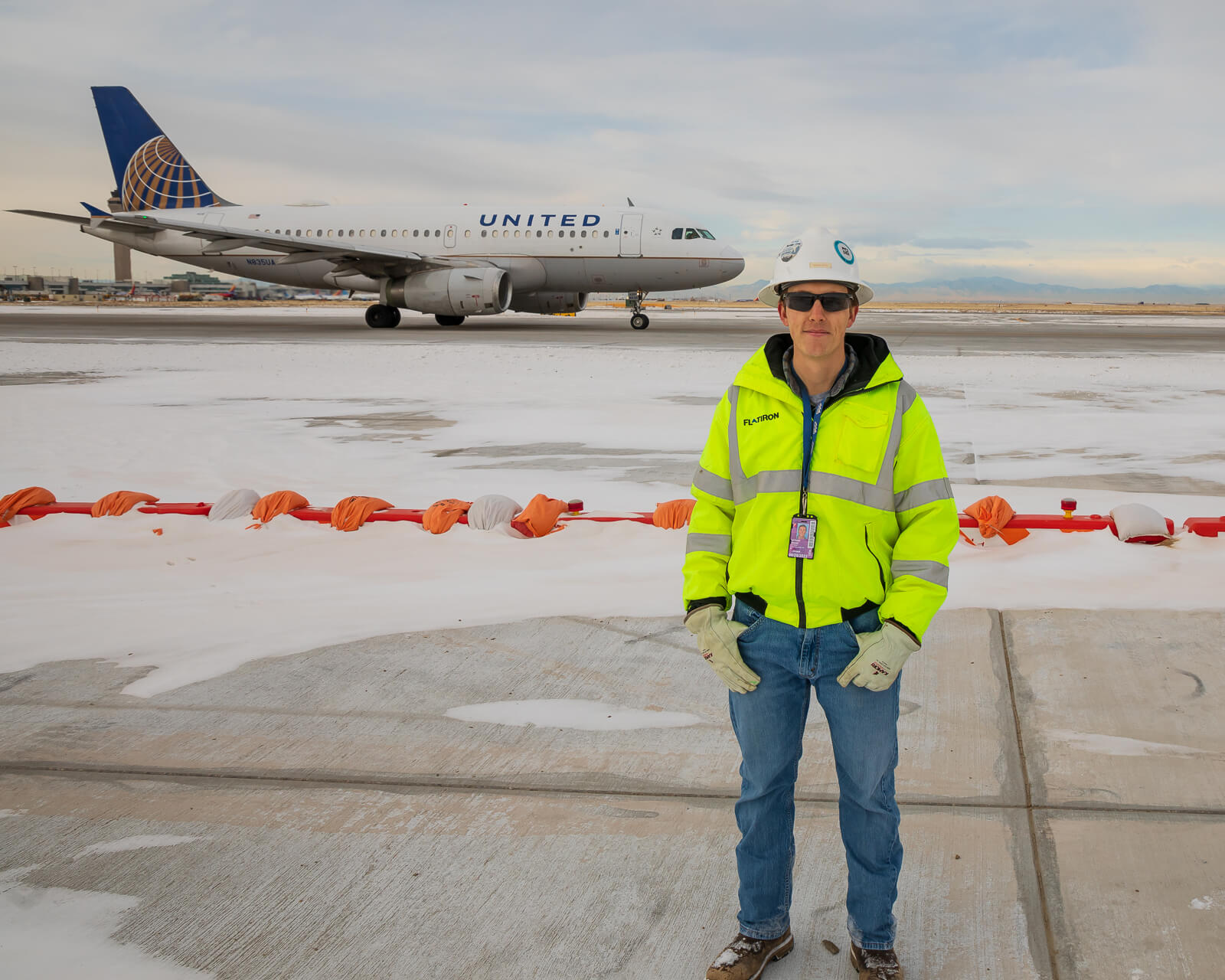
Rain lashed against the floor-to-ceiling windows of Heathrow’s Terminal 5. Inside, Sarah sat on her carry-on bag, staring at a flight board that flickered with the rhythmic cruelty of "Delayed" and "Cancelled." She felt a familiar, gnawing guilt. For months, she had read that her choice to fly home for Christmas was a carbon sin—a direct contribution to the global oil thirst that keeps the world’s geopolitics in a stranglehold. She imagined the kerosene blooming in the sky behind her. She felt like a primary protagonist in the climate crisis.
She was wrong.
It is a comforting thought, in a strange way, to believe that our personal sacrifices—skipping a flight to visit a sick relative or choosing a grueling thirty-hour train ride over a two-hour hop—can break the back of the oil industry. We want to be the heroes of the story. But while Sarah sat there feeling like a planetary villain, a fleet of invisible giants was moving across the oceans and highways, burning through more oil than every grounded traveler combined could ever hope to save.
The aviation industry is the most visible target because it is the most personal. You see the plane. You buy the ticket. You feel the thrust of the engines. Yet, when we look at the cold math of global oil demand, aviation is a mere footnote in a much darker, more industrial volume.
The Heavy Weight of the Invisible
Consider a hypothetical man named Elias. Elias lives in a coastal city and hasn’t stepped foot on a plane in a decade. He prides himself on his "flight-free" lifestyle. But look closer at his morning. He wakes up and brushes his teeth with a plastic brush. He eats breakfast shipped in a refrigerated truck from three provinces away. He wears a polyester shirt. He checks his phone, a device whose components were mined, refined, and shipped across the globe on massive container vessels burning "bunker fuel"—the thick, sulfurous sludge that sits at the bottom of the oil barrel.
Elias is consuming more oil than Sarah. He just doesn’t see the exhaust.
The truth is that aviation accounts for roughly 2% to 3% of global carbon emissions and about 8% of global oil consumption. It’s not nothing. It matters. But even if we grounded every commercial flight tomorrow—if every pilot walked away and every runway grew over with weeds—the global oil crisis would barely flinch.
The real appetite lies in the things we cannot see and the sectors we refuse to simplify.
Road transport—the cars, the delivery vans, the eighteen-wheelers keeping the "just-in-time" economy breathing—swallows nearly half of every barrel of oil produced. Petrochemicals, the building blocks of our modern existence, take another massive bite. Everything from the insulation in your walls to the aspirin in your medicine cabinet starts its life as a hydrocarbon.
Why the Sky is Harder to Fix
There is a technical tragedy at the heart of aviation. In a car, you can swap a gas tank for a battery. It’s heavy, and it has its own environmental costs, but it works because the car stays on the ground. Gravity is a lenient landlord for those with wheels.
But gravity is a tyrant in the sky.
Energy density is the invisible wall. Jet fuel is a miracle of chemistry; it packs an incredible amount of power into a very small, light package. To fly a Boeing 747 across the Atlantic using current battery technology, the batteries would have to weigh so much that the plane could never actually take off. It is a mathematical stalemate.
Because aviation is so difficult to decarbonize, it becomes the ultimate scapegoat. It’s easier for a politician to suggest we stop flying than it is to admit that our entire global shipping network and plastic-based lifestyle are fundamentally addicted to the heavy stuff. By focusing on the traveler, we ignore the system.
The Rebound Effect
Now, consider the global market. Economics is rarely a story of subtraction; it is a story of redirection.
Imagine if a massive, coordinated campaign successfully convinced 20% of the Western world to stop flying. Demand for jet fuel drops. Prices at the pump for that specific refined product plummet. In a vacuum, this looks like a win. But oil refineries are complex chemical factories that don't just produce one thing. When you crack a barrel of oil, you get a "cut" of different products: gasoline, diesel, jet fuel, and heavy oils.
If the demand for jet fuel vanishes, the price of the other "cuts" often shifts. More importantly, the crude oil that was destined for that jet fuel doesn't just stay in the ground. It finds a home elsewhere. In developing economies, where the hunger for cheap energy is a matter of life and death, that surplus becomes the fuel for a new coal plant or a fleet of secondhand diesel trucks.
The crisis isn't a lack of virtue among travelers. It’s a global infrastructure that has no "off" switch.
The Ships That Never Sleep
While Sarah waited at Heathrow, the HMM Algeciras, one of the world's largest container ships, was likely churning through the water somewhere in the Pacific. It can carry 24,000 metal boxes. Each of those boxes is filled with the physical reality of our lives.
Shipping is the circulatory system of the planet. It is also remarkably efficient on a per-ton basis, which is why we’ve been able to ignore its impact for so long. But because these ships operate in international waters, away from the prying eyes of national regulators, they have historically burned the dirtiest fuel imaginable.
One large container ship can emit as much sulfur oxide as millions of cars. Yet, we don't feel "shipping guilt" when we order a new pair of sneakers. The sneakers arrive. The oil is burned. The world moves on.
If we want to ease the oil crisis, we have to look at the grime, not just the clouds. We have to talk about how we heat our homes, how we pave our roads, and how we move the trillions of tons of "stuff" that defines 21st-century life.
The Illusion of the Easy Way Out
The narrative that "flying less" is the primary lever to pull is dangerous because it provides a false sense of completion. It’s a "check-the-box" solution.
"I didn't fly this year," someone says, while sitting in a heated 3,000-square-foot home, driving a three-ton SUV to the grocery store to buy berries flown in from another hemisphere, and tossing plastic packaging into a bin.
The oil crisis is a structural reality. It is baked into the asphalt of our highways and the polyester of our fast-fashion wardrobes. To solve it, we need more than personal abstinence from air travel; we need a radical reimagining of materials science and heavy industry.
Sustainable Aviation Fuel (SAF) is one glimmer of hope. It’s made from waste oils and agricultural residues. It can be dropped straight into existing engines. It’s a bridge. But currently, SAF accounts for less than 0.1% of total jet fuel use. The scale of the problem is so vast that our current "green" solutions look like trying to put out a forest fire with a water pistol.
The Ghost in the Tank
We are haunted by the ghost of the easy answer.
The oil crisis isn't going to be solved by Sarah staying home for Christmas. It isn't going to be solved by Elias and his plastic toothbrush. It requires an unblinking look at the 97 million barrels of oil the world consumes every single day.
Only a fraction of that is in the sky.
The rest is under our tires, in our walls, and on our backs. It is the invisible scaffolding of our lives. When we focus solely on the plane overhead, we are looking at the smoke and ignoring the furnace.
Sarah eventually boarded her flight. As the plane broke through the heavy gray clouds into the brilliant, unburdened sunlight of the upper atmosphere, she looked down. Below her, the world was a grid of lights and moving parts. Millions of cars. Thousands of ships. Countless factories.
She realized that the fuel in the wings was just the beginning.
The real challenge isn't learning how to stay on the ground. It’s learning how to live on it without burning everything beneath our feet.