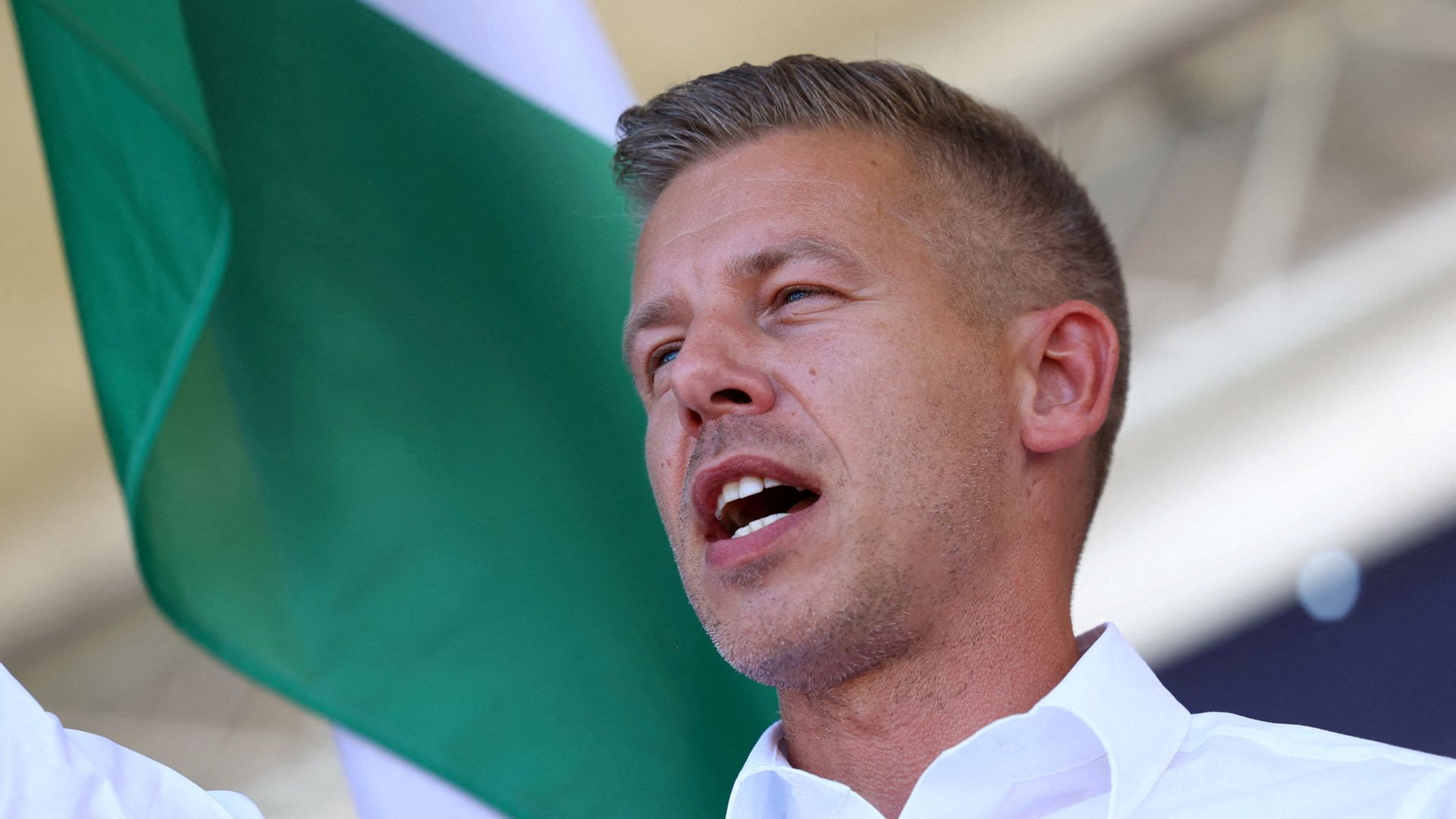
The ascent of Peter Magyar to the Hungarian premiership represents a fundamental recalibration of Central European power dynamics, shifting from a model of transactional obstructionism to one of integrated Europeanism. This transition is not merely a change in leadership style but a structural overhaul of the Hungarian state’s relationship with the European Union (EU) and the North Atlantic Treaty Organization (NATO). To understand this shift, one must analyze the disintegration of the Fidesz hegemony through three specific vectors: the collapse of the illiberal social contract, the professionalization of the opposition, and the strategic realigning of Hungary’s cost-benefit ratio within the Single Market.
The Structural Mechanics of the Tisza Party’s Rise
Magyar’s political utility stems from his status as a former insider within the Orbán administration’s legal and corporate apparatus. This provided him with the specific "insider’s blueprint" required to dismantle the Fidesz communication monopoly. The rise of the Tisza Party (Respect and Freedom) was predicated on a two-stage disruption of the established political order.
- Information Arbitrage: Magyar utilized high-risk transparency—specifically the release of covertly recorded audio regarding judicial interference—to create a credibility gap that the state media could not bridge using traditional deflection tactics.
- Coalition of Discontent: By positioning himself as a center-right conservative, Magyar captured the "homeless" middle class—voters who were ideologically aligned with national sovereignty but repulsed by the systemic corruption and isolationist drift of the previous regime.
The momentum was sustained by an operational shift in protest logistics. Rather than the fragmented, urban-intellectual protests of the past decade, Magyar’s movement mirrored the rural-outreach strategies previously perfected by Fidesz, thereby neutralizing the incumbent’s geographical advantage.
The Reintegration Framework: Rebuilding the Rule of Law
The primary economic hurdle for the new administration is the unfreezing of approximately €30 billion in EU funds. This capital is not a luxury; it is a structural necessity for the stabilization of the forint and the modernization of Hungary’s energy infrastructure. The Magyar strategy for fund reclamation follows a strict legislative sequence designed to meet the "super milestones" set by the European Commission.
The Judicial Independence Protocol
The restoration of the National Judicial Council’s (NJC) oversight powers is the first friction point. The new administration must dismantle the centralized control of the National Office for the Judiciary (NOJ). This requires a legislative majority to restore the NJC’s right to veto presidential appointments to the Supreme Court (Kúria). The goal is to move Hungary from the "High Risk" category to "Compliant" within the Rule of Law Report, which immediately lowers the risk premium on Hungarian sovereign debt.
Anti-Corruption Mechanisms
Integration into the European Public Prosecutor’s Office (EPPO) serves as the primary signal to foreign investors. By ceding a degree of legal sovereignty to the EPPO, Hungary provides a credible guarantee that EU funds will no longer be diverted into crony-capitalist networks. This serves a dual purpose: it unlocks the RRF (Recovery and Resilience Facility) grants and lowers the cost of borrowing by increasing transparency ratings with credit agencies like Moody's and S&P.
Economic Pivot: From East to West
Under the previous administration, Hungary pursued a "Global Opening" strategy, heavily favoring Chinese and Russian capital. While this provided short-term liquidity, it created a long-term strategic bottleneck. The Magyar administration is tasked with rebalancing this investment portfolio without triggering a sudden capital flight.
- The Battery Sector Rationalization: Hungary has become a hub for Chinese EV battery manufacturing. The new strategy shifts the focus from simple assembly to R&D integration within the European battery value chain. This involves stricter environmental compliance and labor standards to align these factories with the EU’s Green Deal.
- Energy Diversification: The dependency on Rosatom for the Paks II nuclear expansion and Gazprom for natural gas represents a significant sovereignty risk. The new energy policy prioritizes the expansion of the Vertical Corridor—a pipeline network connecting Hungary to LNG terminals in Greece and Bulgaria—while reassessing the terms of the Paks II contract to ensure it does not function as a geopolitical leverage point for Moscow.
Foreign Policy: The Return to the Mainstream
Magyar’s victory signifies the end of the "Huxit" specter. The strategy is now one of "Constructive Alignment." Hungary is moving from being the "internal spoiler" of the Visegrád Four (V4) to a proactive participant in the Weimar Triangle (Germany, France, Poland) orbit.
The NATO Correction
The delay in Sweden’s NATO accession and the flirtation with neutrality are being replaced by a commitment to the 2% GDP defense spending target. Hungary’s role in NATO will likely shift toward becoming a regional logistics hub for the Eastern Flank, utilizing its geographical position to facilitate troop movements and military industrial cooperation with Rheinmetall and other European defense contractors.
Ukraine and the Border Logic
The new administration faces the challenge of pivoting from a pro-Moscow neutrality to a pro-Kyiv European stance without alienating the domestic electorate sensitive to the rights of the Hungarian minority in Transcarpathia. The mechanism here is "Linkage Diplomacy": supporting Ukraine’s EU candidacy in exchange for specific, monitored legal protections for minority languages, framed within European human rights standards rather than bilateral ultimatums.
The Fragility of the Transition
The transition remains highly volatile due to the "Deep State" infrastructure left behind by Fidesz. Over 14 years, the previous government embedded loyalists in "foundations" that control universities, media assets, and significant portions of the national economy.
- Institutional Resistance: The Public Interest Trust Foundations (KEKVA) hold billions in assets and are currently governed by boards populated with the previous regime's appointees. Dislodging this control without violating the very "Rule of Law" principles Magyar seeks to uphold is a complex legal paradox.
- Economic Headwinds: If the release of EU funds is delayed by bureaucratic inertia in Brussels, the Magyar administration will face a liquidity crisis. Inflationary pressures remain high, and any austerity measures required to balance the budget could erode the populist support that brought the Tisza Party to power.
The success of this new era depends on the speed of institutional "re-democratization" and the ability of the new government to prove that European integration translates into tangible increases in purchasing power for the average citizen.
The strategic imperative for the Magyar administration is the immediate passage of the "Transparency Package" to secure the first tranche of EU Recovery funds. This capital must be deployed not into general spending, but into the de-monopolization of the energy sector and the digital transformation of small-to-medium enterprises (SMEs). Simultaneously, Hungary must utilize its upcoming EU Council Presidency to act as a bridge-builder, effectively erasing its reputation as a veto-wielding outlier. Failure to execute this shift within the first 180 days will allow the entrenched Fidesz networks to regroup and frame the new administration as a "puppet of Brussels," potentially leading to a period of protracted legislative paralysis.