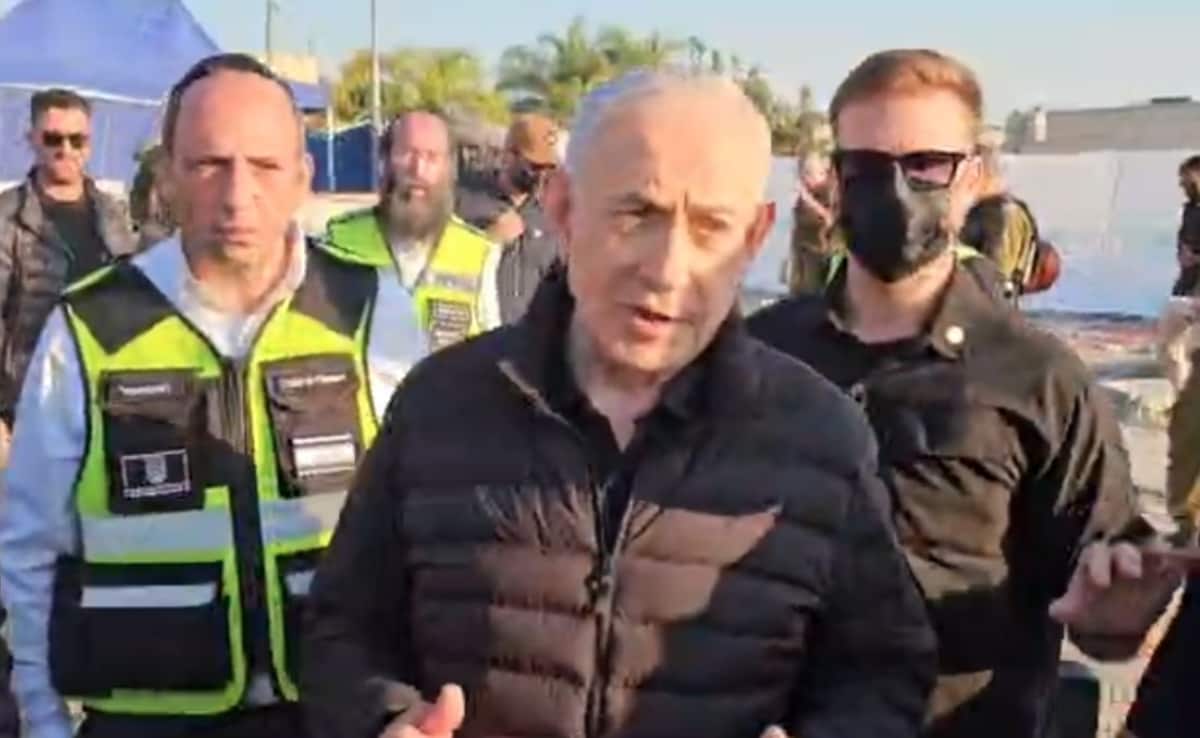
Diplomatic gratitude is a performance art. When Benjamin Netanyahu tells a camera that Narendra Modi is a "great friend," he isn’t describing a personal bond or a shared moral compass. He is executing a transaction. The media laps it up as a "special relationship," a bromance between two strongmen, but the reality is far colder. This isn't about friendship. It's about a mutual survival instinct in an era where traditional alliances are decaying.
The mainstream narrative suggests that India and Israel have finally found their ideological soulmate in one another. They haven't. They’ve found a convenient temporary alignment that both sides are over-leveraging for domestic optics. If you think this "friendship" is a permanent fixture of the 21st century, you’re misreading the scoreboard. If you enjoyed this article, you might want to check out: this related article.
The Myth of Shared Values
Pundits love to talk about "shared democratic values" and "joint struggles against terror." It’s a convenient script. It ignores the fact that India’s foreign policy remains a chaotic exercise in multi-alignment. While Netanyahu thanks Modi for standing with Israel, India is simultaneously deepening its energy ties with Russia and maintaining a delicate, albeit strained, dialogue with Iran.
Friendship implies loyalty. Geopolitics implies math. For another look on this event, check out the latest coverage from Al Jazeera.
Israel needs India because India is the world’s largest arms buyer. Between 2018 and 2022, India accounted for nearly 37% of Israel's total arms exports. You don’t need a "great friend" when you have a "great customer." Netanyahu’s praise is a customer retention strategy. If India stopped buying Heron drones and Barak missiles tomorrow, the "brotherhood" would evaporate faster than a desert mist.
India’s Palestine Tightrope
The "lazy consensus" says India has abandoned its historical support for the Palestinian cause in favor of Tel Aviv. This is a fundamental misunderstanding of New Delhi's "De-hyphenation" policy. India isn't choosing Israel over Palestine; it's trying to treat them as two separate, non-intersecting bank accounts.
- The Energy Reality: India cannot afford to alienate the Arab world. Millions of Indian expats work in the Gulf, sending back billions in remittances.
- The Voting Record: Check the UN General Assembly logs. India still votes against Israel on key resolutions regarding settlements.
- The Rhetoric: Modi’s government still officially supports a two-state solution.
Netanyahu knows this. His public "thank you" is an attempt to box India in. By publicly claiming Modi as a staunch ally, he puts pressure on New Delhi to stop playing both sides. It’s a trap, not a tribute.
The Defense Industrial Complex as a Crutch
I’ve watched defense contractors burn through billions trying to navigate the "Make in India" bureaucracy. Israel has been more successful than most because they are willing to share technology that the US and Europe keep behind a paywall.
But this isn't out of the goodness of their hearts.
Israel’s defense industry is too small to survive on domestic orders alone. They need a massive testing ground. India provides the scale, the cash, and the real-world data. When an Israeli missile system is integrated into the Indian Air Force, it becomes a marketing brochure for the rest of the world.
The downside? India is becoming dangerously dependent on Israeli tech for its border security. Reliance is not the same thing as an alliance. If a conflict breaks out where Israeli interests diverge from Indian ones—say, a flare-up involving an Israeli partner that India dislikes—who do you think Jerusalem will side with? Hint: it won't be the "great friend" in Delhi.
Dismantling the "Strongman" Synergy
The media loves to pair Modi and Netanyahu because of their similar political branding. They are both seen as nationalist icons who prioritize security. This "strongman synergy" is a surface-level observation that ignores the internal mechanics of their respective states.
Israel is a tiny, hyper-technological fortress state. India is a sprawling, diverse, developing subcontinent. Their challenges are not the same. Netanyahu’s "friendship" serves his need for international legitimacy while he faces massive domestic protests and legal battles. Modi’s "friendship" serves his need to project India as a global power that can talk to anyone.
It is a marriage of convenience where both parties are already looking at the exit signs.
The Questions You Should Be Asking
"Does India's support for Israel change the balance of power in the Middle East?"
No. India is a peripheral player in Middle Eastern security. It wants stability for its workers and oil, not a seat at the war room table. India’s "support" is largely rhetorical and symbolic. It doesn't move the needle on the ground in Gaza or Lebanon.
"Is there a secret intelligence pact between the two?"
Intelligence sharing has existed since long before Modi and Netanyahu. The Mossad and R&AW have been talking for decades. The only thing that changed is that now they talk about it on Twitter. Publicizing intelligence cooperation is usually a sign that the actual intelligence is less sensitive than it used to be.
"Will this relationship survive after either leader leaves office?"
The institutional momentum of arms sales will keep the wheels turning, but the "warmth" will vanish. Without the personal PR machine of these two leaders, the relationship reverts to what it actually is: a transactional arrangement between a mid-sized tech hub and a massive developing market.
The Risk of Over-Investment
The danger for India is getting caught in the "Netanyahu Bubble." Israel’s internal politics are more fractured than they have been in decades. By tying India's public image so closely to a single Israeli leader, New Delhi risks alienating future Israeli administrations and the broader international community.
True strategic autonomy means not having "great friends." It means having interests that happen to overlap.
The moment we start believing the "Bhai-Bhai" (brother-brother) rhetoric is the moment we lose sight of the objective. Israel is a supplier. India is a buyer. Everything else is just theater for the evening news.
Stop looking for heart in a room full of mirrors. Netanyahu isn't thanking a friend; he's praising a hedge.
If you want to see the real state of the relationship, stop reading the tweets. Look at the shipping manifests. Look at the UN voting abstentions. Look at the price of oil.
The "friendship" is a ghost in the machine.
Don't buy the hype. Buy the hardware, keep your distance, and always check the fine print on the "solidarity."
Go look at the trade deficit and tell me again about the bond of brothers.


