The intersection of institutional governance and territorial conflict within FIFA operates on a fundamental tension between the Statutory Neutrality Principle and the Human Rights Mandate. When Jibril Rajoub, President of the Palestinian Football Association (PFA), formally requested the suspension of the Israel Football Association (IFA) at the 74th FIFA Congress, he triggered a procedural mechanism that forces the governing body to choose between its legal autonomy and its ethical obligations. This conflict is not merely a diplomatic spat; it is a structural crisis regarding how international federations define "political interference" versus "human rights compliance."
The Tripartite Structural Conflict
To understand the PFA’s motion, one must deconstruct the grievance into three distinct operational failures. Each category carries a different weight under the FIFA Statutes and requires a specific burden of proof.
1. Territorial Jurisdictional Violations
The most technical and legally potent argument involves the inclusion of five Israeli clubs located in the West Bank within the IFA’s domestic leagues. Under FIFA Statute 72.2, a member association’s clubs cannot play on the territory of another member association without the latter's express permission.
- The Bottleneck: FIFA has historically avoided a definitive ruling on this by categorizing the West Bank as "disputed" rather than "occupied" in a sporting context, a distinction that shields the IFA from immediate expulsion.
- The Logical Flaw: If FIFA recognizes Palestine as a full member with defined territorial rights—which it has since 1998—maintaining "neutrality" on where its domestic matches are played creates a precedent that undermines the sovereign integrity of all member associations.
2. Infrastructure Destruction and Force Majeure
The PFA cites the systematic destruction of football infrastructure in Gaza as a violation of FIFA’s objectives to "improve the game of football constantly." From a data-driven perspective, the total cessation of footballing activity in Gaza represents a 100% loss of operational capacity for a significant portion of the PFA’s membership.
- The Mechanism of Responsibility: The PFA argues that the IFA, as a peer association, has failed to advocate against these restrictions or has been complicit through silence.
- The Defense: The IFA’s counter-argument rests on the separation of "State Action" from "Association Action." They contend that an independent sports federation cannot be held liable for the kinetic operations of its national military.
3. Discrimination and Racism (Statute 4)
The third pillar of the PFA motion focuses on discriminatory behavior within the Israeli league system, specifically citing the conduct of certain fan bases and the perceived lack of disciplinary action by the IFA. Under Article 4 of the FIFA Statutes, any discrimination against a country or group of people is strictly prohibited and punishable by suspension.
The Procedural Pivot and the Independent Assessment
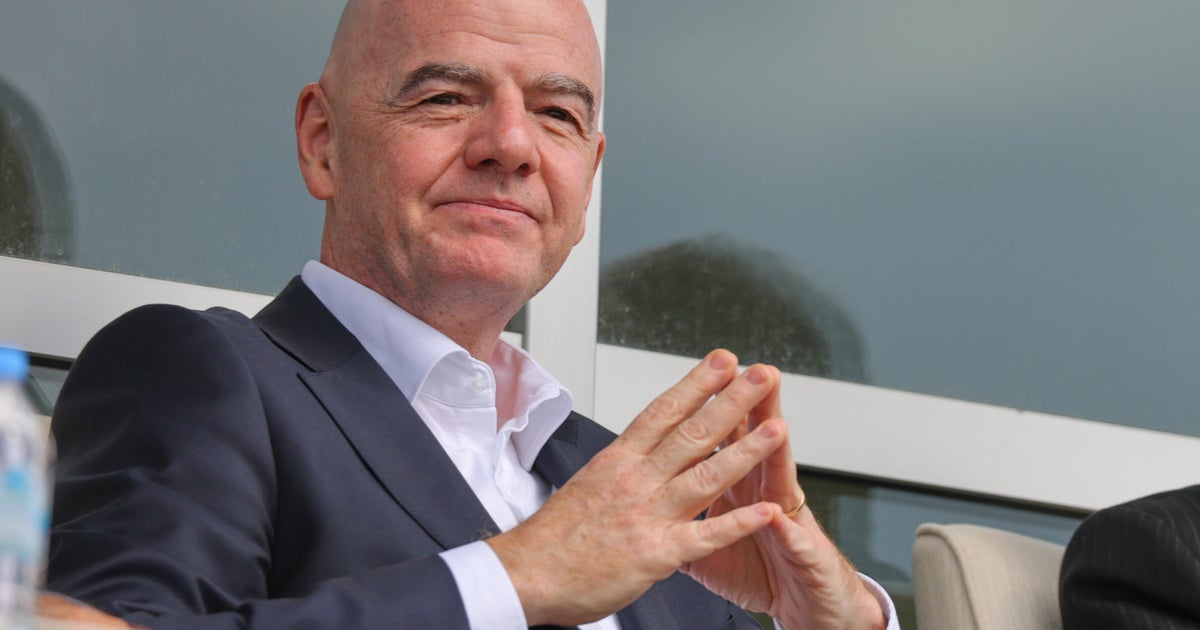
FIFA President Gianni Infantino’s decision to bypass an immediate vote at the Congress in favor of an Independent Legal Assessment represents a strategic delay designed to preserve the organization's internal stability. This move shifts the burden from a democratic vote of 211 member nations—which would be highly susceptible to regional political blocs—to a technical review by legal experts.
The Risk of Selective Precedent
The primary variable in this assessment is the 2022 suspension of the Russian Football Union (RFU). The PFA leverages this as a direct precedent. However, the legal architecture of the Russia suspension differed in one critical aspect: the RFU was suspended primarily because other UEFA nations refused to play them, making the organization of international competitions technically impossible.
- The Operational Reality: Unless a significant bloc of AFC (Asian Football Confederation) or UEFA nations refuses to take the pitch against Israel, FIFA lacks the "operational impossibility" lever it used against Russia.
- The Legal Trap: If the independent assessment finds that the IFA has violated territorial statutes but FIFA fails to act, it creates a "Dead Letter" statute where Article 72.2 becomes effectively unenforceable globally.
The Cost Function of Sanctions
For FIFA, the "cost" of suspending a member is measured in lost broadcasting revenue, potential litigation in the Court of Arbitration for Sport (CAS), and the risk of a schism within the confederations.
Revenue and Sponsorship Impact
Israel’s membership in UEFA (having moved from the AFC in the 1990s) integrates it into the high-value European media market. A suspension would disrupt UEFA’s Nations League and World Cup Qualifying schedules. FIFA’s reluctance is rooted in the financial risk of breaching contracts with broadcasters who expect a full slate of competitive matches.
The Geopolitical Weighted Average
The PFA’s leverage is almost entirely moral and political. By forcing the issue at the Congress, they utilize the "one nation, one vote" system to embarrass the FIFA Council. Even if the motion fails, the PFA successfully increases the "reputational tax" on FIFA’s leadership. The PFA is betting that the cumulative weight of international legal rulings (such as those from the ICJ) will eventually make the IFA’s membership a net negative for FIFA’s brand equity.
The Infrastructure of Advocacy vs. The Infrastructure of Governance
Jibril Rajoub’s rhetoric—specifically his direct confrontation with IFA Vice President Shino Moshe—highlights a breakdown in the "Diplomatic Protocol" usually observed at FIFA gatherings. This suggests the PFA has moved from a strategy of internal negotiation to one of Institutional Attrition.
The Three Potential Outcomes of the Legal Review
- Technical Dismissal: The lawyers rule that the IFA is not responsible for the actions of the Israeli government, maintaining the status quo but likely triggering a PFA appeal to the CAS.
- Conditional Compliance: FIFA issues a "Correction Order" requiring the IFA to remove West Bank clubs from its leagues within a specific timeframe or face suspension. This is the most likely path for an organization seeking a middle ground.
- Full Suspension: A mirror of the Russia-Belarus decision. This is highly unlikely without a massive shift in the positions of the US and European federations, who hold the majority of FIFA's commercial leverage.
The IFA’s defense, presented by President Shino Moshe, focuses on the "purity of sport" and the claim that the PFA is weaponizing the FIFA platform for non-sporting ends. This argument, however, ignores the fact that football infrastructure (stadiums, headquarters, and players) is physically integrated into the conflict. The IFA’s "Neutrality Defense" is increasingly at odds with FIFA’s own Human Rights Policy, adopted in 2017, which commits the organization to "go beyond its direct operations" to prevent adverse human rights impacts.
The Strategic Play for Palestine and the IFA
The PFA must now transition from rhetorical appeals to a granular evidentiary strategy. To win at the legal assessment stage, they must prove a Direct Nexus between IFA administrative decisions and the violation of Palestinian footballing rights. This includes documenting specific instances where IFA policies hindered the movement of PFA players or where the IFA actively facilitated the expansion of clubs into occupied territory.
Conversely, the IFA’s survival strategy depends on maintaining its status as a "Sporting Exception." They must prove that they have no jurisdictional control over the security apparatus that impacts Palestinian football. However, the presence of clubs in settlements remains their greatest legal liability, as it is a voluntary administrative act by the IFA.
The resolution of this motion will define the limits of FIFA’s "apolitical" stance. If the assessment finds no grounds for action, it signals that FIFA’s Human Rights Policy is subordinate to the political comfort of its executive council. If it recommends sanctions, it marks the beginning of a new era where national federations are held strictly liable for the territorial and human rights contexts in which they operate. The "Technical Committee" is not just reviewing a complaint; it is drafting the future constitution of global sports diplomacy.
The PFA's next move must be the filing of an amicus brief to the independent panel that specifically links IFA club licensing to the violation of the FIFA Sustainability and Diversity Charter. This forces the panel to address the IFA's internal regulations rather than the external war, a theater where the PFA has much higher odds of a favorable legal ruling.