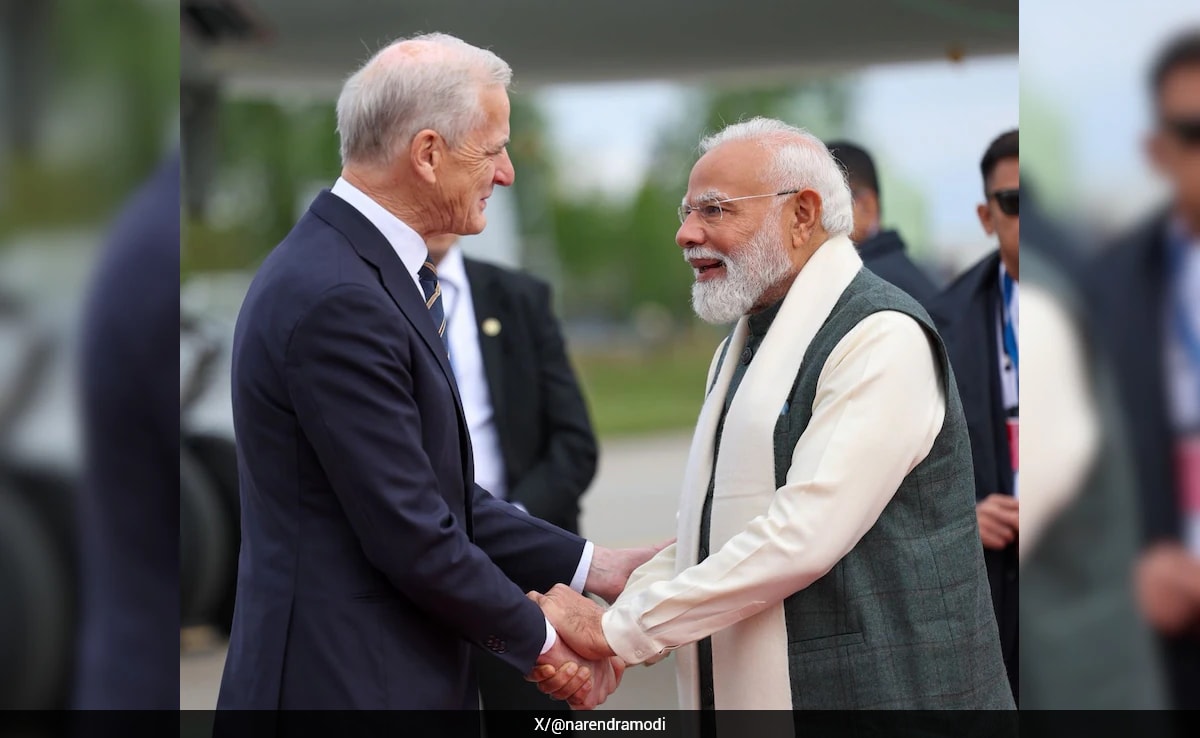
The diplomatic theater in Oslo this week unfolded with the calculated precision of a state visit four decades in the making. Prime Minister Narendra Modi and his Norwegian counterpart, Jonas Gahr Støre, formally upgraded bilateral ties to a Green Strategic Partnership. Handshakes were exchanged, memorandums were signed, and a target was set to double bilateral trade by 2030 while injecting $100 billion of European Free Trade Association (EFTA) capital into the Indian economy.
But beneath the optimistic rhetoric lies a stark operational reality. The headline numbers mask a structural friction between New Delhi's domestic manufacturing ambitions and Oslo's hard-nosed investment mandates.
The Core Conflict of the Capital Pledge
The center of the new agreement relies heavily on the Trade and Economic Partnership Agreement (TEPA). This pact features an unprecedented commitment: $100 billion in foreign direct investment (FDI) over the next fifteen years, paired with the creation of one million jobs in India. It is a massive number. It is also, upon closer inspection, non-binding.
EFTA FDI in India (2000–2025):  ~$11 Billion
TEPA Target (Next 15 Years):     $100 Billion
Historical precedent shows the gap between diplomatic ambition and private sector execution. Since 2000, cumulative FDI from all four EFTA nations into India has hovered around $11 billion. Expecting a sudden tenfold surge requires an extraordinary leap of faith. Sovereign states do not dictate where private capital flows; markets do.
The Sovereign Wealth Fund Contradiction
The most glaring disconnect involves Norges Bank Investment Management, the steward of Norway's $1.4 trillion sovereign wealth fund. While the Norwegian government champions green strategic alignment with New Delhi, its sovereign wealth fund is quietly reallocating its exposure.
At the end of last year, Norges Bank reduced India’s weight in its portfolio by 40 basis points to 2.1%. The adjustment followed an underperformance in the fund's Indian equities segment, which posted a negative return of 1.4% over the preceding twelve months.
This reduction highlights the core tension of the deal. Oslo’s politicians can sign treaties, but Oslo’s fund managers answer strictly to risk-adjusted return metrics. If Indian green infrastructure projects cannot deliver competitive yields, the sovereign wealth fund will look elsewhere.
Clean Tech Versus Local Protectionism
The Green Strategic Partnership focuses heavily on specialized technology transfers. Norway possesses elite capabilities in offshore wind, carbon capture, utilization, and storage (CCUS), and green shipping. India offers massive industrial scale, digital infrastructure, and production speed.
The strategy appears sound on paper, but execution hits immediate bottlenecks.
- Localization Pressures: India’s domestic manufacturing policies heavily favor local sourcing to boost domestic production. This creates friction for Norwegian firms that rely on specialized proprietary equipment built in Europe.
- Infrastructure Risks: Grid integration for offshore wind projects in India remains plagued by regulatory delays, tariff disputes, and long-term off-taker structural issues.
- Technology Transfer Demands: New Delhi expects deep technology sharing rather than simple equipment sales, a requirement that makes European intellectual property holders hesitant.
Norway's expertise in the blue economy, particularly automated maritime shipping and aquaculture, faces similar hurdles. Transferring automated maritime tech to Indian shipyards requires navigating a dense web of state subsidies and protectionist maritime cabotage laws.
The Digital Public Infrastructure Play
A genuinely original element of the visit is the new triangular cooperation agreement. Under this framework, India and Norway plan to jointly deploy India’s Digital Public Infrastructure (DPI) to developing nations across the Global South.
This approach serves two strategic functions. For India, it positions its digital architecture as a global standard. For Norway, it provides a transparent, tech-driven vehicle for its international development budget. By embedding Indian software into Norwegian-funded aid programs, both nations gain geopolitical leverage in regions heavily influenced by Chinese infrastructure investments.
The Geopolitical Equation
The timing of this Nordic outreach is not accidental. The Arctic is becoming a highly contested zone for resource extraction and trade routes. Norway needs reliable partners who respect international law and the United Nations Convention on the Law of the Sea (UNCLOS).
By bringing Norway into the Indo-Pacific Oceans Initiative and formalizing space research ties between ISRO and the Norwegian Space Agency, India gains a foothold in Arctic logistics and polar science. In return, Norway secures a major democratic counterweight in Asian maritime security discussions.
Diplomatic statements offer high-level alignment, but the private sector remains cautious. The $100 billion target will not be met by administrative decrees or state dinners. It will require India to systematically remove the regulatory friction that historically deters European capital, and it requires Norway to accept that entering the world's fastest-growing market requires absorbing local operational risks.