The survival of the Malian transitional government depends on its ability to solve a multi-front attrition problem where the rate of territorial loss exceeds the speed of institutional replenishment. While international observers often focus on the ideological shift from Western to Russian security partnerships, the true metric of state control is the functional reach of the administrative apparatus. If a state cannot collect taxes, adjudicate local disputes, or provide physical security within a defined radius, it ceases to exist in those zones regardless of who sits in Bamako. Mali is currently experiencing a systematic contraction of this functional reach, driven by three specific failure points: the degradation of the monopoly on violence, the collapse of rural mediation, and a fiscal dependency on high-risk extraction.
The Triad of State Erosion
To understand if the Malian government is losing control, one must look past the optics of military parades and analyze the Three Pillars of Governance Continuity. When these pillars are undermined, the central authority reverts to a city-state model, governing the capital while ceding the periphery to non-state actors.
- Kinetic Dominance: The capacity to project force and hold territory permanently.
- Judicial Legitimacy: The ability to be the preferred arbiter of local land and resource disputes.
- Fiscal Extraction: The infrastructure required to fund the state without relying exclusively on foreign subsidies or volatile gold exports.
The current administration has prioritized the first pillar at the expense of the other two. This creates a strategic imbalance: military "clearing" operations occur without the subsequent "holding" phase that requires civil servants and judges. Consequently, insurgent groups—ranging from the Jama’at Nusrat al-Islam wal-Muslimin (JNIM) to the Islamic State in the Greater Sahara (ISGS)—reoccupy these vacuums within days of a military convoy’s departure.
The Security Dilemma of Variable Geometry
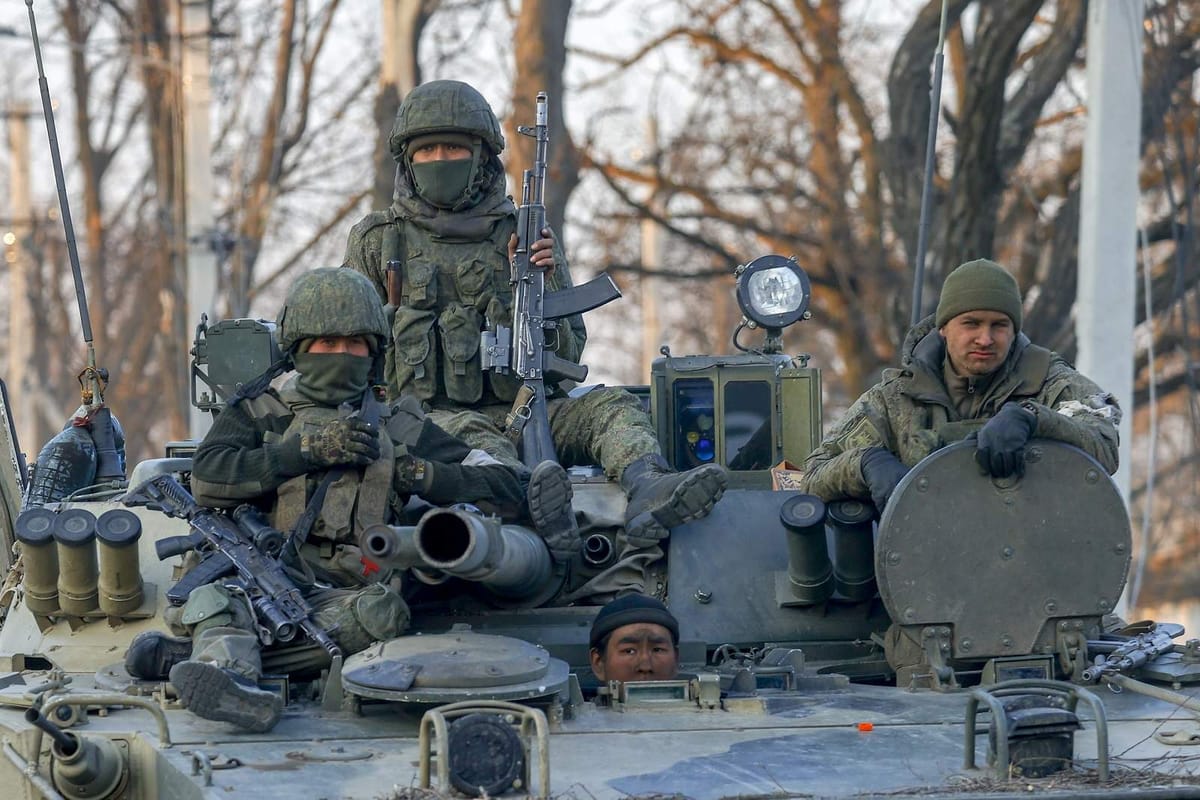
The Malian Armed Forces (FAMa), supported by the Wagner Group (now Africa Corps), have shifted toward a high-aggression, low-footprint kinetic strategy. While this has resulted in symbolic victories, such as the 2023 capture of Kidal, it has fundamentally failed the Security Sustainability Test.
The Cost of Kinetic Overreach
The transition from United Nations (MINUSMA) and French (Barkhane) support to Russian paramilitary assistance changed the math of Malian security. MINUSMA provided a massive, albeit static, logistics and intelligence umbrella. The Russian model, by contrast, is designed for offensive operations and tactical disruption.
The resulting bottleneck is Logistical Overextension. FAMa assets are stretched thin across a geography roughly twice the size of France. The loss of UN-contracted air support and medical evacuation capabilities has increased the "cost per engagement" for the Malian soldier. When casualties rise and reinforcements remain grounded due to maintenance backlogs, the military’s tactical confidence wanes. This leads to a defensive crouch where troops remain in fortified bases, leaving the civilian population to negotiate their own survival with insurgent tax collectors.
The Asymmetry of Intelligence
A state loses control when its intelligence network is blinded. In northern and central Mali, the "Human Intelligence" (HUMINT) ecosystem has been poisoned by the perception of state-sponsored violence against specific ethnic groups, particularly the Fulani. When military operations are perceived as ethnically targeted, the state loses its informants. Without informants, the state cannot distinguish between a civilian and a combatant, leading to further heavy-handedness. This creates a self-reinforcing feedback loop of radicalization that no amount of drone strikes can resolve.
The Judicial Vacuum and the Rise of Shadow Governance
The most critical indicator of lost control is not a flag being lowered, but a judge fleeing his post. In over 40% of Malian territory, the state judiciary is non-existent. Into this void steps the "Shadow State" provided by JNIM and other actors.
The Competitive Advantage of Insurgent Law
Insurgent groups dominate the periphery because they provide a predictable, low-friction legal system. In rural Mali, the primary sources of conflict are land rights and cattle theft. The state legal system is often viewed as slow, corrupt, and physically inaccessible. In contrast, insurgent "sharia courts" offer:
- Immediate Adjudication: Disputes are settled in days, not years.
- Zero-Cost Access: No filing fees or bribes to city-based lawyers.
- Enforcement Certainty: The group that provides the judge also provides the executioner.
By outsourcing justice to insurgents, the rural population inadvertently builds the legitimacy of the shadow state. The central government is not being "overthrown" in these areas; it is being "out-competed" on the basic level of social organization. This loss of judicial monopoly is more dangerous than a lost battle because it is harder to reclaim with tanks than it is to lose with neglect.
The Economic Bottleneck: Gold and Sovereignty
The Malian state’s fiscal health is increasingly untethered from its people. Central to this is the Extractive Dependency Ratio. When a government relies on mobile or taxable citizens for revenue, it has a structural incentive to protect them. When it relies on gold mines, it only has an incentive to protect the mines.
The Revenue Paradox
Mali is one of Africa’s largest gold producers. However, the gold sector is bifurcated into industrial mines (mostly owned by foreign firms) and artisanal mines (controlled by local elites, militias, or insurgents).
The government’s drive to renegotiate mining codes is a rational attempt to increase the "State Take." However, the shift in security partners has created a new liability. The Africa Corps model operates on a "Security for Resources" basis. If a significant portion of the state’s gold revenue is diverted to pay for paramilitary services, the net gain to the national treasury is zero. This prevents the government from investing in the civil infrastructure needed to re-establish control in the north.
Furthermore, the "Zakat" (religious tax) collected by insurgents on artisanal gold mining in the Sahara provides the enemy with a sustainable, decentralized revenue stream that the state cannot easily interdict. The state is fighting a high-burn-rate war against an enemy with low overhead and a diversified tax base.
The Geopolitical Risk of the AES Alliance
The formation of the Alliance of Sahel States (AES) with Burkina Faso and Niger represents a bold attempt to create a regional security bloc independent of Western influence. However, from a structural perspective, the AES is an Alliance of Shared Vulnerabilities.
The withdrawal from the Economic Community of West African States (ECOWAS) has introduced a Trade Friction Variable. Mali is landlocked. Its economy depends on the ports of Dakar, Abidjan, and Tema. By alienating its coastal neighbors, the transitional government has increased the cost of imports and decreased the competitiveness of its exports. Any short-term political gain from "nationalist" rhetoric is being offset by the long-term erosion of the middle class’s purchasing power. A state that cannot stabilize its currency or ensure the flow of basic goods eventually loses the support of its urban power base—the only group that currently keeps the government in power.
The Mechanics of Territorial Contraction
Control is not binary; it is a gradient. The Malian government currently maintains high control in the "Core" (Bamako and the southern agricultural belt), contested control in the "Buffer" (Central Mali/Mopti), and nominal control in the "Periphery" (The North).
The primary threat is the Encroachment of the Buffer into the Core. We are seeing a steady increase in "hit-and-run" attacks within a 100km radius of Bamako. This indicates that the insurgent groups have moved past the stage of simple territorial occupation in the north and are now in the "Disruption Phase" of the south.
- Phase 1: Infiltration. Establishing sleeper cells in urban outskirts.
- Phase 2: Supply Line Interdiction. Attacking convoys on the main roads to Senegal and Ivory Coast.
- Phase 3: Administrative Paralysis. Assassinating local officials to ensure no one works for the state.
If the government cannot secure the main arteries leading into Bamako, the city will effectively become an island. At that point, "control" becomes a legal fiction.
Strategic Forecast: The Pivot to Institutional Survival
The current trajectory suggests that Mali is not facing a sudden collapse, but a Chronic Institutional Fade. The military government may hold the capital for years, but the state as a functional entity is shrinking.
To reverse this, the focus must shift from "Enemy Neutralization" to "Administrative Restoration." This requires three immediate tactical shifts:
- The Civilian Surge: For every battalion sent to a northern town, a mobile court and a grain bank must follow. If the military is the only face of the state, the state will always be viewed as an occupying force.
- Decentralized Mediation: The government must formalize the role of traditional leaders in dispute resolution. Trying to impose a Napoleonic legal code on the Sahara is a failed enterprise. By "licensing" traditional justice, the state can co-opt the legitimacy that insurgents are currently stealing.
- Fiscal Transparency in Defense: The cost of the Africa Corps partnership must be brought onto the formal budget. Hidden costs in the form of mining concessions create a "Shadow Economy" that undermines the regular army and fuels corruption.
The Malian state is at a crossroads where the definition of "victory" must be redefined. Victory is not the death of the last insurgent; it is the return of the first schoolteacher to a village in Gao. Without that transition, the military government is merely managing the decline of a state that is slowly being eaten from the edges inward.