The convergence of Middle Eastern kinetic conflict and European energy vulnerability has triggered a forced acceleration in Electric Vehicle (EV) adoption, creating a structural opening for Chinese Original Equipment Manufacturers (OEMs). While traditional analysis attributes the recent spike in European EV sales to consumer environmental sentiment, the underlying driver is a fundamental shift in the energy-to-total-cost-of-ownership (TCO) ratio. When oil supply chains face disruption—specifically via the Strait of Hormuz—the volatility premium on Internal Combustion Engine (ICE) fuels functions as a regressive tax on European mobility. Chinese manufacturers, insulated by vertically integrated battery supply chains and lower cost bases, are the primary beneficiaries of this geopolitical friction.
The Triple Nexus of EV Adoption Volatility
Understanding the current market shift requires decomposing the "Jump in EU EV Sales" into three distinct causal mechanisms. The Iranian-linked supply shocks do not merely "boost" sales; they alter the capital allocation logic for both fleet managers and private consumers.
1. The Energy Arbitrage Mechanism
The utility of an EV in the Eurozone is tethered to the spread between Brent Crude pricing and the marginal cost of electricity. In a wartime economy or during regional instability involving major oil exporters like Iran, the ICE operating cost enters a state of extreme elasticity.
- The Price Floor Effect: High fuel prices establish a psychological floor for EV interest. Even if electricity prices rise due to natural gas dependencies, the efficiency of electric drivetrains (averaging 85-90% vs. 20-30% for ICE) ensures that the cost per kilometer remains lower.
- Grid Stability vs. Tanker Risk: Electricity generation in the EU has diversified through renewables and nuclear, whereas transport fuels remain 90%+ dependent on external maritime routes. Regional conflict highlights this vulnerability, driving "security-of-fueling" as a consumer priority.
2. Supply Chain Asymmetry
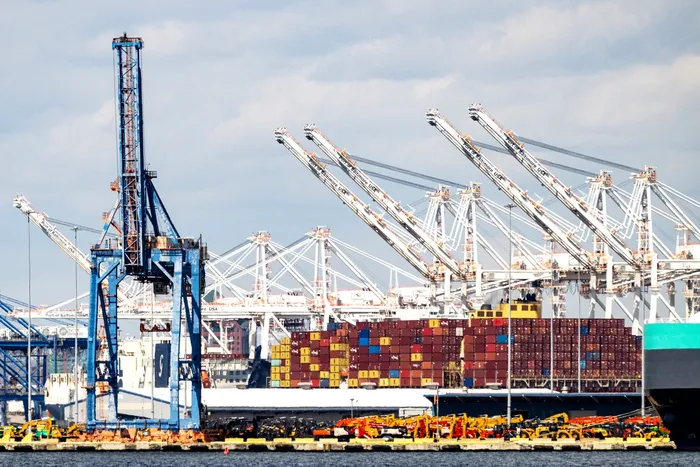
The European automotive industry operates on a high-margin, high-complexity model that is historically dependent on just-in-time logistics. Geopolitical instability increases insurance premiums on maritime freight and disrupts the flow of specialized components. Chinese brands, such as BYD and MG (SAIC), have mitigated this through:
- Direct Mineral Access: Control over the lithium-iron-phosphate (LFP) and nickel-cobalt-manganese (NCM) processing stages.
- State-Linked Logistics: Utilizing the "Belt and Road" rail infrastructure to bypass maritime chokepoints, providing a more stable delivery timeline when sea lanes are contested.
3. The Price-Performance Gap
Chinese brands are not winning on brand equity; they are winning on the marginal utility per Euro. As inflation bites into European disposable income—exacerbated by rising energy costs—the "prestige" premium of German or French brands becomes untenable. Chinese OEMs offer Level 2+ ADAS (Advanced Driver Assistance Systems) and 60kWh+ batteries at price points 20-30% below their European counterparts.
Quantitative Displacement: The Chinese Market Share Capture
The expansion of Chinese brands in Europe is not a tide that lifts all boats; it is a displacement of the legacy B and C-segment markets. To quantify this, we must look at the Cost Function of a mid-range EV.
The cost of an EV battery typically accounts for 30-40% of the total vehicle cost. Chinese OEMs benefit from a scale-driven cost advantage calculated by:
$$C(q) = F + vq$$
Where $F$ (fixed costs) are subsidized by domestic Chinese volume and $v$ (variable costs) are reduced via localized mineral processing. European OEMs, forced to buy cells from third parties (often Chinese or South Korean), carry a built-in margin disadvantage. When a geopolitical crisis spikes oil prices, the "wait-and-see" consumer is pushed toward the most affordable entry point. Because European manufacturers have focused on high-end, luxury EVs to preserve margins, they have left the high-volume entry-level market vacant for Chinese capture.
Strategic Bottlenecks in the European Response
The European Union’s legislative response—primarily the anti-subsidy probe and potential tariffs—represents a reactive rather than a structural fix. These measures create three distinct bottlenecks:
- The Pricing Trap: Imposing a 20-30% tariff on Chinese EVs may protect local jobs, but it simultaneously slows the overall EV adoption rate required to meet carbon targets. It keeps mobility expensive during a period of energy instability.
- The Infrastructure Lag: While vehicle sales jump, the deployment of High-Power Charging (HPC) stations lags. This creates a "charging friction" that could cap the sales growth regardless of how much oil prices rise.
- The Localization Mandate: Chinese firms are already circumventing tariffs by announcing plants in Hungary, Spain, and Poland. This transitions the competition from "Import vs. Local" to "Foreign Capital in Local Markets vs. Legacy Capital," where the legacy players are still burdened by the R&D costs of transitioning away from ICE.
The Geopolitical Risk Profile of the EV Transition
While the Iran conflict serves as a catalyst for EV sales, it introduces a new set of risks. The transition is not an escape from geopolitics, but a migration from one risk theater to another.
- Rare Earth Dependency: Moving away from Iranian oil means moving toward Chinese-processed minerals (Lithium, Cobalt, Neodymium). The "Energy Security" gained on the fuel side is partially lost on the hardware side.
- Economic Protectionism: As Chinese brands gain market share, political pressure for "Fortress Europe" policies increases. This risks a trade war that could increase the cost of power electronics and semiconductors, which are vital for all modern vehicles.
- Dual-Use Concerns: Modern EVs are essentially rolling data centers. The proliferation of Chinese software in European infrastructure raises sovereign data concerns, potentially leading to future bans or restricted zones for Chinese-made vehicles.
Operational Realities for Fleet and Retail Strategy
For institutional buyers and large-scale fleet operators, the "jump" in sales is a signal to de-risk the ICE asset class. Residual values for diesel and petrol vehicles are projected to crater as urban access regulations tighten and fuel volatility persists.
The strategy for navigating this shift involves a three-pronged approach:
- Diversification of Supplier Origin: Avoiding over-exposure to any single manufacturing hub (e.g., balancing Chinese-made units with emerging Eastern European or North American production).
- TCO Modeling with High-Volatilty Inputs: Factoring in a "Conflict Premium" for fuel costs when calculating the five-year outlook for fleet transitions.
- Charging Autonomy: Investing in onsite solar and battery storage (BESS) to decouple vehicle operations from both the global oil market and the local grid price spikes.
The current market data suggests that the "jump" is not a temporary anomaly but the acceleration of a pre-existing trend. The Iranian conflict has merely removed the luxury of time. European OEMs are now in a race to achieve battery parity before Chinese brands consolidate their hold on the mass-market consumer.
Investors and strategists must recognize that the competitive advantage in the automotive sector has shifted from mechanical engineering (engine efficiency) to chemical engineering (battery density) and supply chain orchestration. In this new hierarchy, the ability to maintain production and pricing during global kinetic conflict is the ultimate metric of success. The immediate play for European stakeholders is to aggressively pivot toward LFP battery technology and localized supply chains, or risk becoming specialized niche players in a market dominated by Chinese industrial scale.