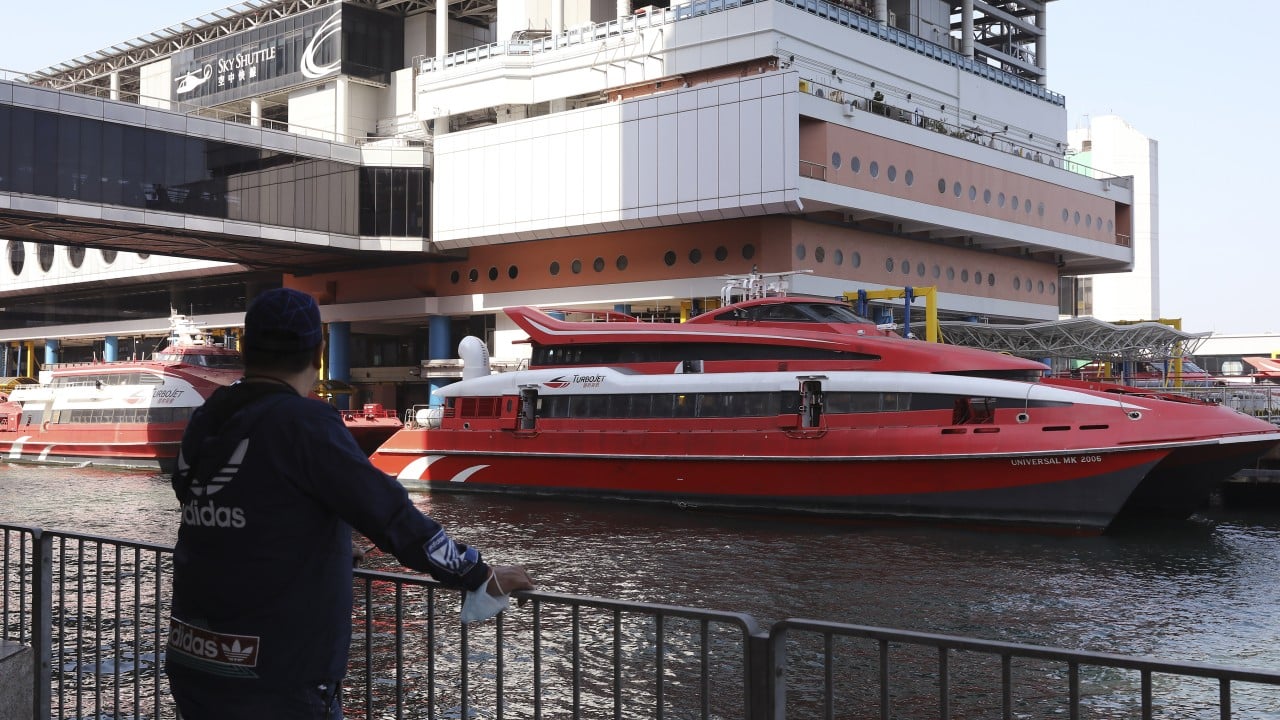
The announced 11% increase in passenger ferry fares between Hong Kong and Macau represents a structural correction to a fragile maritime business model rather than a mere inflationary adjustment. Operators are trapped between rigid price ceilings and volatile operational overheads. To understand this shift, one must look past the headline percentage and analyze the convergence of fuel price volatility, stagnant volume recovery, and the shifting competitive pressure from the Hong Kong-Zhuhai-Macau Bridge (HZMB).
The Operational Cost Function of High-Speed Ferries
The primary driver of the fare hike is a fundamental imbalance in the maritime cost function. High-speed ferries—primarily catamarans and foil-assisted vessels—are notoriously fuel-inefficient compared to land-based transit. The relationship between speed and fuel consumption in marine vessels is non-linear; as velocity increases, the drag force (resistance) increases at the square of the speed, while the power required increases at the cube of the speed.
$P = F_d \cdot v$
$P \propto v^3$
This cubic relationship means even minor increases in marine gas oil (MGO) prices exert disproportionate pressure on the bottom line. When fuel costs surge, operators cannot simply reduce speed to save costs because their value proposition—time efficiency—would collapse, driving passengers toward the HZMB bus services.
Beyond fuel, the cost structure is burdened by:
- Maintenance of Aging Fleets: Many vessels in the cross-border fleet have been in service for decades. Maintenance cycles become more frequent and expensive as aluminum hulls and turbine engines reach late-stage fatigue.
- Regulatory Compliance and Manning: Maritime law dictates specific crew-to-passenger ratios and safety certifications. These costs are fixed regardless of whether a vessel sails at 20% or 90% capacity.
- Berthing and Terminal Fees: Unlike road transport, ferries pay significant "rent" for access to specialized terminals in Sheung Wan, Tsim Sha Tsui, and Taipa. These are often non-negotiable fixed costs.
The Volume Gap and the Post-Pandemic Equilibrium
The 11% fare hike is also a response to the "Volume-Yield Gap." Pre-2019, the Hong Kong-Macau route benefited from massive, predictable flows of leisure and gaming-related traffic. High volume allowed operators to maintain lower yields (fares) while still achieving profitability through sheer scale.
Current passenger numbers have not returned to 2018 peaks. The shortfall creates a "Revenue Deficit" that can only be bridged by increasing the yield per passenger. The market is witnessing a transition from a mass-transit volume play to a premium-service niche. The HZMB has effectively siphoned off the price-sensitive demographic, leaving the ferry operators to cater to travelers who prioritize terminal proximity, comfort, and the ability to bypass the longer transit times associated with reaching the bridge ports.
Strategic Competitive Analysis: Ferry vs. Bridge
The competition between the ferry and the HZMB is not a simple binary choice. It is a battle over the "Total Cost of Transit," which includes:
- Access Time: The time taken to reach the departure point.
- Processing Time: Immigration and customs clearance speeds.
- Direct Cost: The ticket price.
- Convenience Value: The value of avoiding multiple transfers (bus-to-bus vs. pier-to-pier).
The ferry's 11% price hike increases the "Direct Cost" component, potentially pushing more "Value-Driven" travelers to the bridge. However, for a business traveler starting in Central (Hong Kong) and heading to the Cotai Strip (Macau), the ferry remains the optimal path despite the fare increase. The bridge requires a trip to Lantau Island, a bus transfer, and another taxi or shuttle on the Macau side. The ferry operator's strategy assumes that their remaining core demographic has a low price elasticity of demand; in other words, they are willing to pay an extra 10-15% to save 45 minutes of total travel time.
The Risk of the Death Spiral
The danger of this fare increase is the "Maritime Death Spiral." This occurs when higher fares drive away enough passengers that the revenue gain is offset by the volume loss. To compensate for the loss, operators then reduce the frequency of sailings. Reduced frequency makes the service less convenient, driving more passengers away, leading to further fare hikes or service cuts.
Operators are currently walking a tightrope. If they do not raise fares, they face insolvency due to fuel costs. If they raise them too high, they accelerate their own obsolescence in the face of the bridge's efficiency.
Revenue Diversification and Operational Mitigation
To survive this realignment, ferry operators must move beyond ticket sales. The "Anatomy of the Modern Ferry Operator" must include:
- Tiered Service Models: Expanding "Super Class" and private cabin offerings. By upselling 10% of the passenger base to premium tiers, operators can subsidize the "Economy" fares and keep them somewhat competitive.
- Ancillary Revenue: Integrating duty-free, high-end F&B, and "travel packages" that include hotel or casino credits.
- Fleet Modernization: Investing in newer, more fuel-efficient engines or even hybrid propulsion for shorter segments. While the capital expenditure is high, the reduction in the $v^3$ fuel penalty is the only long-term way to stabilize the cost function.
Strategic Recommendation for Stakeholders
Ferry operators must shift their identity from "General Transport" to "Premium Point-to-Point Logistics." The 11% fare increase should be viewed as a temporary liquidity bridge. The long-term strategic play is the aggressive consolidation of schedules to ensure higher Load Factors (the percentage of seats filled per sailing).
Instead of two operators running half-empty boats at the same time, the industry requires a coordinated "Rationalized Timetable." This would allow for high frequency during peak hours while drastically reducing the number of loss-making "ghost sailings" during off-peak periods. For the traveler, this means slightly less flexibility but a more sustainable service. For the operator, it is the only path to maintaining a viable maritime link in a bridge-dominated geography.