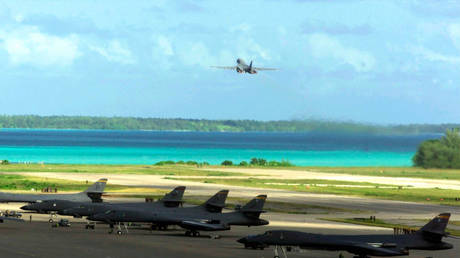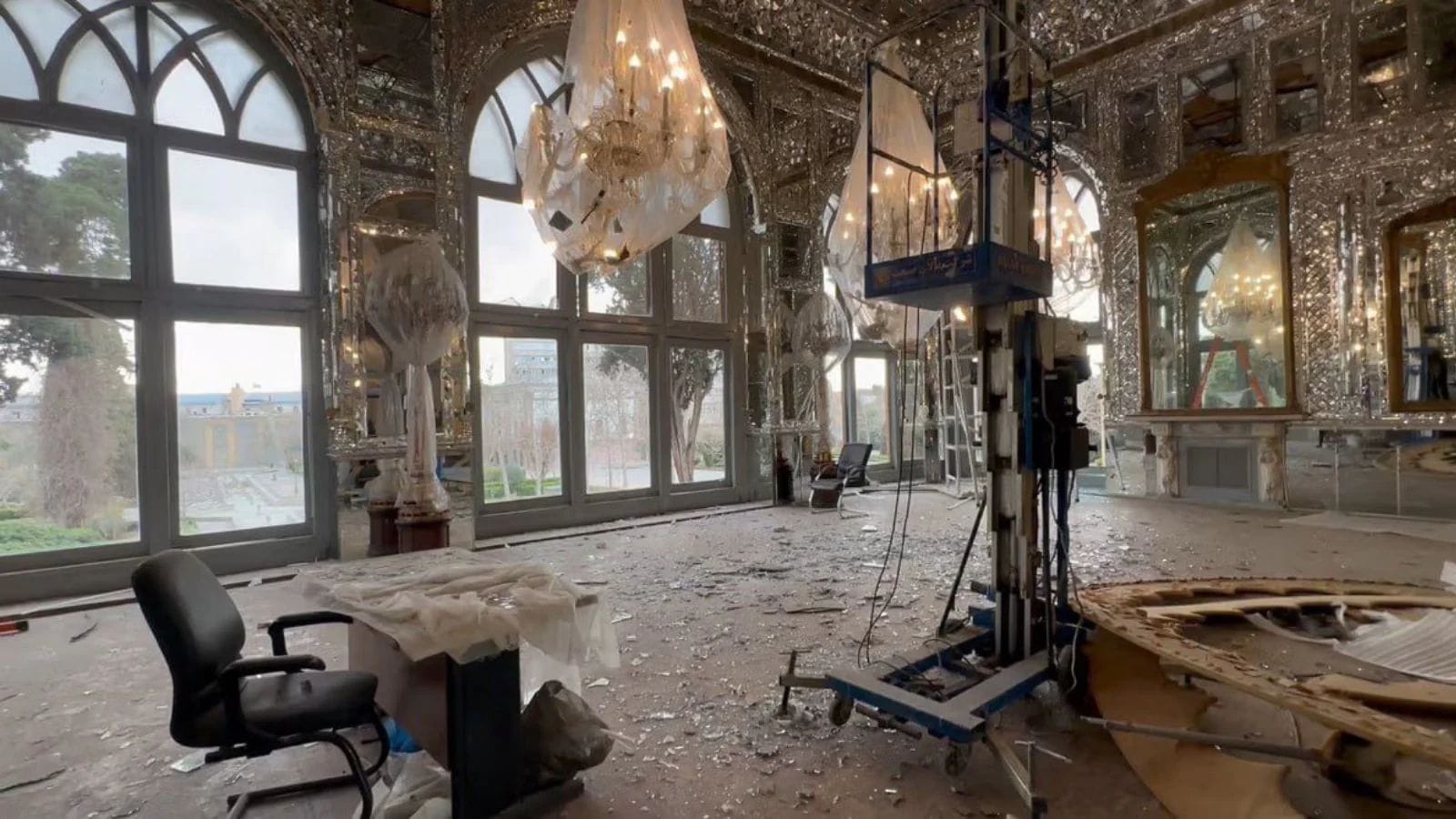
The stone did not groan when it shattered. It didn’t have a voice, though it had carried the echoes of a million whispers for nearly three millennia. When the shockwave hit the Chogha Zanbil ziggurat, the air didn’t just fill with dust; it filled with the pulverized remains of the Elamite Empire.
We tend to measure war in the currency of the living. We count the calories of the displaced, the bandages of the wounded, and the silence of the dead. These are the immediate, jagged costs of conflict. But there is a secondary, quieter slaughter happening in the shadow of the current escalations between Iran, Israel, and the United States. It is the systematic erasure of the human story.
Recent airstrikes have reportedly damaged or threatened over 140 historical sites across Iran. To a strategist in a windowless room in D.C. or Tel Aviv, these are coordinates. They are "collateral risks" or "proximity strikes." But to anyone who has ever stood in the shadow of Persepolis, these are not just piles of rock. They are the anchors of our collective identity.
The Architecture of Forever
Imagine a grandfather in Shiraz. Let’s call him Reza. For forty years, Reza has walked the same path past the Vakil Mosque. To him, the intricate floral tilework isn't a museum piece; it’s the wallpaper of his life. It’s where he proposed to his wife. It’s where he taught his grandson how the light hits the turquoise dome at exactly 4:00 PM, turning the world into a sapphire.
When a missile lands nearby, the vibrations do more than crack the foundation. They sever the thread between Reza and his ancestors. This is what the dry news reports call "cultural heritage damage." A sterile term for a visceral wound.
The sites hit aren't just Iranian. They are the "Versailles of the East." They belong to the timeline of every person on Earth. When the Achaemenid ruins are shaken, we lose a chapter of how we learned to govern, how we learned to write, and how we learned to dream of empire. We are burning the library of our own species to settle a grievance of the present.
The Invisible Stakes
Why does a pile of bricks in the desert matter when people are dying?
It’s a fair question. It’s the question that makes heritage preservation feel like a luxury for the elite. But consider this: war ends. Eventually, the treaties are signed. The soldiers go home. The reconstruction begins.
But you cannot reconstruct a 2,500-year-old soul.
Once the mud-brick walls of the Bam Citadel—already fragile from earthquakes and time—are turned to powder by high-pressure blasts, they are gone. You can build a replica. You can use the same clay. You can hire the best architects. But the "Aura," as the philosopher Walter Benjamin called it, is extinguished. The physical proof that we were once capable of such grandeur vanishes.
This isn't just about art. It’s about the psychological stability of a post-war world. People need touchstones. They need to know that something survived the madness. If you destroy a people's history, you make it significantly harder for them to envision a future. You leave them drifting in a vacuum of "now," where the only thing they know is the violence that took their "before."
The Mechanics of Destruction
Modern warfare is sold as "surgical." We are told that GPS-guided munitions can thread a needle.
Physics argues otherwise.
A 2,000-pound bomb doesn't just hit its target. It creates a seismic event. The ground liquefies. The "Sassanid Archaeological Landscape of Fars Province"—a UNESCO World Heritage site—isn't a single building. It’s an ecosystem of caves, carvings, and urban layouts. Even if a missile misses the ruins by half a mile, the acoustic trauma alone can cause ancient, weathered stone to cleave.
Hypothetically, let’s say a drone targets a mobile missile launcher parked in a valley. The launcher is destroyed. Success. But the shockwave travels through the limestone cliffs, vibrating the "Victory Relief of Shapur I" until a hairline fracture becomes a canyon. The face of a king who survived centuries of wind and sand is erased in a millisecond of "precision."
The tragedy is that these sites are often used as chess pieces. International law, specifically the 1954 Hague Convention, forbids the targeting of cultural property. Yet, in the heat of a "tit-for-tat" escalation, the definition of "military necessity" becomes dangerously elastic.
The Ghosts in the Rubble
The reports are coming in like a slow-motion obituary.
- The Friday Mosque of Isfahan: A thousand years of Islamic architecture, a literal textbook of design, shaken by nearby impacts.
- Persepolis: The ceremonial capital of the Achaemenid Empire, where the stone soldiers of the Apadana have stood guard since 515 BC.
- The Historic City of Yazd: One of the oldest sun-dried mud-brick cities on Earth, where the "windcatchers" have cooled homes without electricity for generations.
If you speak to the conservators on the ground—the men and women who spend their lives with brushes and saline solution cleaning these stones—they speak of the damage in medical terms. They talk about "trauma" to the masonry. They talk about the "stress" on the arches.
One conservator, who must remain anonymous for his safety, described the sound of a distant blast as "the heartbeat of a dying giant." He spent his morning checking the structural integrity of a 14th-century tomb, only to find that the vibration had shaken loose the delicate muqarnas—the honeycomb vaulting—that had stayed put through a dozen dynastic changes.
"We are losing the evidence of our humanity," he said. "They are fighting over power, but they are killing the beauty that makes power worth having."
A World Without a Mirror
We live in an age of digital narcissism. We think that because we have photos of these places, they are safe. We believe that a 3D scan is a substitute for the thing itself.
It isn't.
There is a profound, almost mystical power in physical continuity. Standing in a place where people stood three thousand years ago reminds us that our current political squabbles are a blip. It gives us perspective. It humbles us.
When those sites are destroyed, we lose our mirror. We start to believe that we are the first and only people to matter. We become more arrogant, more reckless, and more prone to the very violence that caused the destruction in the first place.
The 140 sites currently in the crosshairs aren't just "Iranian sites." They are the remnants of the Silk Road. They are the leftovers of the scholars who gave us algebra. They are the birthplaces of religious tolerance—the Cyrus Cylinder, often called the first charter of human rights, came from this soil.
To destroy them is to commit a crime against the future. It is to rob a child born in 2050 of the chance to look at a wall of blue tile and realize that long before there were satellites and social media, there was a mind capable of imagining heaven in a piece of baked clay.
The sky over the Iranian plateau is beautiful this time of year. It is a deep, piercing indigo. But as the jets streak across it, leaving white scars in the blue, the ground beneath is trembling. It is the trembling of a history that is being unmade, one "precision strike" at a time.
The dust is rising. And in that dust, the faces of kings, the patterns of poets, and the memories of millions are dissolving into a grey, anonymous nothingness.