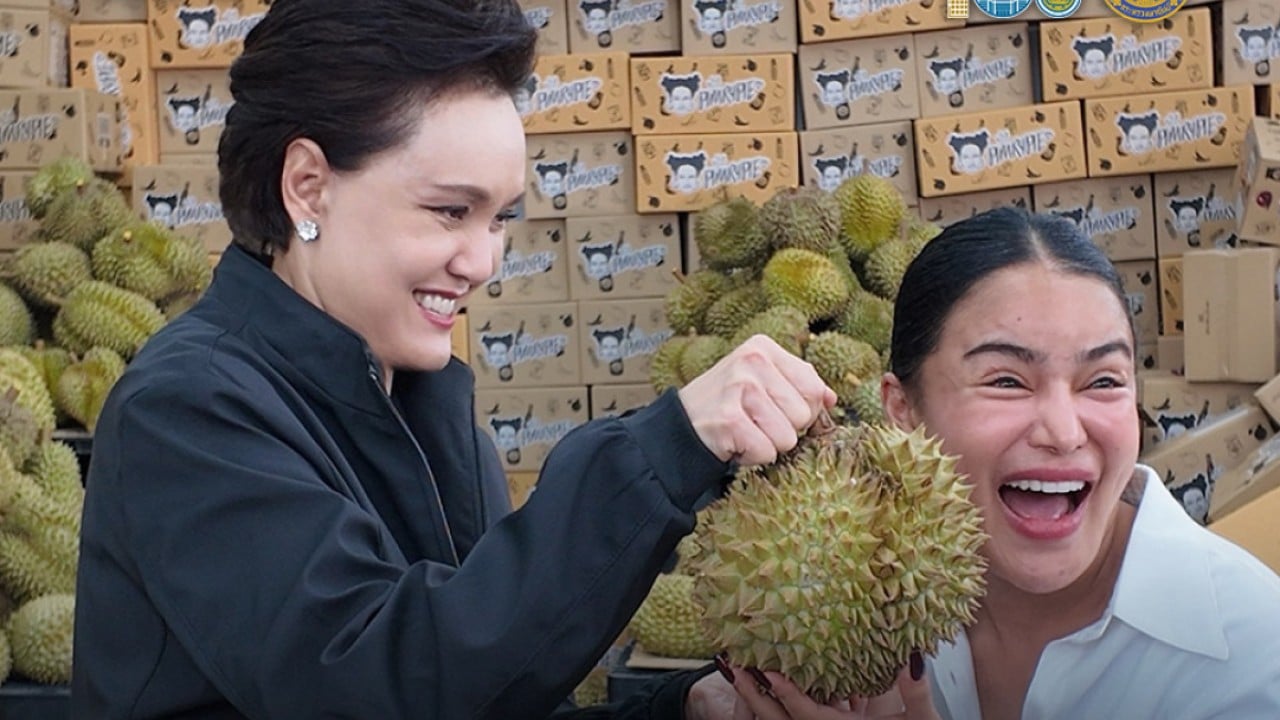
The rapid devaluation of perishable assets during a supply glut represents a classic inventory holding cost crisis. In the Thai durian market, when supply outpaces cold chain capacity and immediate consumer demand, the asset transitions from a high-margin luxury good to a liability with a ticking expiration clock. The recent move by high-reach influencers to liquidate premium durian stocks at "dirt cheap" rates is not an act of charity; it is a calculated risk-mitigation strategy designed to recover sunk costs and maintain cash flow velocity before the product reaches a zero-value state through biological decay.
The Perishability Constraint and the Cost of Inaction
Agricultural commodities like durian are governed by a strict shelf-life decay function. Unlike non-perishable goods where inventory can be held to await price recovery, durian has a terminal value of zero. The logic behind deep discounting during a surplus rests on three economic pillars:
- Storage and Opportunity Cost: Maintaining inventory requires climate-controlled environments. As stocks accumulate, the cost per unit of storage rises, and the physical space occupied prevents the intake of fresher, potentially higher-margin batches.
- The Biological Depreciation Curve: Once harvested, durian enters a climacteric ripening phase. Its marketability peaks within a narrow window. Beyond this window, the fruit’s chemical composition changes, leading to fermentation and texture degradation, rendering it unsellable in premium markets.
- Liquidity Preference: For a distributor or influencer-entrepreneur, holding $100,000 in rotting fruit is objectively worse than holding $30,000 in cash. Liquidating at a 70% loss provides the capital necessary to pivot to the next harvest cycle or different agricultural products.
Influencer Arbitrage as a Distribution Solution
Traditional supply chains often fail during a surplus because of "bullwhip effect" inefficiencies—information lags between the farm gate and the retail shelf. Influencers bypass these lags by leveraging direct-to-consumer (DTC) channels. By utilizing live-streaming platforms, they create an immediate, high-density demand spike that can clear massive inventory volumes in hours rather than weeks.
This model operates on urgency-driven price elasticity. Consumers who would typically view durian as an occasional luxury are induced to purchase in bulk when the price drops below a specific psychological threshold. The influencer acts as the clearinghouse, using their social capital to guarantee the quality of the "surplus" stock, thereby reducing the "lemon problem"—the consumer's fear that low prices signal hidden defects or poor quality.
The Mechanics of the "Flash Liquidation" Model
The execution of a massive inventory dump requires more than just a low price. It requires a logistical framework that can handle the sudden surge in transactional volume:
- Pre-negotiated Logistics: To prevent the "rotting" mentioned in the source material, the influencer must have a high-velocity fulfillment partner ready to ship units the moment the live stream ends.
- Tiered Pricing for Volume: Often, these liquidations use "bundle" logic (e.g., three units for the price of one) to increase the average order value even while the unit price is depressed. This shifts the logistical cost burden from the seller to the buyer.
- Scarcity Framing: Despite the actual surplus, the marketing narrative frames the low price as a "one-time event," preventing long-term brand erosion. If consumers expect these prices to stay low, the premium durian market would face a permanent price floor collapse.
Market Saturation and the Threshold of Profitability
A surplus typically occurs when environmental factors lead to synchronized ripening across different geographic regions (e.g., Chanthaburi and Rayong provinces). When this happens, the market enters a state of perfect competition, where no individual seller has the power to set prices.
In this environment, the influencer's margin is squeezed from both ends. They face high acquisition costs from earlier in the season and plummeting retail values. The "dirt cheap" pricing observed is often an attempt to hit the shutdown point—the price at which the revenue covers the variable costs (shipping, packaging, platform fees) even if it fails to cover the fixed costs (initial purchase of the crop, marketing overhead).
Calculating the Loss Minimization
$Loss = (Fixed Costs + Variable Costs) - Total Revenue$
If $Total Revenue$ is greater than $Variable Costs$, the seller should continue to sell. If $Total Revenue$ falls below $Variable Costs$, every sale actually costs the influencer more money than letting the fruit rot. The "dirt cheap" price is carefully calibrated to stay just above this variable cost threshold.
Structural Bottlenecks in the Thai Durian Trade
The reliance on flash sales highlights a deeper systemic failure in the regional agricultural economy. A truly robust system would not require emergency liquidations. The presence of such events indicates:
- Inadequate Processing Infrastructure: A lack of industrial-scale vacuum freezing or freeze-drying facilities means that excess fresh fruit cannot be converted into shelf-stable value-added products.
- Export Friction: Dependence on a single major export market (often China) creates massive risk. If border crossings slow or import regulations change during a peak harvest, the internal Thai market becomes flooded, leading to the exact price crashes currently observed.
- Information Asymmetry: Farmers and influencers often lack real-time data on total planted acreage and expected yield timing, leading to "harvest shocks" where too much product hits the market simultaneously.
Brand Dilution vs. Market Survival
There is a significant risk to the influencer’s long-term brand equity when engaging in deep-discount liquidations. Durian is often marketed as the "King of Fruits," a high-status commodity. When an influencer known for premium goods begins selling at "dirt cheap" rates, they risk recalibrating their audience's price expectations.
To mitigate this, sophisticated operators utilize a "second label" strategy or frame the sale as a "rescue mission" for farmers. This shifts the consumer's perception from "this product is now cheap" to "I am participating in a time-sensitive social cause." This psychological framing preserves the "premium" status of the product for the next season while allowing for immediate inventory clearance.
The Strategic Shift to Value-Added Processing
The ultimate solution to agricultural surplus is not more influencers; it is diversified processing. For stakeholders looking to move beyond the cycle of harvest-and-panic-sell, the capital currently spent on high-reach marketing should be redirected into:
- Cold Chain Integration: Owning the refrigerated logistics stack to extend the "sellable" window by 7-14 days.
- Differentiated Ripening: Implementing technology to stagger the ripening of harvested fruit, allowing for a smoothed supply curve rather than a vertical spike.
- Secondary Market Development: Establishing pre-set contracts with food processing companies (producing durian paste, chips, or ice cream) to absorb surplus at a fixed floor price, ensuring that "dirt cheap" consumer sales are a last resort rather than a standard operating procedure.
The influencer-led liquidation is a symptom of a market that lacks mid-stream stability. While effective for short-term capital recovery, it exposes the volatility of a "fresh-only" sales model. Future market leaders will be those who can decouple the asset's value from its biological clock through technology and diversified distribution, rather than relying on the fleeting attention of a live-streamed audience to bail out a failing inventory.
Investors and large-scale distributors must prioritize the acquisition of "buffer capacity"—the ability to store, process, or divert stock—over pure marketing reach. Without this capacity, the Thai durian market remains a high-stakes gamble on weather patterns and border logistics, where the only tool for survival is the destruction of one's own profit margins.