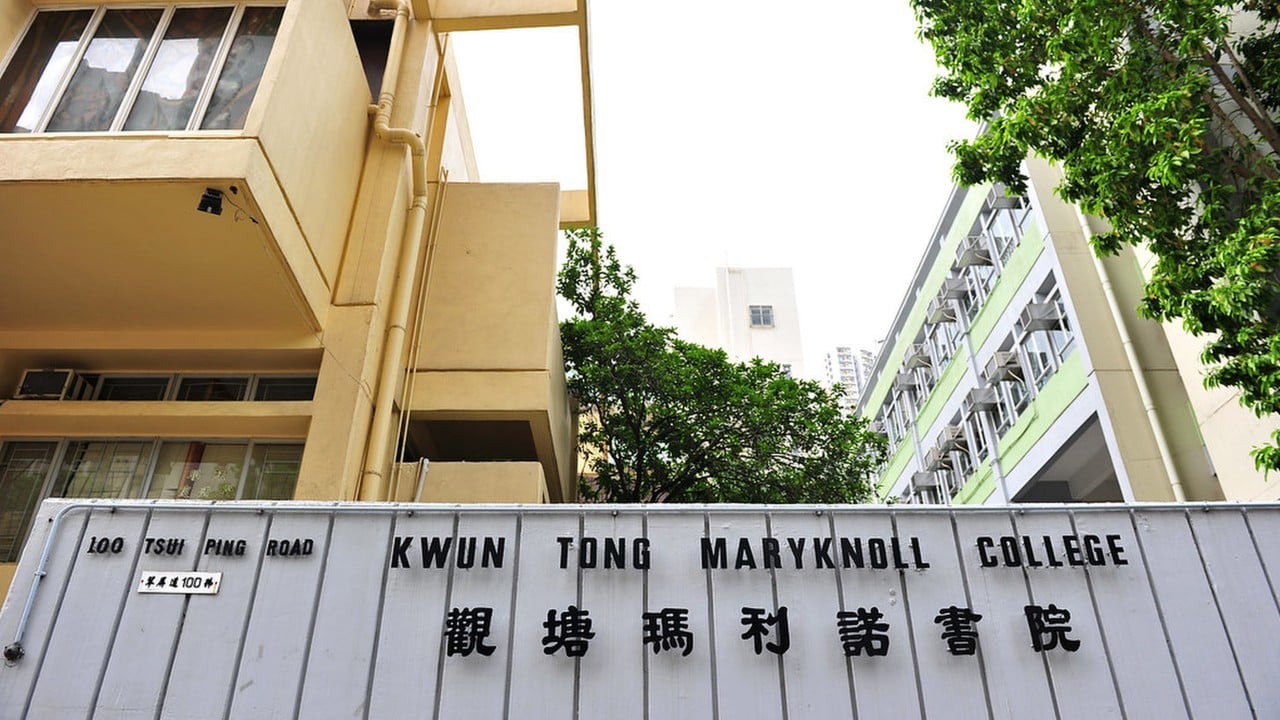
The air in the hallways of a typical Hong Kong secondary school usually vibrates with a specific, frantic energy. It is the sound of a thousand micro-interactions—the sharp tap of heels on linoleum, the muffled roar of the canteen, and the constant, rhythmic clicking of thumbs against glass. But at one particular campus recently, that rhythm broke. The silence that replaced it wasn't the peaceful quiet of a library. It was the heavy, pressurized stillness of a standoff.
When the administration at this local school decided to implement a total ban on mobile phones, they likely envisioned a return to a golden age of focused study and face-to-face chatter. They saw a distraction. The students, however, saw a limb being severed.
This isn't just a story about rules or "kids these days" being unable to look up from their screens. It is a story about the fundamental tension between an old-world educational system and a generation that views the digital space not as a tool, but as their primary environment. When the Education Bureau (EDB) finally stepped in, they weren't just mediating a policy dispute. They were arbitrating a clash of realities.
The Midnight Confiscation
Consider a hypothetical student we will call Marco. Marco is sixteen. His entire social architecture—his study groups, his weekend plans, the memes that form the shorthand of his friendships—lives inside a slab of aluminum and glass that fits in his pocket. For Marco, the phone is his memory, his map, and his safety net.
When the school announced that phones would be collected and locked away for the duration of the day—and in some reported cases, even during after-school hours—the anxiety didn't stem from an inability to play games. It stemmed from a profound sense of isolation.
The backlash was immediate. It started with whispers in the corridors and escalated into a formal outcry that reached the ears of the city’s highest educational authorities. Parents joined the fray, not because they love TikTok, but because they live in a city defined by logistics and long working hours. In Hong Kong, a phone is the "digital umbilical cord." It is how a mother knows her son reached the bus stop safely during a rainstorm. It is how a father tells his daughter he’ll be late for dinner.
By removing the device entirely, the school didn't just remove a distraction; they removed a sense of security.
The Bureaucratic Correction
The Education Bureau does not usually spend its time worrying about individual school rules unless those rules start to vibrate with the frequency of a PR disaster. Their intervention was a soft but firm reminder that while schools have autonomy, they do not have the right to ignore the "School Administration Guide."
The EDB’s stance was clear: schools must communicate. They must consult. They cannot simply hand down edicts from a mountaintop and expect sixteen-year-olds to bow in silent gratitude.
But the real friction lies in the numbers. Research consistently shows that the mere presence of a smartphone reduces cognitive capacity. It is a phenomenon known as "brain drain." Even if the phone is off and face down on the desk, a portion of your subconscious is busy not checking it. From a purely neurological perspective, the school’s desire for a phone-free zone makes perfect sense. If you want a student to master $f(x) = ax^2 + bx + c$, you probably don't want them receiving a notification about a limited-time skin in a mobile battle royale.
The problem is the execution. Total prohibition rarely breeds discipline; it breeds resentment and ingenuity. Students at the school began finding ways to bypass the lockers, or simply carried "decoy" phones to hand over while keeping their real devices tucked into their waistbands.
The Phantom Limb
We often treat technology as an external accessory, something we can put on and take off like a jacket. This is a fundamental misunderstanding of the modern human condition. To a teenager in 2026, the smartphone is an extension of the self.
Imagine a school deciding that all students must leave their left shoes at the gate because some students use them to kick their neighbors. It is an absurd solution to a behavioral problem. By banning the object rather than teaching the behavior, the school missed an opportunity to actually educate.
The EDB’s guidelines suggest that schools should formulate their "Bring Your Own Device" (BYOD) policies with a sense of balance. The goal should be "digital literacy," not "digital abstinence."
Consider the difference in these two scenarios. In the first, a teacher sees a phone and seizes it, sparking a week of paperwork and parental anger. In the second, the teacher incorporates the phone into the lesson. "Everyone, pull out your devices. We’re going to use a real-time polling app to see how many of you think the protagonist in this story was justified."
In the second scenario, the phone is a bridge. In the first, it’s a wall.
The Invisible Stakes
Why did this specific incident spark such a firestorm when school phone bans are common globally? Because Hong Kong is a high-pressure cooker. The students are already navigating one of the most competitive academic environments on the planet. For many, the phone is their only release valve—a way to listen to music between grueling sessions of DSE prep or to check in with a friend who is feeling the same crushing weight of expectations.
When the school took the phones, they inadvertently took the release valve.
The Education Bureau’s intervention serves as a warning to other institutions: you cannot manage a 21st-century classroom with 19th-century methods of control. The "backlash" wasn't a tantrum. It was a demand for respect. It was a plea for the administration to acknowledge that the world has changed, and that learning to live with technology is a far more valuable skill than learning to live in fear of it.
The Mirror in the Pocket
There is a certain irony in adults—who check their emails at the dinner table and scroll through news feeds during red lights—telling children that they lack the self-control to handle a device. We are all struggling with this. We are all addicts in varying stages of denial.
The school’s mistake was thinking they could solve a societal struggle with a locker key. They tried to create a vacuum, forgetting that nature, and teenagers, abhor a vacuum.
The EDB has now pushed the ball back into the school’s court. The lockers remain, perhaps, but the policy must change. There must be a dialogue. There must be a recognition that these students will eventually enter a workforce where their success depends entirely on their ability to manage their digital lives without a teacher standing over their shoulder.
As the sun sets over the high-rises of Kowloon, the students walk out of the school gates. The moment they cross that invisible line, a thousand screens light up simultaneously. The silence is broken. Blue light reflects in a thousand pairs of eyes, a glowing tide of notifications rushing in to fill the day’s void. They aren't just checking messages. They are reconnecting to their world, proving that you can lock up the hardware, but you can never truly capture the ghost in the machine.