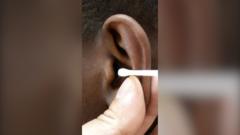
The warning is printed on every plastic tub and cardboard sleeve in the pharmacy aisle, yet millions of people ignore it every morning. "Do not insert into the ear canal." It is a legal shield for manufacturers and a medical plea from otolaryngologists, yet the habit persists. We are a society obsessed with an imaginary cleanliness, scrubbing away at a substance that isn't dirt, but a sophisticated biological defense system. Using cotton buds to clean your ears is not just unnecessary; it is a mechanical assault on a self-cleaning organ that often results in hearing loss, infection, and expensive medical interventions.
The reality is that earwax, or cerumen, is the gatekeeper of your auditory health. It is an acidic, lipid-rich secretion designed to trap dust, repel water, and kill bacteria before they can reach the delicate tympanic membrane. When you go digging with a cotton-tipped applicator, you aren't "cleaning." You are compacting. You are taking a small amount of migrating wax and ramming it deeper into the bony portion of the canal where it was never meant to go.
The Anatomy of a Self Inflicted Injury
To understand why the cotton bud is the enemy, you have to look at the geometry of the ear. The external auditory canal is a dead-end street. The skin here is unique; it grows outward from the center of the eardrum like a conveyor belt. This migration naturally carries wax and debris out to the entrance of the ear, where it eventually dries and falls away.
When a cotton bud enters the fray, it acts as a piston. Because the bud is nearly the same diameter as the canal, there is no room for the wax to escape around the sides. Instead, the wax is pushed past the narrow "isthmus" of the ear canal. Once it passes this point, the natural conveyor belt mechanism fails. The wax becomes an impaction—a hard, dark plug that creates a conductive hearing loss.
I’ve spent years interviewing surgeons who spend their Monday mornings suctioning out "mush" created by users who thought they were being hygienic. They describe the skin of the inner ear as some of the most fragile tissue in the human body. One slip, one accidental bump of the elbow from a spouse or a pet, and that cotton bud becomes a spear. It can easily puncture the eardrum, a catastrophe that leads to intense pain, vertigo, and potentially permanent hearing damage.
The Psychological Hook of the Golden Scrape
Why do we do it? If the medical community is so unified in its hatred of the practice, why is the cotton bud industry worth billions? The answer lies in a strange intersection of hygiene theater and neurology.
The ear canal is packed with nerve endings, specifically branches of the vagus nerve. Stimulating these nerves can trigger a minor pleasurable response—a phenomenon some call "ear-gasms." It’s an addiction to a sensation. People convince themselves they have "itchy ears," when in fact, the itchiness is usually caused by the very habit they use to treat it. By stripping away the protective oils of the cerumen, they leave the skin dry, cracked, and prone to eczema or low-grade fungal infections. The more they scrape, the more it itches. The more it itches, the more they scrape.
The Myth of the Dirty Ear
We have been conditioned to view earwax as a sign of poor grooming, akin to dirt under the fingernails or unbrushed teeth. This is a fundamental misunderstanding of human biology. Cerumen is more like tears or saliva—a functional secretion.
In a healthy ear, you should never see wax deep inside. If you see a bit at the opening, the system is working. Wiping the external ear with a washcloth is the only "cleaning" required. The moment you cross the threshold of the canal, you are interfering with a process that has been perfected over millions of years of evolution.
The Industrial Blind Spot
The business of cotton buds is a masterclass in corporate plausible deniability. Take a look at the packaging of any major brand. You will see illustrations of the buds being used for makeup application, keyboard cleaning, or arts and crafts. The word "ear" is conspicuously absent from the marketing materials of reputable brands, yet they are stocked in the "Ear Care" section of every grocery store next to the ear drops.
This creates a dangerous gap in consumer awareness. The manufacturer avoids liability by printing a tiny warning that no one reads, while the retail placement reinforces the dangerous behavior. It is a cycle of profit built on a foundation of "oops."
When the System Breaks Down
For some, the self-cleaning mechanism actually does fail. This isn't usually a result of "too much wax," but rather a canal shape that is too narrow or tortuous, or perhaps a change in the consistency of the wax as we age. Older adults often produce a drier, harder cerumen that is more prone to clumping.
When this happens, the solution is never a cotton bud.
Mechanical removal by a professional is the gold standard. A clinician using a microscope and specialized tools—like a curette or a suction tip—can remove an impaction in seconds without pushing it further in.
Irrigation is another common method, though it carries its own risks. Shooting a jet of water into the ear can be dangerous if the eardrum is already weakened or if the person has a history of ear surgeries. It must be done at body temperature; cold water hitting the inner ear triggers the caloric reflex, which can cause violent vomiting and spinning.
Cerumenolytics, or wax-softening drops, are the only safe home-care option. These drops, often containing carbamide peroxide, work by releasing oxygen to break up the organic matrix of the wax plug. They don't "clean" the ear so much as they liquefy the blockage so it can finally move out on its own.
The Dark Side of Ear Candling
In the vacuum of proper ear health education, "alternative" treatments flourish. Ear candling is perhaps the most egregious example. The claim is that a hollow, lighted candle creates a vacuum that sucks wax out of the ear.
This is a physical impossibility. Testing has shown that the "vacuum" produced is non-existent. The brown gunk found inside a spent ear candle isn't earwax; it’s melted candle wax and charred fabric. More importantly, it is incredibly dangerous. Every year, emergency rooms treat patients with severe burns to the ear canal or wax dripped directly onto the eardrum. It is a predatory practice that offers zero benefit and significant risk.
The Cost of the Habit
Beyond the physical pain, there is a massive economic drain associated with earwax impaction. It is one of the most common reasons for primary care visits. In the United States alone, Medicare spends millions annually on cerumen removal. Much of this is preventable. If we stopped the "piston effect" of manual cleaning, the number of clinical impactions would plummet.
We are also seeing a rise in "swimmer's ear" (otitis externa) among people who never go near a pool. By removing the acidic barrier of the wax, these individuals are creating a neutral-pH environment that is a playground for Pseudomonas and other bacteria. A cotton bud user is essentially inviting an infection into their skull.
A New Protocol for Auditory Hygiene
The shift in behavior requires a total re-evaluation of what a "clean" ear looks like. It isn't a dry, white-walled tunnel. A healthy ear canal should be slightly oily and may have visible flakes of yellow or brown material.
If you feel a sense of fullness or a sudden drop in hearing, the worst thing you can do is reach for a bud. You are effectively trying to clear a clogged pipe by shoving a stick down it. You might clear a tiny hole in the center, providing temporary relief, but you are reinforcing the walls of the blockage.
Guidelines for the Modern Ear
- Discard the buds: Use them for your detailing your car or cleaning your camera lens, but keep them away from your head.
- Embrace the washcloth: Clean only what your finger can reach while wrapped in a towel. If you can’t reach it, you aren't supposed to.
- Monitor the itch: If your ears are chronically itchy, see a dermatologist or an ENT. You likely have a skin condition that is being exacerbated by your cleaning routine.
- Softening over scraping: If you are prone to buildup, use a few drops of mineral oil or commercial ear drops once a week to keep the wax pliable.
The ear is a masterpiece of biological engineering, a delicate system that converts air pressure waves into the symphony of human experience. It does not need the crude intervention of a plastic stick tipped in bleached cotton. The most "expert" thing you can do for your ears is to leave them alone. Stop the digging, stop the scraping, and let the biological conveyor belt do the work it was designed to do.
If the hearing doesn't return or the pressure remains, seek a professional with a headlamp and a vacuum. Your eardrum will thank you.